
Missions Encyclopedia Entry 1779170957: Voyager 1
SUMMARY: Voyager 1 is a historic space mission that has traveled farther than any human-made object, providing unparalleled insights into the outer Solar System and interstellar space.
Overview
Launched on September 5, 1977, Voyager 1 is a space probe designed to study the outer Solar System and beyond. Conceived by NASA's Jet Propulsion Laboratory (JPL), Voyager 1 is the first of two identical spacecraft, the other being Voyager 2, which was launched on August 20, 1977. The primary mission objective was to explore the outer planets, their moons, and the heliosphere, the region of space influenced by the Sun. Voyager 1 has exceeded expectations, becoming the most distant human-made object in space, with a current distance of over 14.5 billion miles (23.3 billion kilometers) from Earth.
Voyager 1 is a remarkable example of human ingenuity and technological advancement. The spacecraft is powered by a radioisotope thermoelectric generator (RTG), which converts the heat generated by the decay of plutonium-238 into electricity. This innovative power source has allowed Voyager 1 to operate for over 45 years, far exceeding its original five-year mission duration. The spacecraft's design includes a gold-plated copper coating to protect it from the harsh conditions of space, such as radiation and extreme temperatures.
History/Background
The Voyager 1 mission was conceived in the early 1970s, with the primary goal of exploring the outer Solar System. The project was led by Dr. Carl Sagan, a renowned astrophysicist and science communicator, who played a crucial role in shaping the mission's objectives and scientific instruments. Voyager 1 was launched on a Titan IIIE-Centaur rocket from Cape Canaveral Air Force Station in Florida, carrying a payload of 11 scientific instruments, including a magnetometer, a plasma spectrometer, and a cosmic ray detector.
Key Information
Voyager 1 has achieved numerous milestones throughout its journey:
* First Close Encounter with Jupiter: On March 5, 1979, Voyager 1 flew within 125,000 miles (201,000 kilometers) of Jupiter's cloud tops, providing the first close-up observations of the planet's magnetic field and atmosphere.
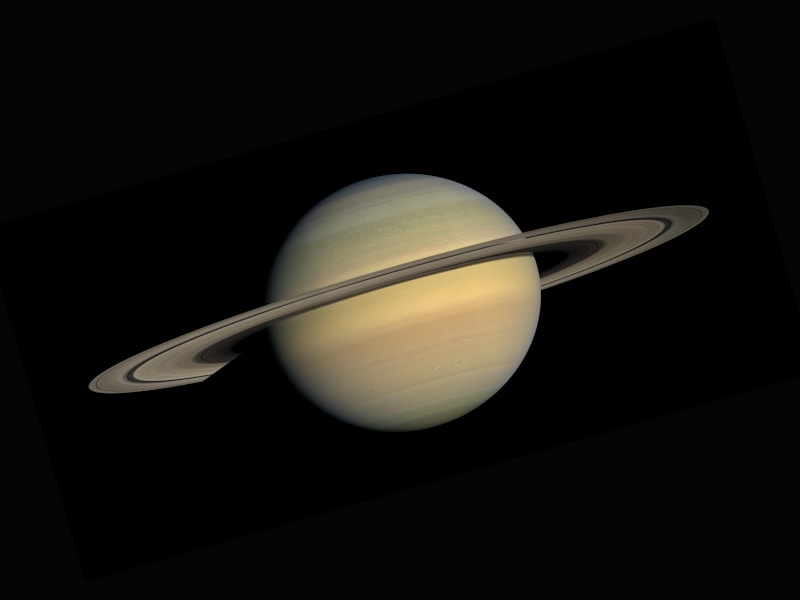
* First Flyby of Saturn: On November 12, 1980, Voyager 1 flew within 77,000 miles (124,000 kilometers) of Saturn's cloud tops, revealing the planet's rings and moons in unprecedented detail.
* Entry into Interstellar Space: On August 25, 2012, Voyager 1 crossed the heliopause, the boundary between the heliosphere and interstellar space, becoming the first human-made object to enter interstellar space.
* Most Distant Human-Made Object: Voyager 1 is currently the most distant human-made object in space, with a distance of over 14.5 billion miles (23.3 billion kilometers) from Earth.
Significance
Voyager 1's achievements have significantly expanded our understanding of the outer Solar System and interstellar space. The mission has provided valuable insights into the magnetic fields, atmospheres, and moons of the outer planets, as well as the structure and composition of the heliosphere. Voyager 1's journey has also raised important questions about the origins and evolution of our Solar System, as well as the possibility of life beyond Earth.
INFOBOX:
- Name: Voyager 1
- Type: Space Probe
- Date: September 5, 1977
- Location: Interstellar Space
- Known For: First human-made object to enter interstellar space
TAGS: Space Exploration, Voyager 1, Outer Solar System, Interstellar Space, NASA, Jet Propulsion Laboratory, Carl Sagan, Spacecraft, RTG, Gold Plating, Cosmic Ray Detector, Magnetometer, Plasma Spectrometer.