
Missions Encyclopedia Entry 1779186005: Voyager 1
SUMMARY: Voyager 1 is a historic space mission that has traveled farther than any human-made object, providing unparalleled insights into the outer Solar System and interstellar space.
Overview
Launched on September 5, 1977, Voyager 1 is a space probe designed to study the outer Solar System and beyond. The mission was conceived by NASA's Jet Propulsion Laboratory (JPL) in Pasadena, California, with the primary objective of exploring the outer planets and their moons. Voyager 1 is one of two identical spacecraft, the other being Voyager 2, which was launched on August 20, 1977. The twin probes were designed to take advantage of a rare alignment of the outer planets, allowing them to visit Jupiter, Saturn, Uranus, and Neptune in a single mission.
Voyager 1 is a remarkable example of human ingenuity and technological advancement. Weighing approximately 825 kilograms (1,820 pounds), the spacecraft is powered by a radioisotope thermoelectric generator (RTG), which converts the heat generated by the decay of plutonium-238 into electricity. This innovative power source has enabled Voyager 1 to operate for over 45 years, making it one of the longest-lived spacecraft in history.
History/Background
The Voyager 1 mission was conceived in the early 1970s, during a period of intense space exploration activity. The Apollo program had successfully landed astronauts on the Moon, and scientists were eager to explore the outer Solar System. Voyager 1 was designed to take advantage of the rare alignment of the outer planets, which occurs every 176 years. The spacecraft was built by a team of engineers and scientists at JPL, led by Dr. Edward Stone, who would later become the director of JPL.
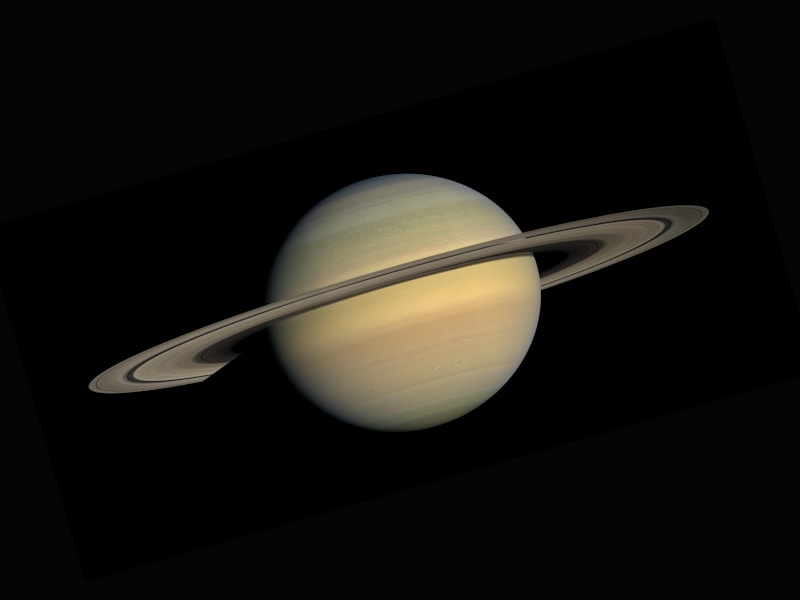
Voyager 1 was launched on September 5, 1977, from Cape Canaveral Air Force Station in Florida. The spacecraft followed a complex trajectory, which included a gravitational assist from Jupiter and Saturn. On September 12, 1977, Voyager 1 flew by Jupiter, providing the first close-up images of the planet's atmosphere and magnetic field. The spacecraft continued on its journey, flying by Saturn on November 12, 1980, and entering interstellar space on August 25, 2012.
Key Information
Voyager 1 has achieved numerous milestones throughout its mission. Some of the most significant include:
* Farthest Human-Made Object: Voyager 1 has traveled farther than any human-made object, with a distance of over 14 billion miles (22.5 billion kilometers) from Earth.
* Interstellar Space: Voyager 1 entered interstellar space on August 25, 2012, becoming the first spacecraft to explore the region between the Solar System and the nearest star, Proxima Centauri.
* Cosmic Ray Detector: Voyager 1 is equipped with a cosmic ray detector, which has provided valuable insights into the high-energy particles that permeate the Solar System.
* Golden Record: Voyager 1 carries a Golden Record, a gold-plated copper record containing sounds and images of Earth, intended to serve as a message to any extraterrestrial life form that may encounter the spacecraft.
Significance
Voyager 1 has had a profound impact on our understanding of the Solar System and the universe. The mission has provided unprecedented insights into the outer planets, their moons, and the interstellar medium. The spacecraft has also served as a technological marvel, demonstrating the capabilities of human ingenuity and innovation.
The Voyager 1 mission has also raised important questions about the search for extraterrestrial life. The Golden Record, which contains sounds and images of Earth, serves as a message to any extraterrestrial life form that may encounter the spacecraft. The record includes natural sounds, such as rain and thunder, as well as human voices and music.
INFOBOX:
- Name: Voyager 1
- Type: Space Probe
- Date: September 5, 1977
- Location: Interstellar Space
- Known For: Farthest Human-Made Object, Interstellar Space Explorer
TAGS: Space Exploration, Voyager 1, Outer Solar System, Interstellar Space, Cosmic Rays, Golden Record, Search for Extraterrestrial Life, NASA, Jet Propulsion Laboratory, Spacecraft, Radioisotope Thermoelectric Generator.