
Missions Encyclopedia Entry 1779373339: Voyager 1
SUMMARY: Voyager 1 is a historic space mission that has traveled farther than any human-made object, providing groundbreaking insights into the outer Solar System and interstellar space.
Overview
Launched on September 5, 1977, Voyager 1 is a space probe designed to study the outer Solar System and beyond. The mission was conceived by NASA's Jet Propulsion Laboratory (JPL) as a follow-up to the successful Pioneer 10 mission, with the primary objective of exploring Jupiter and Saturn. However, Voyager 1's trajectory was altered to take advantage of a rare alignment of the outer planets, allowing it to continue on a path into interstellar space.
Voyager 1 is a twin spacecraft, accompanied by Voyager 2, which was launched on August 20, 1977. Both spacecraft were designed to be identical, with a mass of approximately 825 kilograms (1,820 pounds) and a diameter of 1.8 meters (6 feet). The spacecraft are powered by radioisotope thermoelectric generators (RTGs), which convert the heat generated by radioactive decay into electricity.
History/Background
The Voyager 1 mission was the result of a collaborative effort between NASA, the National Academy of Sciences, and the Jet Propulsion Laboratory. The mission's primary objectives were to:
1. Study the outer Solar System, including Jupiter and Saturn
2. Investigate the outer reaches of the heliosphere, the region of space influenced by the Sun
3. Explore the interstellar medium, the material that fills the space between stars
The Voyager 1 spacecraft was designed to operate for at least five years, but it has far exceeded its expected lifespan. The spacecraft's trajectory was carefully planned to take advantage of the gravitational influence of the outer planets, allowing it to continue on a path into interstellar space.
Key Information
Voyager 1 has achieved numerous milestones throughout its journey, including:
1. Closest approach to Jupiter: On March 5, 1979, Voyager 1 flew within 3.5 million kilometers (2.2 million miles) of Jupiter's cloud tops, providing the first close-up images of the planet's atmosphere and magnetic field.
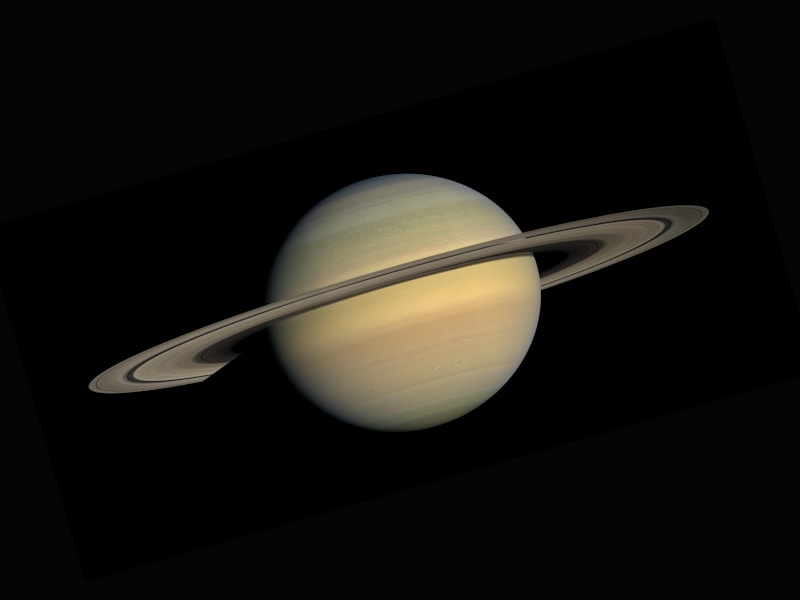
2. Saturn flyby: On November 12, 1980, Voyager 1 flew within 124,000 kilometers (77,000 miles) of Saturn's cloud tops, capturing stunning images of the planet's rings and moons.
3. Interstellar space: On August 25, 2012, Voyager 1 crossed the heliopause, the boundary between the heliosphere and interstellar space, becoming the first human-made object to enter interstellar space.
4. Farthest human-made object: Voyager 1 is now the farthest human-made object in space, with a distance of over 14 billion miles (22.5 billion kilometers) from Earth.
Significance
Voyager 1's mission has greatly expanded our understanding of the outer Solar System and interstellar space. The spacecraft's discoveries have included:
1. Magnetic fields: Voyager 1 has provided detailed information about the magnetic fields of Jupiter and Saturn, revealing complex structures and interactions with the solar wind.
2. Planetary atmospheres: The spacecraft has studied the atmospheres of Jupiter and Saturn, providing insights into their composition and dynamics.
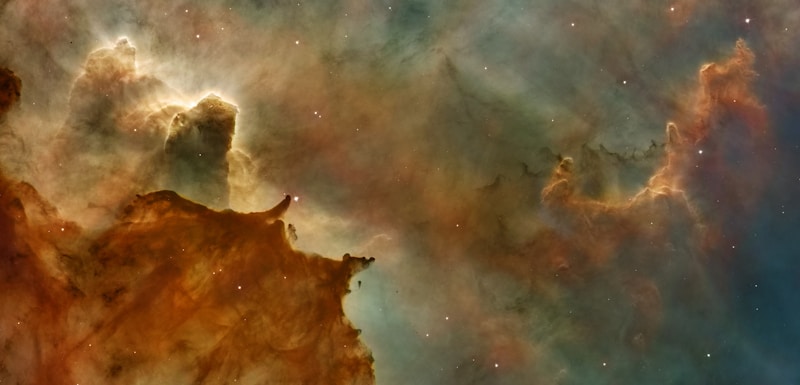
3. Interstellar medium: Voyager 1 has entered the interstellar medium, allowing scientists to study the material that fills the space between stars.
INFOBOX:
- Name: Voyager 1
- Type: Space probe
- Date: September 5, 1977
- Location: Interstellar space
- Known For: First human-made object to enter interstellar space
TAGS: Voyager 1, Space exploration, Solar System, Interstellar space, Jupiter, Saturn, Magnetic fields, Planetary atmospheres, Interstellar medium, Space probe.