
Missions Encyclopedia Entry 1779607504: Voyager 1
SUMMARY: Voyager 1 is a historic space mission that has traveled farther than any human-made object, providing unparalleled insights into the outer reaches of our solar system and beyond.
Overview
Launched on September 5, 1977, Voyager 1 is a space probe designed to study the outer Solar System and beyond. The mission was conceived by NASA's Jet Propulsion Laboratory (JPL) as a follow-up to the Pioneer 10 and 11 missions, with the primary objective of exploring the outer planets and their moons. Voyager 1 is a twin mission to Voyager 2, which was launched on August 20, 1977.
Voyager 1 is a remarkable spacecraft, measuring 8.5 feet (2.6 meters) in length and weighing approximately 1,600 pounds (725 kilograms). It is equipped with a suite of scientific instruments, including a magnetometer, a plasma detector, and a cosmic ray detector, which have allowed scientists to study the outer Solar System's magnetic fields, plasma environments, and cosmic radiation. The spacecraft is powered by a radioisotope thermoelectric generator (RTG), which converts the heat generated by the decay of radioactive isotopes into electricity.
History/Background
The Voyager 1 mission was the culmination of a decade-long effort by NASA to explore the outer Solar System. The concept of a mission to explore the outer planets dates back to the 1960s, but it wasn't until the 1970s that the project gained momentum. The Voyager 1 spacecraft was designed and built by a team of engineers and scientists at JPL, led by Dr. John Casani, who would later become the project's director. The spacecraft was launched on a Titan IIIE-Centaur rocket from Cape Canaveral Air Force Station in Florida.
Key Information
Voyager 1 has achieved numerous milestones throughout its journey, including:
* Closest approach to Jupiter: On March 5, 1979, Voyager 1 flew within 3.4 million miles (5.5 million kilometers) of Jupiter's cloud tops, providing the first close-up images of the planet's magnetic field and aurorae.
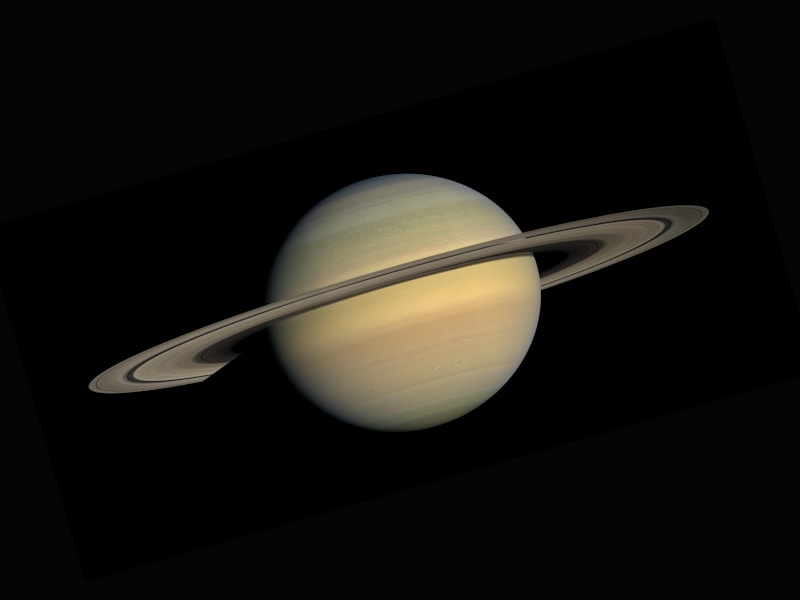
* Turbulent Saturnian system: On November 12, 1980, Voyager 1 encountered Saturn's magnetic field, which was found to be much stronger than expected. The spacecraft also discovered a complex system of rings and moons.
* Interstellar medium: On August 25, 2012, Voyager 1 crossed the heliopause, the boundary between the heliosphere (the region of space influenced by the Sun) and interstellar space. This marked the first time a human-made object had entered interstellar space.
* Distance record: As of 2023, Voyager 1 is approximately 14.5 billion miles (23.3 billion kilometers) away from Earth, making it the most distant human-made object in space.
Significance
Voyager 1's achievements have significantly expanded our understanding of the outer Solar System and the interstellar medium. The mission has provided valuable insights into the magnetic fields, plasma environments, and cosmic radiation of the outer planets and beyond. The spacecraft's instruments have also detected signs of water and organic molecules in the outer Solar System, which has implications for the search for life beyond Earth.
The Voyager 1 mission has also had a profound impact on our understanding of the universe's scale and complexity. The spacecraft's journey has taken it to the edge of the heliosphere, demonstrating the vastness of the cosmos and the fragility of our planet in the grand scheme of things.
INFOBOX:
- Name: Voyager 1
- Type: Space Probe
- Date: September 5, 1977
- Location: Interstellar space
- Known For: First human-made object to enter interstellar space
TAGS: Voyager 1, Space Probe, Outer Solar System, Interstellar Space, Cosmic Radiation, Magnetic Fields, Plasma Environments, Space Exploration, NASA