
Missions Encyclopedia Entry 1779866284: Voyager 1
SUMMARY: Voyager 1 is a space probe launched by NASA in 1977, designed to study the outer Solar System and beyond, becoming the most distant human-made object in space.
Overview
Voyager 1 is a space exploration mission that has been traveling through interstellar space for over 45 years, providing unprecedented insights into the outer reaches of our Solar System and the surrounding interstellar medium. Launched on September 5, 1977, from Cape Canaveral, Florida, Voyager 1 was designed to take advantage of a rare alignment of the outer planets, allowing it to visit Jupiter and Saturn in a single mission. The spacecraft was built by NASA's Jet Propulsion Laboratory (JPL) and is powered by a radioisotope thermoelectric generator (RTG), which converts the heat generated by the decay of radioactive isotopes into electricity.
Voyager 1 is equipped with a range of scientific instruments, including a magnetometer, a plasma detector, and a cosmic ray detector, which have allowed scientists to study the magnetic fields, plasma environments, and cosmic radiation of the outer Solar System. The spacecraft's trajectory has taken it through the heliosheath, a region of space where the solar wind slows down and becomes turbulent, and into the interstellar medium, where it has encountered a region of high-energy particles and magnetic fields.
History/Background
The Voyager 1 mission was conceived in the early 1970s, as a follow-up to the Pioneer 10 and 11 missions, which had explored the outer Solar System in the early 1970s. The Voyager mission was designed to take advantage of a rare alignment of the outer planets, which would allow the spacecraft to visit Jupiter and Saturn in a single mission. The spacecraft was built by NASA's Jet Propulsion Laboratory (JPL) and was launched on September 5, 1977, from Cape Canaveral, Florida.
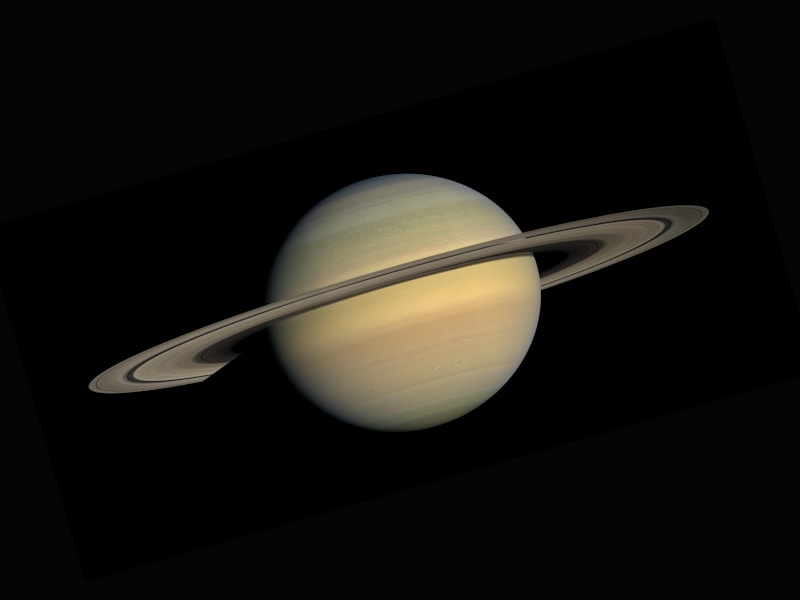
Voyager 1's primary mission was to study the outer Solar System, with a focus on the Jupiter and Saturn systems. The spacecraft flew by Jupiter on March 5, 1979, and Saturn on November 12, 1980, providing a wealth of data on the magnetic fields, plasma environments, and ring systems of these planets. After completing its primary mission, Voyager 1 continued on a trajectory that would take it into interstellar space, where it would become the most distant human-made object in space.
Key Information
* Launch Date: September 5, 1977
* Launch Vehicle: Titan IIIE-Centaur
* Spacecraft Mass: 825 kg (1,820 lb)
* Power Source: Radioisotope Thermoelectric Generator (RTG)
* Scientific Instruments: Magnetometer, Plasma Detector, Cosmic Ray Detector
* Distance from Earth: Over 14 billion miles (22.5 billion kilometers)
* Speed: Approximately 38,000 miles per hour (61,155 kilometers per hour)
* Interstellar Medium: Voyager 1 entered the interstellar medium in August 2012, becoming the most distant human-made object in space.
Significance
Voyager 1's mission has provided a wealth of data on the outer Solar System and the surrounding interstellar medium, expanding our understanding of the universe and its many mysteries. The spacecraft's journey has taken it through the heliosheath, a region of space where the solar wind slows down and becomes turbulent, and into the interstellar medium, where it has encountered a region of high-energy particles and magnetic fields.
Voyager 1's legacy extends beyond its scientific discoveries, as it has also served as a symbol of human ingenuity and exploration. The spacecraft's golden record, which contains sounds and images of Earth, serves as a message to any extraterrestrial life form that may encounter the spacecraft, providing a glimpse into human culture and civilization.
INFOBOX:
- Name: Voyager 1
- Type: Space Probe
- Date: September 5, 1977
- Location: Interstellar Space
- Known For: Most distant human-made object in space
TAGS: Space Exploration, Voyager Mission, Outer Solar System, Interstellar Space, NASA, Space Probe, Cosmic Radiation, Magnetic Fields, Plasma Environments.