
Missions Encyclopedia Entry 1780003264: Voyager 1
SUMMARY: Voyager 1 is a historic space mission that has traveled farther than any human-made object, providing unparalleled insights into the outer Solar System and interstellar space.
Overview
Launched on September 5, 1977, Voyager 1 is a space probe designed to study the outer Solar System and beyond. Conceived by NASA's Jet Propulsion Laboratory (JPL), the mission was initially intended to explore the outer planets, but its trajectory has taken it into the interstellar medium, making it the most distant human-made object in space. Voyager 1 is a remarkable achievement in space exploration, marking a significant milestone in our understanding of the cosmos.
The Voyager 1 spacecraft is a remarkable 22 feet (6.7 meters) long and 8 feet (2.4 meters) wide, with a mass of approximately 1,600 pounds (725 kilograms). Equipped with a suite of scientific instruments, including a magnetometer, plasma spectrometer, and cosmic ray detector, Voyager 1 has been collecting data on the outer Solar System's magnetic fields, charged particles, and cosmic rays. The spacecraft's twin, Voyager 2, was launched on August 20, 1977, and has also traveled to the outer Solar System, but Voyager 1 has surpassed it in distance.
History/Background
The Voyager 1 mission was conceived in the early 1970s, when NASA's JPL was developing a new generation of space probes to explore the outer Solar System. The mission was initially designed to study Jupiter and Saturn, but as the spacecraft's trajectory was refined, it became clear that it would have the opportunity to explore the outer reaches of the Solar System and potentially enter interstellar space. Voyager 1 was launched on September 5, 1977, from Cape Canaveral Air Force Station in Florida, and its trajectory was carefully planned to take advantage of the gravitational assists from Jupiter and Saturn.
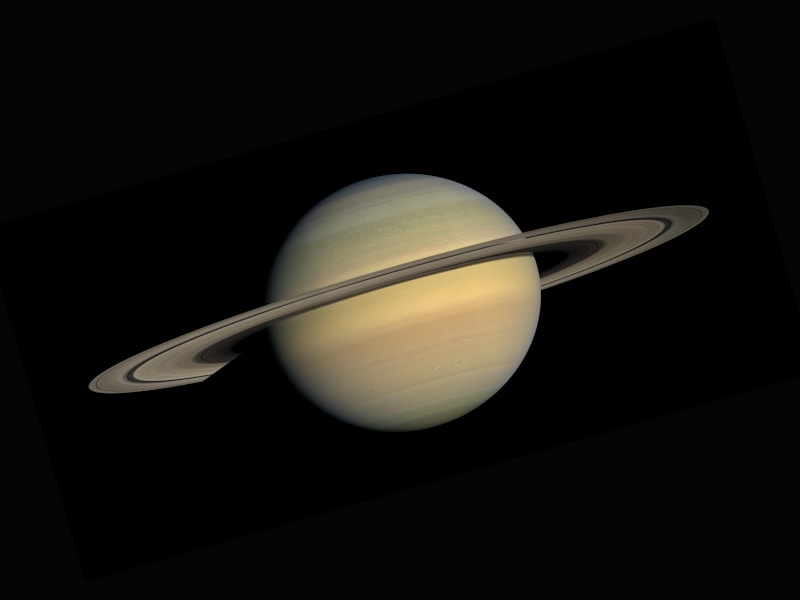
On September 12, 1977, Voyager 1 flew by Jupiter, using the planet's gravity to alter its trajectory and send it toward Saturn. On November 12, 1980, the spacecraft flew by Saturn, collecting valuable data on the planet's rings and magnetic field. Voyager 1 continued on its journey, passing the orbit of Neptune in August 1989 and entering the heliosheath, a region of space where the solar wind slows down and becomes turbulent. On August 25, 2012, Voyager 1 crossed the heliopause, the boundary between the heliosheath and interstellar space, marking a historic milestone in space exploration.
Key Information
Voyager 1 has traveled an astonishing 14.2 billion miles (22.8 billion kilometers) since its launch, making it the most distant human-made object in space. The spacecraft's speed has slowed down over time due to the gravitational influences of the outer planets, but it continues to travel at a pace of about 38,000 miles per hour (61,155 kilometers per hour). Voyager 1's scientific instruments have collected a vast amount of data on the outer Solar System, including the magnetic fields, charged particles, and cosmic rays that permeate the region.
One of the most significant discoveries made by Voyager 1 is the presence of a region of space known as the "heliopause," which marks the boundary between the heliosheath and interstellar space. Voyager 1's data has also revealed the existence of a "magnetic field" in the interstellar medium, which is thought to be generated by the motion of charged particles in the galaxy. The spacecraft's cosmic ray detector has also provided valuable insights into the sources and origins of cosmic rays, which are high-energy particles that bombard the Earth from space.
Significance
Voyager 1's mission has far-reaching implications for our understanding of the Solar System and the universe as a whole. The spacecraft's data has provided valuable insights into the outer Solar System's magnetic fields, charged particles, and cosmic rays, which are essential for understanding the behavior of the Sun and the planets. Voyager 1's journey into interstellar space has also opened up new possibilities for future space missions, which could potentially explore the galaxy and beyond.
INFOBOX:
- Name: Voyager 1
- Type: Space Probe
- Date: September 5, 1977
- Location: Interstellar Space
- Known For: Most distant human-made object in space
TAGS: Space Exploration, Voyager 1, Outer Solar System, Interstellar Space, NASA, JPL, Space Probe, Cosmic Rays, Magnetic Fields, Charged Particles, Heliopause.