
Missions Encyclopedia Entry 1780034427: Voyager 1
SUMMARY: Voyager 1 is a historic space mission that has traveled farther than any human-made object in space, providing groundbreaking insights into the outer reaches of our solar system and beyond.
Overview
Launched on September 5, 1977, Voyager 1 is a space probe designed to study the outer Solar System and beyond. Developed by NASA's Jet Propulsion Laboratory (JPL), this mission was conceived to take advantage of a rare alignment of the outer planets, allowing for a single spacecraft to visit multiple destinations in the outer reaches of our solar system. Voyager 1 is one of two identical spacecraft, the other being Voyager 2, which was launched on August 20, 1977.
Voyager 1 is a remarkable example of human ingenuity and technological advancement. Weighing approximately 825 kilograms (1,820 pounds), the spacecraft is powered by a radioisotope thermoelectric generator (RTG), which converts the heat generated by the decay of plutonium-238 into electricity. This innovative power source has allowed Voyager 1 to operate for over 45 years, making it one of the longest-lived space missions in history.
History/Background
The Voyager 1 mission was conceived in the early 1970s, when NASA's Planetary Program was looking for a way to explore the outer Solar System. The project was led by a team of scientists and engineers at JPL, who designed the spacecraft to take advantage of a rare alignment of the outer planets. The spacecraft was built by a team of over 1,000 engineers, technicians, and scientists, who worked tirelessly to ensure the success of the mission.
Voyager 1 was launched on September 5, 1977, from Cape Canaveral Air Force Station in Florida. The spacecraft was initially designed to study the outer Solar System, with a focus on the Jupiter and Saturn systems. However, as the mission progressed, scientists realized that Voyager 1 had the potential to travel much farther, potentially even reaching interstellar space.
Key Information
Voyager 1 has achieved numerous milestones throughout its mission, including:
* Closest approach to Jupiter: Voyager 1 flew within 3.5 million kilometers (2.2 million miles) of Jupiter's cloud tops on March 5, 1979.
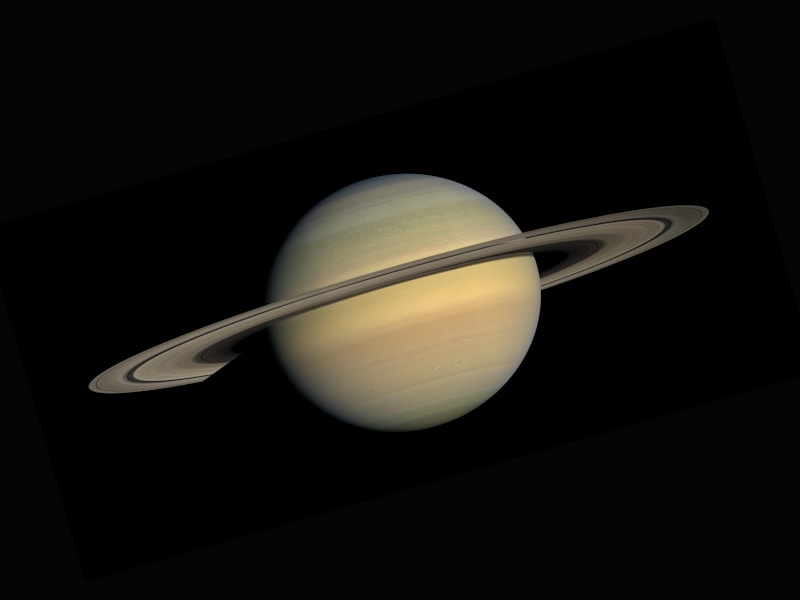
* Closest approach to Saturn: Voyager 1 flew within 124,000 kilometers (77,000 miles) of Saturn's cloud tops on November 12, 1980.
* Interstellar space: Voyager 1 entered interstellar space on August 25, 2012, becoming the first human-made object to do so.
* Farthest human-made object: Voyager 1 is currently the farthest human-made object in space, with a distance of over 14.2 billion kilometers (8.8 billion miles) from Earth.
Voyager 1 has also provided a wealth of scientific data, including:
* Magnetic field measurements: Voyager 1 has measured the magnetic field of Jupiter and Saturn, providing valuable insights into the formation and evolution of these planets.
* Plasma measurements: Voyager 1 has measured the plasma environment of the outer Solar System, providing insights into the interaction between the solar wind and the interplanetary medium.
* Cosmic ray measurements: Voyager 1 has measured the cosmic ray flux in the outer Solar System, providing insights into the acceleration and propagation of high-energy particles.
Significance
Voyager 1 has had a profound impact on our understanding of the outer Solar System and beyond. The mission has provided a wealth of scientific data, which has helped to advance our understanding of the formation and evolution of our solar system. Voyager 1 has also inspired generations of scientists and engineers, demonstrating the power of human ingenuity and technological advancement.
INFOBOX:
- Name: Voyager 1
- Type: Space Probe
- Date: September 5, 1977
- Location: Interstellar space
- Known For: First human-made object to enter interstellar space
TAGS: Space Exploration, Voyager 1, Interstellar Space, Outer Solar System, NASA, JPL, Space Probe, Radioisotope Thermoelectric Generator, RTG, Plutonium-238, Cosmic Rays, Magnetic Field, Plasma, Solar Wind.