**
Overview
Launched on September 5, 1977, Voyager 1 is a space mission that has been traveling through the cosmos for over 45 years, making it one of the most enduring and successful space exploration projects in history. The mission was designed to study the outer Solar System, particularly the gas giants Jupiter and Saturn, and to explore the outer reaches of the heliosphere, the region of space influenced by the Sun. The Voyager 1 spacecraft is a remarkable example of human ingenuity and technological advancement, and its discoveries have greatly expanded our understanding of the universe.
The Voyager 1 spacecraft is a twin mission to Voyager 2, launched on August 20, 1977. Both spacecraft were designed to take advantage of a rare alignment of the outer planets, allowing them to visit multiple planets in a single mission. The Voyager 1 spacecraft is powered by a radioisotope thermoelectric generator (RTG), which converts the heat generated by the decay of radioactive isotopes into electricity. This innovative power source has allowed the spacecraft to continue operating long after its primary mission was completed.
History/Background
The Voyager 1 mission was conceived in the early 1970s, when NASA was planning a series of missions to explore the outer Solar System. The mission was designed to take advantage of a rare alignment of the outer planets, which would allow the spacecraft to visit multiple planets in a single mission. The Voyager 1 spacecraft was built by NASA's Jet Propulsion Laboratory (JPL) in Pasadena, California, and was launched on September 5, 1977, from Cape Canaveral Air Force Station in Florida.
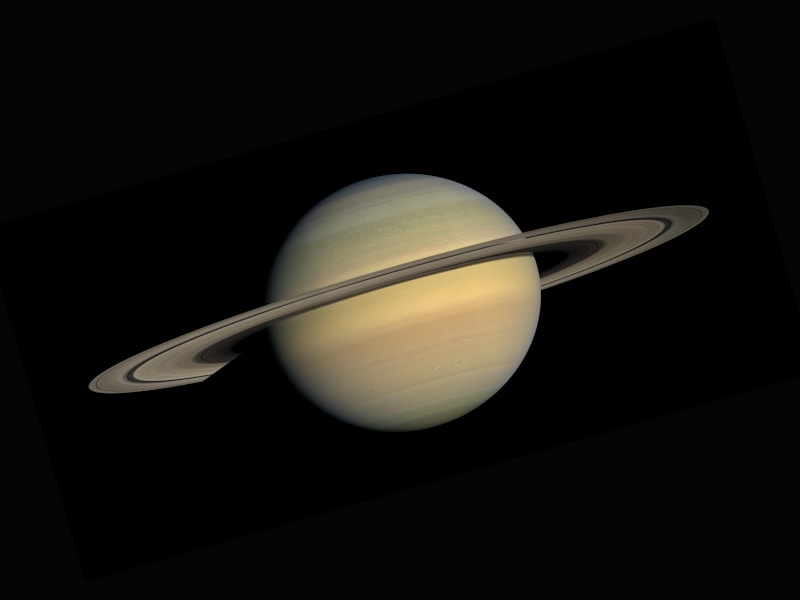
The Voyager 1 spacecraft flew by Jupiter on March 5, 1979, and Saturn on November 12, 1980. During these flybys, the spacecraft sent back a wealth of data and images, including the famous "Pioneer" and "Saturnian" images. The spacecraft also carried a gold-plated copper record, known as the "Golden Record," which contains sounds and images of Earth and its inhabitants.
Key Information
Voyager 1 has traveled over 14 billion miles (22.5 billion kilometers) from Earth, making it the most distant human-made object in space. The spacecraft is now in the interstellar medium, the region of space outside the heliosphere. In 2012, the spacecraft crossed the heliopause, the boundary between the heliosphere and interstellar space.
The Voyager 1 spacecraft is equipped with a range of scientific instruments, including a magnetometer, a plasma spectrometer, and a cosmic ray detector. These instruments have allowed the spacecraft to study the outer Solar System and the interstellar medium in unprecedented detail.
Significance
The Voyager 1 mission has greatly expanded our understanding of the universe, and has provided a wealth of data and images that have helped to shape our understanding of the outer Solar System and beyond. The mission has also demonstrated the power of human ingenuity and technological advancement, and has inspired generations of scientists and engineers.
The Voyager 1 spacecraft is a testament to the enduring legacy of the space exploration program, and serves as a reminder of the incredible achievements that can be accomplished through human ingenuity and determination.
INFOBOX:
- Name: Voyager 1
- Type: Interstellar space exploration mission
- Date: September 5, 1977
- Location: Interstellar medium
- Known For: First human-made object to enter interstellar space
TAGS: Voyager 1, Space Exploration, Interstellar Space, Outer Solar System, Jupiter, Saturn, Golden Record, Spacecraft, NASA, JPL, Heliopause, Heliosphere, Cosmic Ray Detector, Magnetometer, Plasma Spectrometer.