
**
Overview
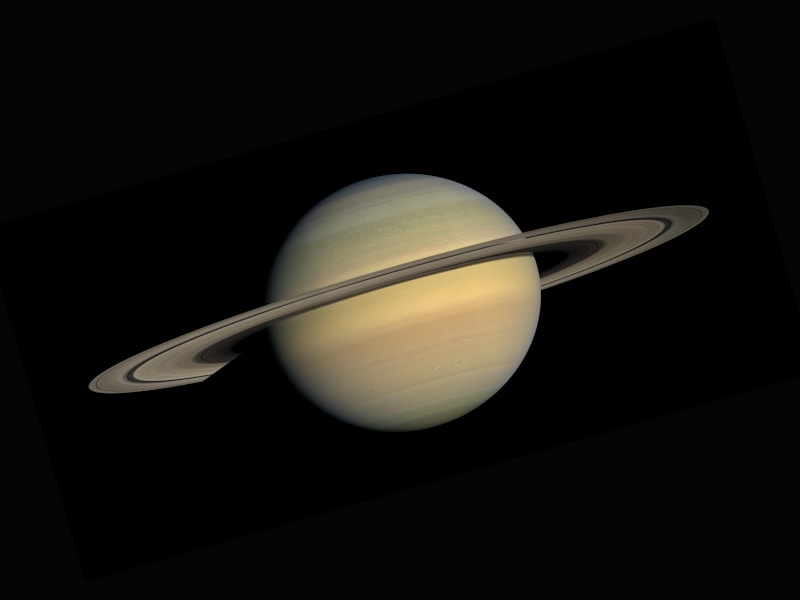
The Pioneer 10 and Pioneer 11 missions were a pair of ambitious space probes launched by NASA in the early 1970s, with the primary goal of studying the outer Solar System and beyond. These missions were part of a larger program aimed at exploring the outer reaches of our celestial neighborhood and pushing the boundaries of space exploration. The Pioneer 10 and 11 spacecraft were designed to take advantage of a rare alignment of the outer planets, allowing them to fly by Jupiter and Saturn, respectively, and gather valuable data on these gas giants.
The Pioneer 10 spacecraft, launched on March 2, 1972, was the first to fly by Jupiter, providing scientists with a wealth of information about the planet's magnetic field, atmosphere, and moons. The Pioneer 11 spacecraft, launched on April 5, 1973, followed suit, flying by Jupiter and Saturn, and returning even more detailed data about these planets. Both spacecraft were equipped with a range of instruments, including cameras, spectrometers, and magnetometers, which allowed them to collect data on the composition, temperature, and magnetic fields of the planets they encountered.
History/Background
The idea for the Pioneer 10 and 11 missions dates back to the 1960s, when NASA began planning for a series of space probes that would explore the outer Solar System. The program was initially known as the "Outer Planets Program," and it was designed to take advantage of the rare alignment of the outer planets that occurs every 176 years. The Pioneer 10 and 11 spacecraft were built by NASA's Ames Research Center and the Jet Propulsion Laboratory, respectively, and they were launched using the Atlas-Centaur rocket.
The Pioneer 10 spacecraft was the first to be launched, and it flew by Jupiter on December 3, 1973. The spacecraft's instruments were designed to collect data on the planet's magnetic field, atmosphere, and moons, and they provided scientists with a wealth of information about the planet's composition and temperature. The Pioneer 11 spacecraft followed suit, flying by Jupiter on December 2, 1974, and Saturn on September 1, 1979.
Key Information
The Pioneer 10 and 11 spacecraft were equipped with a range of instruments, including:
* Multispectral Imagers: These cameras were designed to collect data on the composition and temperature of the planets' atmospheres.
* Magnetometers: These instruments were used to study the magnetic fields of the planets and their moons.
* Spectrometers: These instruments were used to analyze the composition of the planets' atmospheres and surfaces.
* Radiation Detectors: These instruments were used to study the radiation belts surrounding the planets.
The Pioneer 10 and 11 spacecraft also carried a Golden Record, a gold-plated copper record containing sounds and images of Earth, as well as a message from humanity. The record was designed to serve as a message to any extraterrestrial life forms that might encounter the spacecraft.
Significance
The Pioneer 10 and 11 missions were a major milestone in the history of space exploration, providing scientists with a wealth of information about the outer Solar System. The missions demonstrated the feasibility of long-distance space travel and paved the way for future missions to the outer planets and beyond. The Pioneer 10 and 11 spacecraft also carried a message from humanity, which serves as a reminder of our place in the universe and our desire to explore and understand the cosmos.
INFOBOX:
- Name: Pioneer 10 and Pioneer 11
- Type: Space Probes
- Date: March 2, 1972 (Pioneer 10) and April 5, 1973 (Pioneer 11)
- Location: Outer Solar System
- Known For: First spacecraft to fly by Jupiter and Saturn, and to carry a Golden Record containing a message from humanity.
TAGS: Space Exploration, Pioneer 10, Pioneer 11, Outer Solar System, Jupiter, Saturn, Space Probes, Golden Record, NASA, Ames Research Center, Jet Propulsion Laboratory.