
**
Overview
Launched on September 5, 1977, Voyager 1 is a space probe designed to study the outer Solar System and beyond. The mission was conceived by NASA's Jet Propulsion Laboratory (JPL) to explore the outer reaches of the heliosphere, the region of space influenced by the Sun. Voyager 1 is the second of two spacecraft, the first being Voyager 2, which was launched on August 20, 1977. The twin spacecraft were designed to take advantage of a rare alignment of the outer planets, allowing them to visit Jupiter, Saturn, Uranus, and Neptune in a single mission.
Voyager 1 is a remarkable example of human ingenuity and technological advancement. The spacecraft is powered by a radioisotope thermoelectric generator (RTG), which converts the heat generated by the decay of radioactive isotopes into electricity. This innovative power source has allowed Voyager 1 to continue operating for over 45 years, making it one of the longest-operating spacecraft in history.
History/Background
The Voyager 1 mission was born out of the success of the Pioneer 10 and 11 missions, which had explored the outer Solar System in the early 1970s. NASA scientists and engineers recognized the opportunity to send a spacecraft to the outer reaches of the heliosphere, where the Sun's influence was thought to be minimal. The Voyager 1 spacecraft was designed to take advantage of this opportunity, with a flyby of Jupiter and Saturn followed by a journey into interstellar space.
The Voyager 1 spacecraft was launched on September 5, 1977, from Cape Canaveral Air Force Station in Florida. The spacecraft was equipped with a range of scientific instruments, including a magnetometer, a plasma analyzer, and a cosmic ray detector. These instruments were designed to study the outer Solar System, including the magnetic fields, plasma environments, and cosmic radiation.
Key Information
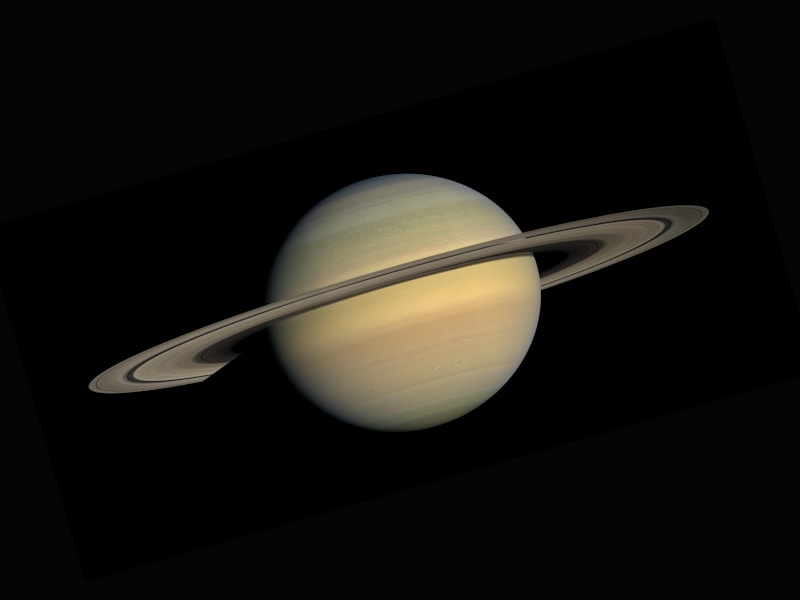
Voyager 1 has achieved numerous milestones throughout its mission. On September 12, 1977, the spacecraft flew by Jupiter, providing the first close-up images of the planet's magnetic field and radiation belts. On November 12, 1980, Voyager 1 flew by Saturn, revealing the planet's ring system and magnetic field. In 1990, Voyager 1 crossed the heliopause, the boundary between the heliosphere and interstellar space.
In 2012, Voyager 1 entered the interstellar medium, becoming the first human-made object to do so. The spacecraft is now traveling at a speed of approximately 38,000 miles per hour (61,155 kilometers per hour), making it one of the fastest-moving objects in the Solar System. Voyager 1 is also the most distant human-made object, with a distance of over 14 billion miles (22.5 billion kilometers) from Earth.
Significance
Voyager 1 has made significant contributions to our understanding of the outer Solar System and beyond. The spacecraft has provided valuable insights into the magnetic fields, plasma environments, and cosmic radiation of the outer planets. The mission has also demonstrated the feasibility of long-duration spaceflight, paving the way for future missions to the outer reaches of the Solar System and beyond.
The Voyager 1 spacecraft carries a golden record, a gold-plated copper record containing sounds and images of Earth. The record is a message to any extraterrestrial life form that may encounter the spacecraft, providing a snapshot of human culture and civilization.
INFOBOX:
- Name: Voyager 1
- Type: Space Probe
- Date: September 5, 1977
- Location: Interstellar Space
- Known For: First human-made object to enter interstellar space
TAGS: Space Exploration, Voyager 1, Outer Solar System, Interstellar Space, Space Probe, NASA, Jet Propulsion Laboratory, Radioisotope Thermoelectric Generator, Golden Record, Cosmic Radiation, Magnetic Fields, Plasma Environments.