Missions Encyclopedia Entry 1780121164: Voyager 1
SUMMARY: Voyager 1 is a historic space mission that has traveled farther than any human-made object, providing groundbreaking insights into the outer Solar System and interstellar space.
Overview
Launched on September 5, 1977, Voyager 1 is a space exploration mission designed to study the outer Solar System and beyond. The spacecraft was built by NASA's Jet Propulsion Laboratory (JPL) and is part of the Voyager program, which includes its twin, Voyager 2. Voyager 1 is a remarkable achievement in space exploration, having traveled over 14 billion miles (22.5 billion kilometers) from Earth, making it the most distant human-made object in space.
Voyager 1's primary mission was to study the outer Solar System, focusing on the gas giants Jupiter and Saturn. The spacecraft was equipped with a range of scientific instruments, including a magnetometer, plasma detector, and ultraviolet spectrometer, which allowed it to gather data on the magnetic fields, atmospheres, and radiation environments of the planets. However, Voyager 1's journey has far exceeded its original mission objectives, and it has become a pioneer in the exploration of interstellar space.
History/Background
The concept of Voyager 1 dates back to the 1960s, when NASA began planning for a mission to explore the outer Solar System. The Voyager program was designed to take advantage of a rare alignment of the outer planets, which occurred in the late 1970s. Voyager 1 was launched on September 5, 1977, from Cape Canaveral, Florida, aboard a Titan IIIE rocket. The spacecraft's trajectory was carefully planned to ensure that it would fly by Jupiter and Saturn, providing scientists with a unique opportunity to study these planets up close.
Voyager 1's journey was not without its challenges. The spacecraft had to withstand the harsh conditions of space, including extreme temperatures, radiation, and the intense magnetic fields of the planets. Additionally, the spacecraft's power source, a radioisotope thermoelectric generator (RTG), had to be carefully managed to ensure that it would last long enough to power the spacecraft's instruments.
Key Information
Voyager 1 has achieved numerous milestones throughout its journey, including:
* Closest approach to Jupiter: Voyager 1 flew within 3.8 million miles (6.1 million kilometers) of Jupiter's cloud tops on March 5, 1979.
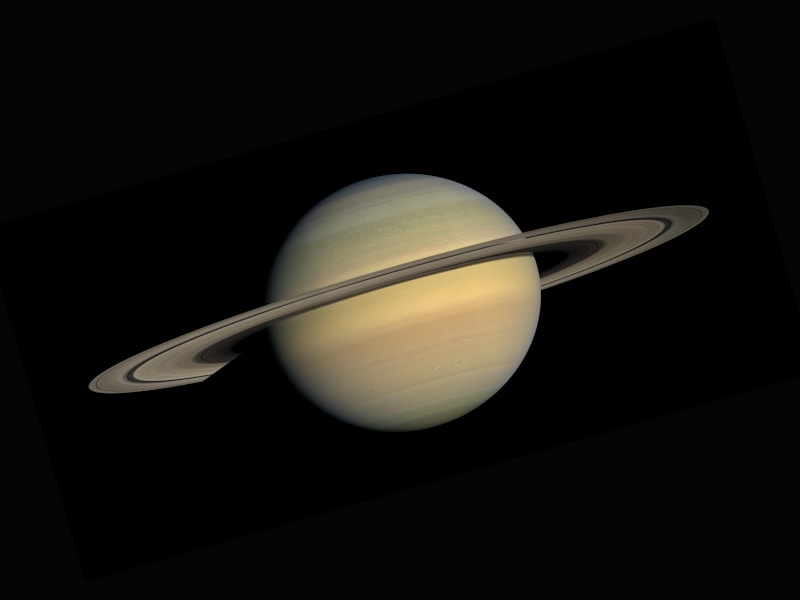
* Flyby of Saturn: Voyager 1 flew within 77,000 miles (124,000 kilometers) of Saturn's cloud tops on November 12, 1980.
* Entry into interstellar space: Voyager 1 crossed the heliopause, the boundary between the Solar System and interstellar space, on August 25, 2012.
* Most distant human-made object: Voyager 1 is currently the most distant human-made object in space, with a distance of over 14 billion miles (22.5 billion kilometers) from Earth.
Significance
Voyager 1's journey has provided scientists with a wealth of information about the outer Solar System and interstellar space. The spacecraft's data has helped to shed light on the formation and evolution of our Solar System, as well as the properties of the interstellar medium. Voyager 1's mission has also inspired new generations of scientists and engineers, demonstrating the power of human ingenuity and exploration.
INFOBOX:
- Name: Voyager 1
- Type: Spacecraft
- Date: September 5, 1977
- Location: Interstellar space
- Known For: Most distant human-made object in space
TAGS: Space Exploration, Voyager Program, Outer Solar System, Interstellar Space, Jupiter, Saturn, NASA, Spacecraft, Solar System.