Missions Encyclopedia Entry 1780231024: Voyager 1
SUMMARY: Voyager 1 is a historic space mission that has traveled farther than any human-made object, providing unparalleled insights into the outer Solar System and beyond.
Overview
Launched on September 5, 1977, Voyager 1 is a space probe designed to study the outer Solar System and beyond. The mission was a collaborative effort between NASA's Jet Propulsion Laboratory (JPL) and the Ames Research Center, with the primary goal of exploring the outer reaches of the Solar System and searching for signs of life in the cosmos. Voyager 1 is the second of five spacecraft in the Voyager program, following Voyager 2, which was launched on August 20, 1977.
Voyager 1 is a remarkable spacecraft, weighing approximately 825 kilograms (1,820 pounds) and measuring 3.7 meters (12.1 feet) in length. The spacecraft is equipped with a range of scientific instruments, including a magnetometer, a plasma analyzer, and a cosmic ray detector, which have enabled scientists to study the outer Solar System's magnetic field, plasma environment, and cosmic radiation.
History/Background
The Voyager program was conceived in the early 1970s, with the primary goal of studying the outer Solar System and beyond. The mission was designed to take advantage of a rare alignment of the outer planets, which would allow the spacecraft to visit Jupiter, Saturn, Uranus, and Neptune in a single mission. Voyager 1 was launched on September 5, 1977, and quickly set a course for Jupiter, which it encountered on March 5, 1979. The spacecraft's flyby of Jupiter provided scientists with a wealth of new information about the planet's magnetic field, atmosphere, and moons.
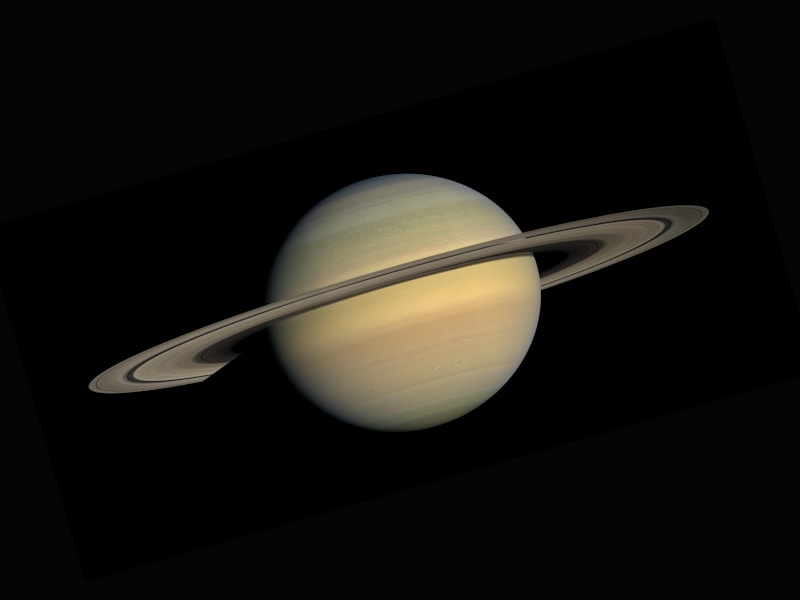
After its encounter with Jupiter, Voyager 1 continued on a trajectory that would take it beyond the outer reaches of the Solar System. On November 12, 1980, the spacecraft flew by Saturn, providing scientists with a wealth of new information about the planet's rings, moons, and magnetic field. Voyager 1's encounter with Saturn marked the end of its primary mission, but the spacecraft continued to operate and transmit data back to Earth.
Key Information
Voyager 1 has achieved a number of historic milestones, including:
* Farthest Human-Made Object: Voyager 1 is the farthest human-made object in space, with a distance of over 14 billion miles (22.5 billion kilometers) from Earth.
* Interstellar Space: On August 25, 2012, Voyager 1 crossed the heliopause, the boundary between the Solar System and interstellar space.
* Cosmic Ray Detection: Voyager 1 has detected a number of high-energy cosmic rays, which have provided scientists with new insights into the origins of these particles.
* Magnetic Field Measurements: Voyager 1 has made a number of significant measurements of the outer Solar System's magnetic field, which have helped scientists to better understand the dynamics of the Solar System.
Significance
Voyager 1's mission has had a profound impact on our understanding of the outer Solar System and beyond. The spacecraft's discoveries have provided scientists with a wealth of new information about the magnetic field, plasma environment, and cosmic radiation of the outer Solar System. Voyager 1's encounter with interstellar space has also marked a new era in space exploration, with the spacecraft serving as a pioneer for future missions to explore the cosmos.
INFOBOX:
- Name: Voyager 1
- Type: Space Probe
- Date: September 5, 1977
- Location: Interstellar Space
- Known For: Farthest Human-Made Object in Space
TAGS: Space Exploration, Voyager Program, Outer Solar System, Interstellar Space, Cosmic Rays, Magnetic Field, Plasma Environment, Space Probe.