
**
Overview
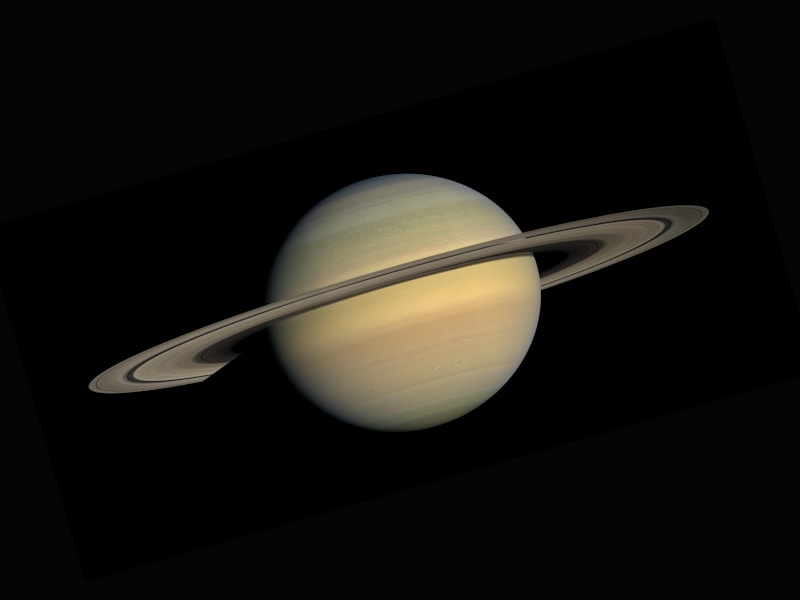
The Voyager 1 and Voyager 2 missions are two of the most ambitious and groundbreaking space exploration projects in history. Launched on September 5, 1977, and August 20, 1977, respectively, these twin spacecraft were designed to study the outer Solar System, including the gas giants Jupiter and Saturn, and the outer reaches of the heliosphere. The primary objective of the mission was to explore the outer planets, their moons, and the surrounding environment, with a secondary goal of entering the interstellar medium, the region of space outside our Solar System.
The Voyager spacecraft were built by NASA's Jet Propulsion Laboratory (JPL) and were equipped with a suite of instruments designed to study the magnetic fields, atmospheres, and surfaces of the planets they would encounter. The spacecraft were also equipped with a Golden Record, a gold-plated copper record containing sounds and images of Earth, intended as a message to any extraterrestrial life form that might encounter the spacecraft.
History/Background
The Voyager mission was conceived in the early 1970s, as a follow-up to the successful Pioneer 10 and Pioneer 11 missions, which had explored the outer Solar System in the early 1970s. The Voyager spacecraft were designed to take advantage of a rare alignment of the outer planets, which would allow the spacecraft to visit Jupiter, Saturn, and Uranus (although Voyager 2 did not visit Uranus) in a relatively short period of time. The spacecraft were launched in 1977, with Voyager 1 traveling in the direction of the constellation Ophiuchus and Voyager 2 traveling in the direction of the constellation Scorpius.
Key Information
Key Facts:
* Launch Date: Voyager 1: September 5, 1977; Voyager 2: August 20, 1977
* Spacecraft Design: Voyager 1 and 2 are identical spacecraft, each with a mass of approximately 825 kg (1,820 lb) and a power source consisting of three radioisotope thermoelectric generators (RTGs)
* Instruments: Voyager 1 and 2 are equipped with a suite of instruments, including magnetometers, plasma detectors, and cameras
* Jupiter Flyby: Voyager 1: March 5, 1979; Voyager 2: July 9, 1979
* Saturn Flyby: Voyager 1: November 12, 1980; Voyager 2: August 25, 1981
* Uranus Flyby: Voyager 2: January 24, 1986
* Interstellar Medium: Voyager 1 entered the interstellar medium on August 25, 2012, becoming the first human-made object to do so
* Distance: As of 2023, Voyager 1 is approximately 14.5 billion miles (23.3 billion kilometers) from Earth, while Voyager 2 is approximately 12.1 billion miles (19.5 billion kilometers) from Earth
Significance
The Voyager 1 and 2 missions have provided a wealth of information about the outer Solar System and the interstellar medium. The spacecraft have helped scientists to better understand the magnetic fields, atmospheres, and surfaces of the planets they have encountered, and have provided insights into the formation and evolution of our Solar System. The Voyager spacecraft have also served as a kind of "time capsule" for humanity, carrying a message to any extraterrestrial life form that might encounter them.
INFOBOX:
- Name: Voyager 1 and 2
- Type: Space probes
- Date: 1977
- Location: Outer Solar System and interstellar medium
- Known For: First human-made objects to enter the interstellar medium
TAGS: Space exploration, Voyager mission, outer Solar System, interstellar medium, heliosphere, gas giants, Jupiter, Saturn, Uranus, space probes, NASA, Jet Propulsion Laboratory, Golden Record.