
Missions Encyclopedia Entry 1780336985
Voyager 1
SUMMARY: Voyager 1 is a space probe launched by NASA in 1977, designed to study the outer Solar System and beyond, becoming the most distant human-made object in space.
Overview
Voyager 1 is a space exploration mission that has been operational for over 45 years, providing unparalleled insights into the outer reaches of our Solar System and the interstellar medium. Launched on September 5, 1977, from Cape Canaveral, Florida, Voyager 1 was designed to study the outer planets, particularly Jupiter and Saturn, and to explore the outer heliosphere. The mission was a collaborative effort between NASA's Jet Propulsion Laboratory (JPL) and the California Institute of Technology (Caltech).
Voyager 1 is a twin mission to Voyager 2, which was launched on August 20, 1977. Both spacecraft were equipped with a range of scientific instruments, including magnetometers, plasma detectors, and cameras, to study the magnetic fields, atmospheres, and surfaces of the planets they encountered. The spacecraft were also designed to carry a Golden Record, a gold-plated copper record containing sounds and images of Earth, intended to serve as a message to any extraterrestrial life form that might encounter the spacecraft.
History/Background
The Voyager 1 mission was conceived in the early 1970s, as a follow-up to the successful Pioneer 10 and 11 missions. The spacecraft was designed to take advantage of a rare alignment of the outer planets, allowing it to visit Jupiter and Saturn in a single mission. The Voyager 1 spacecraft was built by NASA's Jet Propulsion Laboratory, with a team led by Dr. Edward Stone, who would later become the director of the JPL. The spacecraft was launched on September 5, 1977, aboard a Titan IIIE-Centaur rocket, and entered into a heliocentric orbit.
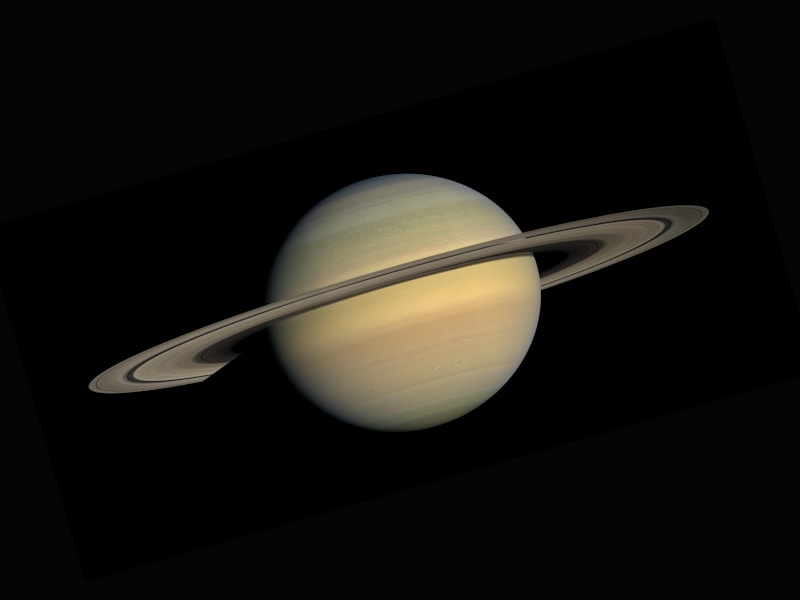
Voyager 1's primary mission was to study the outer planets, and it achieved this goal in spectacular fashion. On March 5, 1979, the spacecraft flew by Jupiter, sending back stunning images of the planet's Great Red Spot and its moons. On November 12, 1980, Voyager 1 flew by Saturn, providing the first close-up images of the planet's rings and its moons. The spacecraft continued to explore the outer heliosphere, entering the interstellar medium in August 2012.
Key Information
Voyager 1 has achieved numerous milestones throughout its mission. Some of the key facts and achievements include:
* Most Distant Human-Made Object: Voyager 1 is the most distant human-made object in space, with a distance of over 14 billion miles (22.5 billion kilometers) from Earth.
* Interstellar Medium: Voyager 1 entered the interstellar medium in August 2012, becoming the first spacecraft to do so.
* Golden Record: Voyager 1 carries a Golden Record, a gold-plated copper record containing sounds and images of Earth.
* Magnetic Field: Voyager 1 has provided valuable insights into the magnetic field of the outer heliosphere.
* Plasma Detectors: The spacecraft has used its plasma detectors to study the plasma environment of the outer heliosphere.
Significance
Voyager 1 has had a profound impact on our understanding of the outer Solar System and the interstellar medium. The mission has provided unparalleled insights into the magnetic fields, atmospheres, and surfaces of the planets it encountered. The spacecraft has also served as a messenger to the universe, carrying a Golden Record containing sounds and images of Earth.
The Voyager 1 mission has also raised important questions about the long-term survival of the spacecraft and its potential impact on extraterrestrial life. The spacecraft is expected to continue operating until around 2025, when its power source will be depleted. However, even if the spacecraft ceases to function, its Golden Record will remain as a message to the universe, a testament to humanity's ingenuity and curiosity.
INFOBOX:
- Name: Voyager 1
- Type: Space Probe
- Date: September 5, 1977
- Location: Outer heliosphere
- Known For: Most distant human-made object in space
TAGS: Space Exploration, Voyager 1, Outer Solar System, Interstellar Medium, Golden Record, NASA, Jet Propulsion Laboratory, California Institute of Technology.