
Missions Encyclopedia Entry 1780643169: Voyager 1
SUMMARY: Voyager 1 is a historic space mission that launched in 1977 to study the outer Solar System and beyond, becoming the most distant human-made object in space.
Overview
Voyager 1 is a space probe launched by NASA on September 5, 1977, as part of the Voyager program. The mission was designed to study the outer Solar System and beyond, with a focus on the Jupiter and Saturn systems. The spacecraft was built by NASA's Jet Propulsion Laboratory (JPL) and was intended to be a follow-up to the Pioneer 10 mission. Voyager 1 was equipped with a range of scientific instruments, including cameras, spectrometers, and magnetometers, to study the composition, magnetic fields, and atmospheres of the planets and their moons.
The Voyager 1 spacecraft is a remarkable achievement in engineering and design, with a mass of approximately 825 kilograms (1,820 pounds) and a size of about 3.7 meters (12 feet) in length and 1.5 meters (4.9 feet) in diameter. The spacecraft is powered by a radioisotope thermoelectric generator (RTG), which converts the heat generated by the decay of radioactive isotopes into electricity. This power source has allowed Voyager 1 to continue operating for over 40 years, making it one of the longest-lived space missions in history.
History/Background
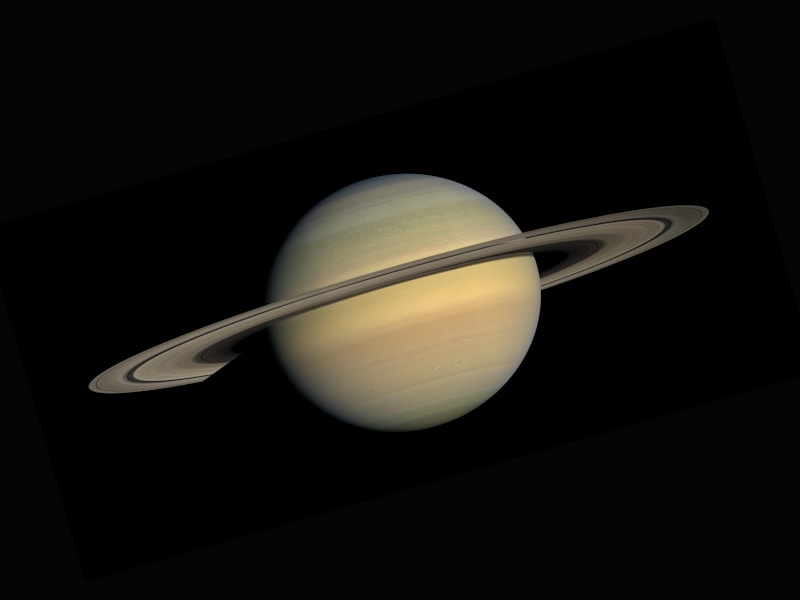
The Voyager 1 mission was conceived in the early 1970s, with the goal of exploring the outer Solar System and beyond. The spacecraft was launched on September 5, 1977, from Cape Canaveral Air Force Station in Florida, aboard a Titan IIIE rocket. After a successful launch, Voyager 1 began its journey to Jupiter, which it encountered on March 5, 1979. The spacecraft then continued on to Saturn, which it visited on November 12, 1980. Voyager 1's flyby of Saturn provided a wealth of new information about the planet's rings and moons, including the discovery of the moon Enceladus's geysers.
After its encounter with Saturn, Voyager 1 continued on a trajectory that would take it into interstellar space. On August 25, 2012, the spacecraft crossed the heliopause, the boundary between the heliosphere and interstellar space, becoming the most distant human-made object in space. Voyager 1 is now over 14 billion miles (22.5 billion kilometers) away from Earth, and is traveling at a speed of about 38,000 miles per hour (61,155 kilometers per hour).
Key Information
Voyager 1 has made numerous significant discoveries throughout its mission, including:
* Jupiter's magnetic field: Voyager 1 provided the first close-up measurements of Jupiter's magnetic field, which is one of the strongest in the Solar System.
* Saturn's rings: Voyager 1's flyby of Saturn revealed the intricate structure of the planet's rings, including the discovery of new ringlets and the observation of ring particles.
* Enceladus's geysers: Voyager 1's observation of Enceladus's geysers provided evidence of a possible subsurface ocean on the moon.
* Interstellar medium: Voyager 1 has provided the first direct measurements of the interstellar medium, the material that fills the space between stars.
Significance
Voyager 1's mission has had a profound impact on our understanding of the outer Solar System and beyond. The spacecraft's discoveries have greatly expanded our knowledge of the planets, moons, and magnetic fields of the Solar System. Voyager 1's journey into interstellar space has also provided a unique opportunity to study the properties of the interstellar medium and the boundary between the heliosphere and interstellar space.
INFOBOX:
- Name: Voyager 1
- Type: Space Probe
- Date: September 5, 1977
- Location: Interstellar space
- Known For: Most distant human-made object in space
TAGS: Voyager 1, Space Probe, NASA, Jupiter, Saturn, Enceladus, Interstellar Space, Heliopause, Space Exploration, Astronomy.