
Missions Encyclopedia Entry 1780765387: Voyager 1
SUMMARY: Voyager 1 is a historic spacecraft that has traveled farther than any human-made object, providing unparalleled insights into the outer reaches of our solar system and beyond.
Overview
Launched on September 5, 1977, Voyager 1 is a space probe designed to study the outer Solar System and beyond. The mission was a collaborative effort between NASA's Jet Propulsion Laboratory (JPL) and the United States' National Aeronautics and Space Administration (NASA). Voyager 1 was part of a twin mission, with its sister spacecraft, Voyager 2, launched just a few weeks earlier. The primary objective of the mission was to explore the outer planets, their moons, and the heliosphere, the region of space influenced by the Sun.
Voyager 1's journey began on a trajectory that would take it beyond the Kuiper Belt, a region of icy bodies and other small celestial objects beyond Neptune. The spacecraft was equipped with a range of instruments, including a plasma science instrument, a magnetic field instrument, and a cosmic ray system, designed to study the solar wind, magnetic fields, and cosmic rays in the outer Solar System. Voyager 1's Golden Record, a gold-plated copper record containing sounds and images of Earth, was also included as a message to any potential extraterrestrial life forms.
History/Background
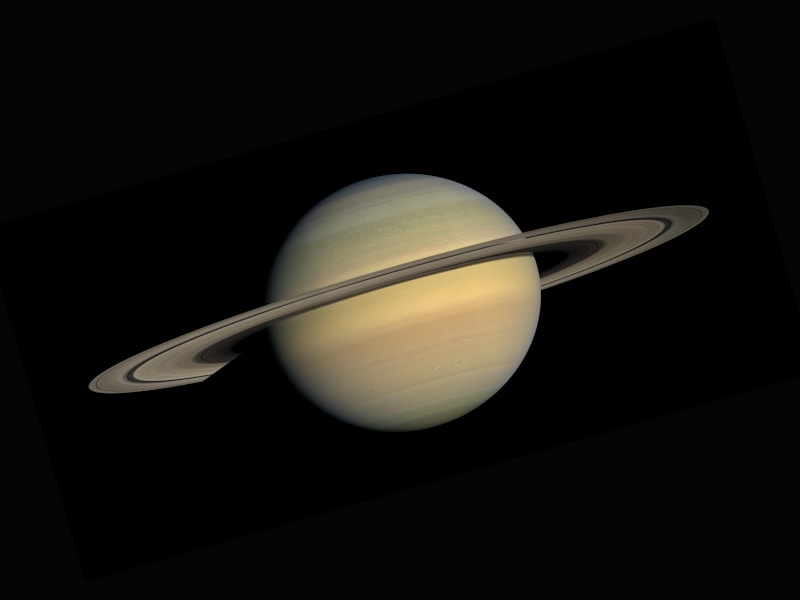
The Voyager 1 mission was conceived in the early 1970s, with the goal of exploring the outer Solar System and beyond. The mission was designed to take advantage of a rare alignment of the outer planets, which would allow the spacecraft to visit Jupiter, Saturn, Uranus, and Neptune in a relatively short period. Voyager 1 was launched on September 5, 1977, from Cape Canaveral Air Force Station in Florida, aboard a Titan IIIE rocket. The spacecraft's journey was marked by several significant milestones, including its encounter with Jupiter in March 1979 and Saturn in November 1980.
Key Information
Voyager 1's most significant achievement is its status as the most distant human-made object in space. On August 25, 2012, the spacecraft crossed the heliopause, the boundary between the heliosphere and interstellar space. Voyager 1 is now traveling through the interstellar medium, the region of space outside the heliosphere. The spacecraft's instruments have provided a wealth of data on the outer Solar System and beyond, including the solar wind, magnetic fields, and cosmic rays.
Some of the key facts about Voyager 1 include:
* Launch Date: September 5, 1977
* Launch Vehicle: Titan IIIE rocket
* Primary Objective: Explore the outer Solar System and beyond
* Distance Traveled: Over 14 billion miles (22.5 billion kilometers)
* Speed: Approximately 38,000 miles per hour (61,155 kilometers per hour)
* Power Source: Radioisotope Thermoelectric Generators (RTGs)
* Golden Record: A gold-plated copper record containing sounds and images of Earth
Significance
Voyager 1's mission has greatly expanded our understanding of the outer Solar System and beyond. The spacecraft's instruments have provided a wealth of data on the solar wind, magnetic fields, and cosmic rays, which has helped scientists to better understand the behavior of the Sun and the outer planets. Voyager 1's journey has also raised important questions about the interstellar medium and the potential for life beyond our solar system.
INFOBOX:
- Name: Voyager 1
- Type: Space Probe
- Date: September 5, 1977
- Location: Interstellar space
- Known For: Most distant human-made object in space
TAGS: Space Probe, Voyager Mission, Outer Solar System, Interstellar Space, Solar Wind, Magnetic Fields, Cosmic Rays, Golden Record, Extraterrestrial Life