
Missions Encyclopedia Entry 1781471344: Voyager 1
SUMMARY: Voyager 1 is a historic space mission that has traveled farther than any human-made object, providing groundbreaking insights into the outer Solar System and interstellar space.
Overview
Launched on September 5, 1977, Voyager 1 is a twin spacecraft mission designed to study the outer Solar System and beyond. The mission was conceived by NASA's Jet Propulsion Laboratory (JPL) as a follow-up to the successful Pioneer 10 and 11 missions. Voyager 1 was built to take advantage of a rare alignment of the outer planets, allowing it to visit Jupiter, Saturn, and their moons. However, its primary objective was to explore the outer reaches of the Solar System and venture into interstellar space.
Voyager 1 is a remarkable example of human ingenuity and technological advancement. The spacecraft is equipped with a range of instruments designed to study the outer Solar System's magnetic fields, charged particles, and cosmic rays. Its Golden Record, a gold-plated copper record containing sounds and images of Earth, serves as a message to any extraterrestrial life form that might encounter the spacecraft. Voyager 1's design has enabled it to withstand the harsh conditions of space, including extreme temperatures, radiation, and the vacuum of space.
History/Background
The Voyager 1 mission was conceived in the early 1970s, with a launch date set for 1976. However, due to technical issues and the need for additional funding, the launch was delayed until 1977. The spacecraft was built by a team of engineers and scientists at JPL, led by Project Manager John Casani. Voyager 1 was launched on September 5, 1977, from Cape Canaveral Air Force Station in Florida, aboard a Titan IIIE rocket. The spacecraft's twin, Voyager 2, was launched on August 20, 1977.
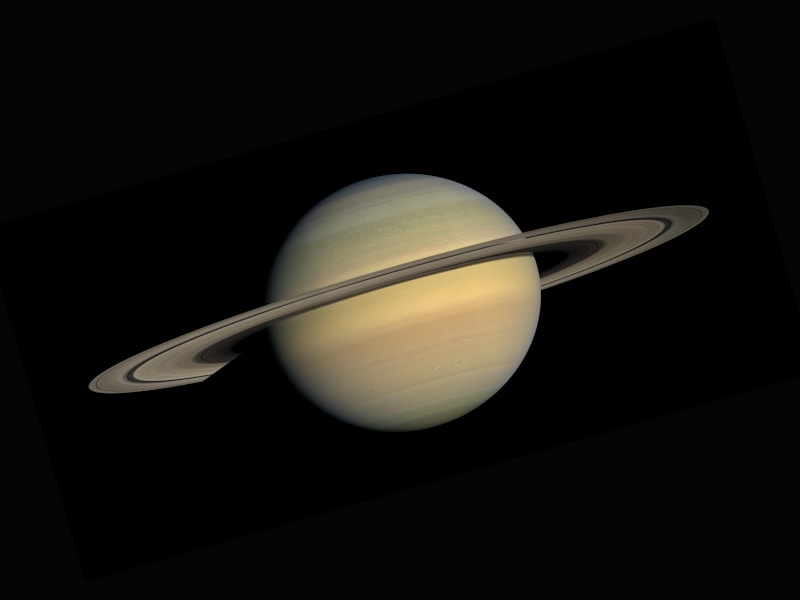
Voyager 1's primary mission was to study the outer Solar System, with a focus on the Jupiter and Saturn systems. The spacecraft flew by Jupiter on March 5, 1979, and Saturn on November 12, 1980. During these encounters, Voyager 1's instruments gathered a wealth of data on the planets' magnetic fields, atmospheres, and moons. The spacecraft's trajectory was carefully planned to take advantage of the gravitational pull of the outer planets, allowing it to continue its journey into interstellar space.
Key Information
Voyager 1 has achieved numerous milestones during its journey. On August 25, 2012, the spacecraft crossed the heliopause, the boundary between the Solar System and interstellar space. This marked a historic moment in space exploration, as Voyager 1 became the first human-made object to enter interstellar space. The spacecraft is now traveling at a speed of approximately 38,000 miles per hour (61,155 kilometers per hour), making it the fastest-moving object in space.
Voyager 1's instruments have continued to gather data on the interstellar medium, the region of space outside the Solar System. The spacecraft's Cosmic Ray System has detected high-energy particles from distant stars and supernovae, providing insights into the origins of these particles. Voyager 1's magnetic field instrument has also detected unusual magnetic field structures in the interstellar medium, which may be indicative of the presence of a nearby star or other celestial object.
Significance
Voyager 1's mission has had a profound impact on our understanding of the outer Solar System and interstellar space. The spacecraft's data has helped scientists to better understand the formation and evolution of our Solar System, as well as the properties of the interstellar medium. Voyager 1's journey has also raised important questions about the possibility of extraterrestrial life and the potential for human exploration of the outer Solar System.
Voyager 1's legacy extends beyond its scientific contributions. The spacecraft's Golden Record serves as a message to any extraterrestrial life form that might encounter the spacecraft, providing a glimpse into human culture and civilization. Voyager 1's mission has also inspired generations of scientists, engineers, and explorers, demonstrating the power of human ingenuity and the importance of space exploration.
INFOBOX:
- Name: Voyager 1
- Type: Spacecraft
- Date: September 5, 1977
- Location: Interstellar space
- Known For: First human-made object to enter interstellar space
TAGS: Voyager 1, Space Exploration, Interstellar Space, Outer Solar System, Golden Record, Cosmic Rays, Magnetic Fields, Spacecraft, NASA, JPL, Jet Propulsion Laboratory.