
Missions Encyclopedia Entry 1781867345: Voyager 1
SUMMARY: Voyager 1 is a historic space mission that has traveled farther than any human-made object, providing unprecedented insights into the outer Solar System and interstellar space.
Overview
Launched on September 5, 1977, Voyager 1 is a space probe designed to study the outer Solar System and beyond. The mission was conceived by NASA's Jet Propulsion Laboratory (JPL) in Pasadena, California, with the primary goal of exploring Jupiter and Saturn. However, the spacecraft's trajectory has taken it far beyond its original objectives, making it one of the most successful and enduring space missions in history.
Voyager 1 is a twin spacecraft, accompanied by Voyager 2, which was launched on August 20, 1977. Both spacecraft were designed to be identical, with a mass of approximately 825 kilograms (1,825 pounds) and a diameter of about 1.5 meters (4.9 feet). The spacecraft's power source is a radioisotope thermoelectric generator (RTG), which converts the heat generated by the decay of radioactive isotopes into electricity.
History/Background
The Voyager 1 mission was born out of the success of the Pioneer 10 and 11 missions, which had explored the outer Solar System in the early 1970s. NASA's JPL, led by Dr. Carl Sagan, proposed a new mission that would take advantage of the favorable alignment of the outer planets in the late 1970s. The mission was approved in 1975, and the spacecraft was built and launched in 1977.
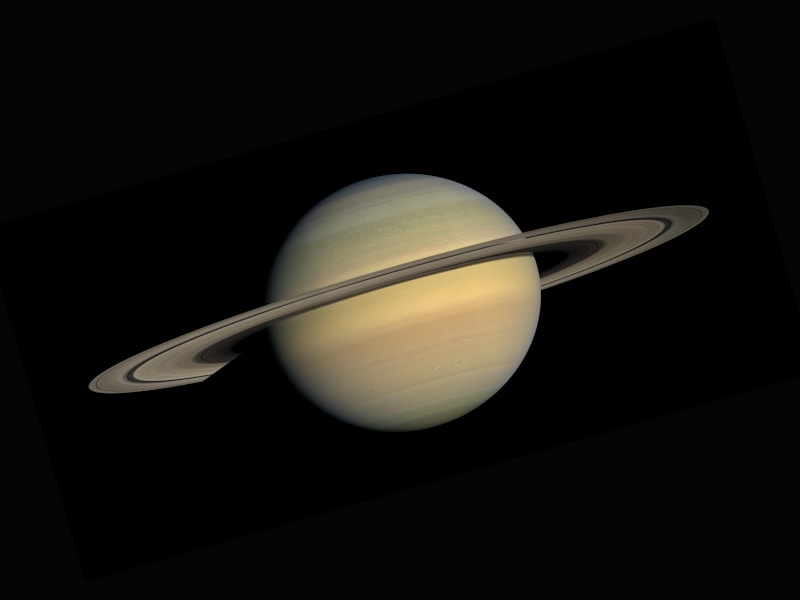
Voyager 1's journey began on September 5, 1977, when it was launched from Cape Canaveral Air Force Station in Florida. The spacecraft followed a complex trajectory that took it past Jupiter and Saturn, using the gravity of these planets to accelerate its speed and alter its course. Voyager 1's flyby of Jupiter occurred on March 5, 1979, and its flyby of Saturn occurred on November 12, 1980.
Key Information
Voyager 1 has achieved numerous milestones and set several records throughout its journey. Some of the key facts and achievements include:
- Farthest Human-Made Object: Voyager 1 is the farthest human-made object from Earth, with a distance of over 14 billion miles (22.5 billion kilometers) as of 2023.
- Interstellar Space: Voyager 1 entered interstellar space on August 25, 2012, becoming the first spacecraft to do so.
- Cosmic Ray Detector: Voyager 1 carries a cosmic ray detector that has provided valuable insights into the high-energy particles that permeate the Solar System.
- Golden Record: Voyager 1 carries a Golden Record, a gold-plated copper record that contains sounds and images of Earth, intended as a message to any extraterrestrial life form that might encounter the spacecraft.
- Power Source: Voyager 1's RTG power source has provided the spacecraft with a reliable source of energy for over 45 years, making it one of the longest-operating spacecraft in history.
Significance
Voyager 1's significance extends far beyond its scientific achievements. The mission has provided a unique perspective on the outer Solar System and the interstellar medium, expanding our understanding of the universe and its many mysteries. The spacecraft's journey has also inspired generations of scientists, engineers, and explorers, demonstrating the power of human ingenuity and the importance of space exploration.
INFOBOX:
- Name: Voyager 1
- Type: Space Probe
- Date: September 5, 1977
- Location: Interstellar Space
- Known For: Farthest Human-Made Object, Interstellar Space Explorer
TAGS: Space Exploration, Voyager 1, Interstellar Space, Cosmic Ray Detector, Golden Record, RTG Power Source, Outer Solar System, Space Probe.