
**
Overview
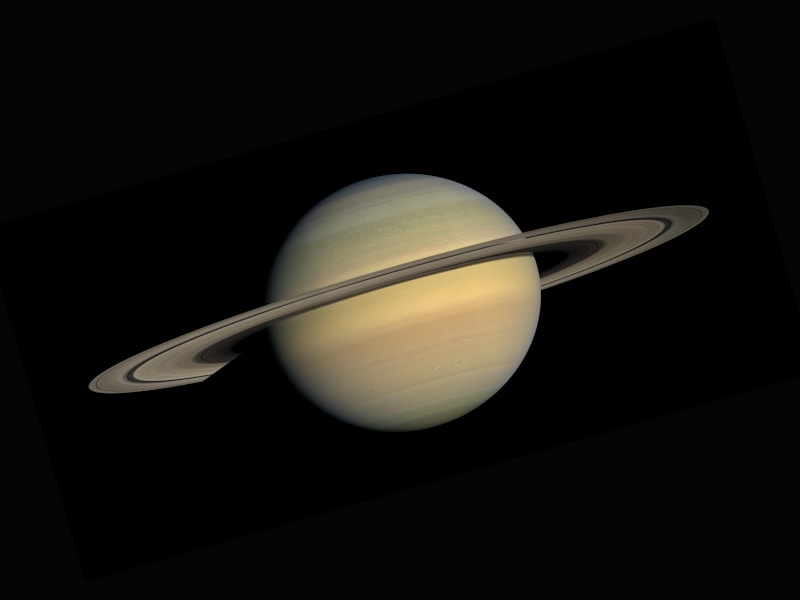
The Voyager 1 and Voyager 2 missions are a pair of twin spacecraft designed to explore the outer reaches of the Solar System and beyond. Launched on September 5, 1977, and August 20, 1977, respectively, the Voyager probes were created to study the outer planets, their magnetic fields, and the interstellar medium. The primary objectives of the mission were to explore the outer Solar System, study the outer planets, and collect data on the heliosphere, the region of space influenced by the Sun.
The Voyager spacecraft were designed to be robust and long-lasting, with a focus on gathering data on the outer planets and their moons. Each spacecraft is equipped with a Golden Record, a gold-plated copper record containing sounds and images of Earth, intended to serve as a message to any extraterrestrial life form that might encounter the spacecraft.
History/Background
The Voyager 1 and Voyager 2 missions were the result of a long-term effort by NASA to explore the outer Solar System. The idea of sending a spacecraft to explore the outer planets dates back to the 1960s, but it wasn't until the 1970s that the project gained momentum. The Voyager spacecraft were designed by a team of scientists and engineers at NASA's Jet Propulsion Laboratory (JPL) in Pasadena, California.
The Voyager 1 spacecraft was launched on September 5, 1977, from Cape Canaveral, Florida, aboard a Titan IIIE rocket. Voyager 2 was launched on August 20, 1977, from the same launch site. Both spacecraft followed a trajectory that took them past Jupiter and Saturn, with Voyager 1 continuing on a path towards the edge of the Solar System.
Key Information
Voyager 1:
* Launch Date: September 5, 1977
* Launch Site: Cape Canaveral, Florida
* Spacecraft Mass: 825 kg (1,820 lbs)
* Power Source: Radioisotope Thermoelectric Generators (RTGs)
* Distance from Earth: Over 14 billion miles (22.5 billion kilometers)
* Speed: Approximately 38,000 miles per hour (61,155 kilometers per hour)
Voyager 2:
* Launch Date: August 20, 1977
* Launch Site: Cape Canaveral, Florida
* Spacecraft Mass: 722 kg (1,590 lbs)
* Power Source: Radioisotope Thermoelectric Generators (RTGs)
* Distance from Earth: Over 12 billion miles (19.3 billion kilometers)
* Speed: Approximately 35,000 miles per hour (56,325 kilometers per hour)
Significance
The Voyager 1 and Voyager 2 missions have greatly expanded our understanding of the outer Solar System and the interstellar medium. The spacecraft have provided a wealth of data on the outer planets, their magnetic fields, and the heliosphere. The Voyager probes have also helped scientists to better understand the structure and composition of the outer Solar System.
The Voyager 1 spacecraft has become the most distant human-made object in space, entering interstellar space in August 2012. The spacecraft continues to transmit data back to Earth, providing scientists with valuable insights into the outer reaches of the Solar System.
INFOBOX:
- Name: Voyager 1 and Voyager 2
- Type: Space Probes
- Date: 1977
- Location: Outer Solar System and beyond
- Known For: Exploring the outer Solar System and entering interstellar space
TAGS: Voyager, Space Probes, Outer Solar System, Interstellar Space, NASA, Space Exploration, Astronomy, Planetary Science, Spacecraft Design.