
Overview
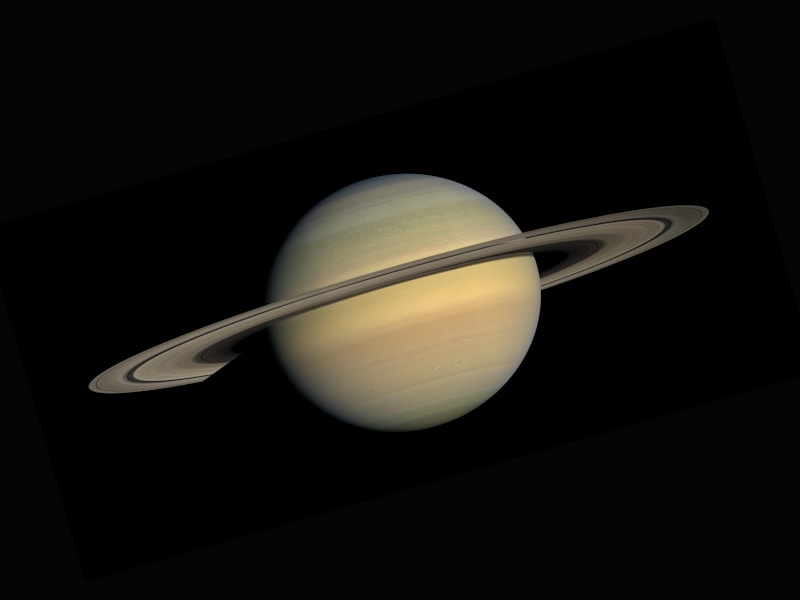
Launched on September 5, 1977, Voyager 1 is a space probe designed to study the outer Solar System and beyond. The mission was conceived by NASA's Jet Propulsion Laboratory (JPL) as a follow-up to the Pioneer 10 and 11 missions. Voyager 1 is one of the most ambitious space missions ever undertaken, with a primary objective of exploring the outer reaches of the Solar System and entering interstellar space. The spacecraft is equipped with a range of instruments, including cameras, spectrometers, and magnetometers, which have enabled scientists to gather unprecedented data on the outer Solar System.Voyager 1 is a twin spacecraft, with its sister mission, Voyager 2, launched on August 20, 1977. While both spacecraft were designed to explore the outer Solar System, Voyager 1 was specifically tasked with studying the outer reaches of the heliosphere, the region of space influenced by the Sun. The spacecraft's trajectory was carefully planned to ensure that it would encounter several key targets, including Jupiter, Saturn, and the heliopause, the boundary between the heliosphere and interstellar space.
History/Background
The Voyager 1 mission was conceived in the early 1970s, when NASA's JPL was tasked with developing a new generation of space probes capable of exploring the outer Solar System. The mission was initially designed to study the outer planets, with a focus on Jupiter and Saturn. However, as the mission progressed, scientists realized that the spacecraft had the potential to travel much farther than initially planned. The Voyager 1 spacecraft was built by NASA's JPL, with a team of engineers and scientists led by Dr. Carl Sagan. The spacecraft was launched on September 5, 1977, from Cape Canaveral Air Force Station in Florida.Key Information
Voyager 1 has traveled an astonishing 14.5 billion miles (23.3 billion kilometers) from Earth, making it the most distant human-made object in space. The spacecraft has entered interstellar space, becoming the first object to do so. Voyager 1 has encountered several key targets, including Jupiter, Saturn, and the heliopause. The spacecraft has also detected the presence of a heliospheric bow shock, a region of space where the solar wind is compressed and accelerated. Voyager 1 has also provided scientists with unprecedented insights into the outer Solar System, including the composition and structure of the outer planets' atmospheres.Some of the key achievements of the Voyager 1 mission include:
* First spacecraft to enter interstellar space: Voyager 1 became the first object to enter interstellar space on August 25, 2012.
* Most distant human-made object: Voyager 1 has traveled farther than any other human-made object, with a distance of over 14.5 billion miles (23.3 billion kilometers) from Earth.
* Longest-running space mission: Voyager 1 has been operational for over 45 years, making it the longest-running space mission in history.
* Pioneering use of the Grand Tour: Voyager 1's trajectory was designed to take advantage of a rare alignment of the outer planets, allowing the spacecraft to visit multiple planets in a single mission.