Missions Encyclopedia Entry 1782120728
Summary: The Voyager 1 mission is a historic space exploration project that has been traveling through interstellar space since 2012, providing groundbreaking insights into the outer reaches of our solar system and beyond.
Overview
Launched on September 5, 1977, Voyager 1 is a twin spacecraft designed to study the outer Solar System and beyond. The mission was conceived by NASA's Jet Propulsion Laboratory (JPL) in Pasadena, California, with the primary goal of exploring the Jupiter and Saturn systems. However, the spacecraft's trajectory has taken it far beyond its original objectives, making it one of the most successful and enduring space missions in history.
Voyager 1 is a remarkable example of human ingenuity and technological advancement. Weighing approximately 825 kilograms (1,820 pounds), the spacecraft is powered by a radioisotope thermoelectric generator (RTG), which converts the heat generated by the decay of plutonium-238 into electricity. This innovative power source has allowed the spacecraft to operate continuously for over 45 years, sending back a wealth of data and images to Earth.
History/Background
The Voyager mission was born out of the success of the Pioneer and Mariner spacecraft, which had previously explored the outer Solar System. In the early 1970s, NASA began planning a new mission to study the Jupiter and Saturn systems in greater detail. The Voyager spacecraft were designed to take advantage of a rare alignment of the outer planets, which would allow them to visit Jupiter and Saturn in a relatively short period of time.
The Voyager 1 spacecraft was launched on September 5, 1977, from Cape Canaveral Air Force Station in Florida. It was followed by its twin, Voyager 2, which was launched on August 20, 1977. Both spacecraft were equipped with a range of scientific instruments, including cameras, spectrometers, and magnetometers, which were designed to study the composition, magnetic fields, and atmospheres of the planets they encountered.
Key Information
Voyager 1 has achieved numerous milestones throughout its mission, including:
* First spacecraft to visit Jupiter: On March 5, 1979, Voyager 1 flew within 3,000 kilometers (1,900 miles) of Jupiter's cloud tops, sending back stunning images and data on the planet's magnetic field and atmosphere.
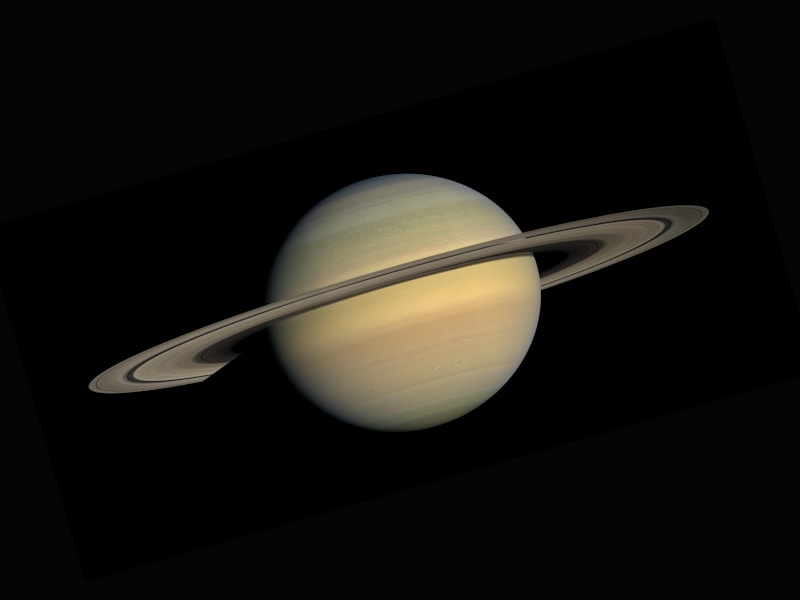
* First spacecraft to visit Saturn: On November 12, 1980, Voyager 1 flew within 124,000 kilometers (77,000 miles) of Saturn's cloud tops, providing valuable insights into the planet's rings and magnetic field.
* Farthest human-made object: On August 25, 2012, Voyager 1 crossed the heliopause, the boundary between the heliosphere (the region of space influenced by the Sun) and interstellar space, becoming the farthest human-made object in space.
* Interstellar space exploration: Voyager 1 is now traveling through the interstellar medium, a region of space filled with gas and dust, and is providing scientists with valuable insights into the composition and properties of this region.
Significance
The Voyager 1 mission has had a profound impact on our understanding of the outer Solar System and beyond. The data and images returned by the spacecraft have revolutionized our knowledge of the planets, their magnetic fields, and their atmospheres. The mission has also raised important questions about the origins of the Solar System and the possibility of life beyond Earth.
As Voyager 1 continues its journey into interstellar space, it serves as a reminder of human ingenuity and the power of space exploration. The mission has inspired generations of scientists, engineers, and explorers, and its legacy will continue to shape our understanding of the universe for centuries to come.
INFOBOX:
- Name: Voyager 1
- Type: Spacecraft
- Date: September 5, 1977
- Location: Interstellar space
- Known For: First spacecraft to visit Jupiter and Saturn, farthest human-made object in space
TAGS: Voyager, Space Exploration, Interstellar Space, Jupiter, Saturn, Solar System, NASA, JPL, Spacecraft, Astronomy