
**
Overview
Launched on September 5, 1977, Voyager 1 is a space probe designed to study the outer Solar System and beyond. The mission was conceived by NASA's Jet Propulsion Laboratory (JPL) as part of the Voyager Program, a series of twin spacecraft designed to explore the outer planets and their moons. The primary objectives of the mission were to study the outer planets, their magnetic fields, and the interplanetary medium, as well as to search for signs of life in the outer Solar System.
The Voyager 1 spacecraft was built by NASA's Jet Propulsion Laboratory (JPL) and was launched from Cape Canaveral Air Force Station in Florida. The spacecraft was designed to be a flyby mission, meaning it would pass close to the outer planets and gather data before continuing on its journey into interstellar space. The spacecraft is powered by a radioisotope thermoelectric generator (RTG), which converts the heat generated by the decay of radioactive isotopes into electricity.
History/Background
The Voyager 1 mission was conceived in the early 1970s as a response to the success of the Pioneer 10 and Pioneer 11 missions, which had explored the outer planets and provided valuable insights into the outer Solar System. The Voyager Program was designed to be a more ambitious and comprehensive mission, with a focus on studying the outer planets and their moons in greater detail. The mission was also designed to be a "grand tour" of the outer Solar System, with the spacecraft passing close to Jupiter, Saturn, Uranus, and Neptune.
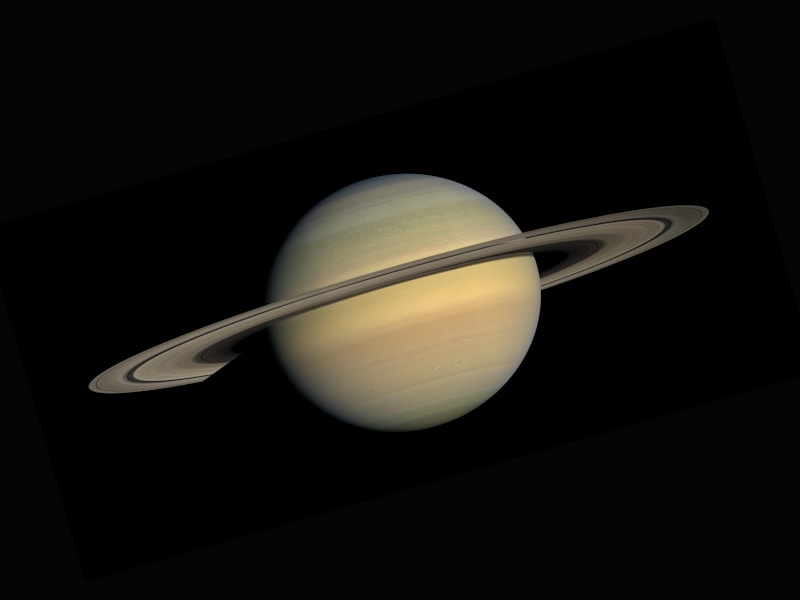
The Voyager 1 spacecraft was launched on September 5, 1977, and began its journey to Jupiter. The spacecraft flew by Jupiter on March 5, 1979, and provided a wealth of data on the planet's magnetic field, atmosphere, and moons. The spacecraft then continued on its journey to Saturn, which it flew by on November 12, 1980. The spacecraft also flew by Uranus on January 24, 1986, and Neptune on August 25, 1989.
Key Information
The Voyager 1 spacecraft has traveled a distance of over 14 billion miles (22.5 billion kilometers) from Earth, making it the most distant human-made object in space. The spacecraft has entered the interstellar medium, the region of space outside of our Solar System, and is now traveling through the Local Interstellar Cloud, a region of space that is thought to be the boundary between our Solar System and the surrounding interstellar medium.
The Voyager 1 spacecraft has provided a wealth of data on the outer Solar System and beyond, including information on the magnetic fields, atmospheres, and moons of the outer planets. The spacecraft has also detected the presence of cosmic rays, high-energy particles that are thought to originate from outside of our Solar System.
Significance
The Voyager 1 mission has provided a wealth of insights into the outer Solar System and beyond, and has paved the way for future space exploration missions. The mission has also raised important questions about the nature of the universe and the possibility of life beyond our Solar System.
The Voyager 1 spacecraft is expected to continue traveling through interstellar space for millions of years, providing a unique window into the outer reaches of our Solar System and beyond. The spacecraft has also been equipped with a Golden Record, a gold-plated copper record that contains sounds and images of Earth, as well as a message from humanity to any potential extraterrestrial life forms that may encounter the spacecraft.
INFOBOX:
- Name: Voyager 1
- Type: Space Probe
- Date: September 5, 1977
- Location: Interstellar Space
- Known For: Most Distant Human-Made Object in Space
TAGS: Space Exploration, Voyager Program, Outer Solar System, Interstellar Space, Cosmic Rays, Golden Record, Space Probe, NASA, Jet Propulsion Laboratory.