**
Overview
Launched on September 5, 1977, Voyager 1 is a space probe designed to study the outer Solar System and beyond. The mission was conceived by NASA's Jet Propulsion Laboratory (JPL) and was part of a twin-probe project, with Voyager 2 launched on August 20, 1977. The primary objective of the mission was to explore the outer planets, particularly Jupiter and Saturn, and to gather data on the heliosphere, the region of space influenced by the Sun.
Voyager 1 is a remarkable spacecraft, weighing approximately 825 kilograms (1,820 pounds) and measuring 3.7 meters (12.1 feet) in length. It is powered by a radioisotope thermoelectric generator (RTG), which converts the heat generated by radioactive decay into electricity. The spacecraft is equipped with a range of scientific instruments, including a magnetometer, a plasma spectrometer, and a cosmic ray detector.
History/Background
The Voyager 1 mission was the culmination of a series of space exploration projects that aimed to study the outer Solar System. The idea of sending a spacecraft to explore the outer planets dates back to the 1960s, when NASA's Mariner 2 spacecraft flew by Venus in 1962. The success of the Mariner 2 mission paved the way for more ambitious projects, including the Voyager mission.
The Voyager 1 spacecraft was designed to take advantage of a rare alignment of the outer planets, which occurred in the late 1970s. The mission was planned to fly by Jupiter in March 1979 and Saturn in November 1980. However, the spacecraft's trajectory was altered by the gravitational influence of Jupiter, causing it to pass closer to the planet than planned.
Key Information
Voyager 1 has achieved several historic milestones, including:
* First spacecraft to visit Jupiter: Voyager 1 flew by Jupiter on March 5, 1979, providing the first close-up images of the planet's magnetic field and atmosphere.
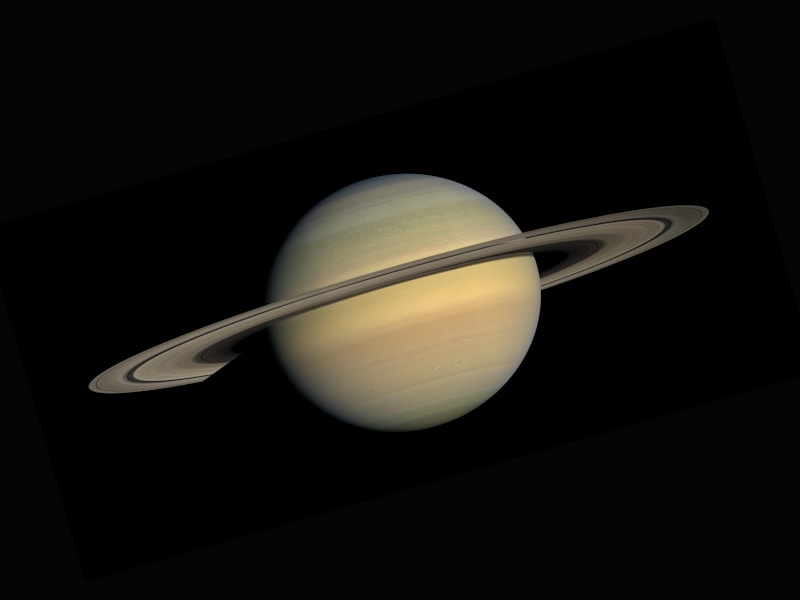
* First spacecraft to visit Saturn: Voyager 1 flew by Saturn on November 12, 1980, revealing the planet's rings and moons in unprecedented detail.
* Farthest human-made object: Voyager 1 has traveled over 14 billion miles (22.5 billion kilometers) from Earth, making it the farthest human-made object in space.
* Interstellar space: Voyager 1 entered interstellar space on August 25, 2012, becoming the first spacecraft to travel beyond the heliosphere.
Significance
The Voyager 1 mission has greatly expanded our understanding of the outer Solar System and the interstellar medium. The spacecraft's data has provided insights into the structure and evolution of the heliosphere, as well as the properties of the interstellar medium. The mission has also raised important questions about the possibility of life beyond our solar system.
Voyager 1 has also become a cultural icon, symbolizing humanity's quest for exploration and discovery. The spacecraft's Golden Record, a gold-plated copper record containing sounds and images of Earth, serves as a message to any extraterrestrial life form that may encounter the spacecraft.
INFOBOX:
- Name: Voyager 1
- Type: Space probe
- Date: September 5, 1977
- Location: Interstellar space
- Known For: First spacecraft to visit Jupiter and Saturn, farthest human-made object in space
TAGS: Space exploration, Voyager mission, Jupiter, Saturn, Interstellar space, Heliosphere, Spacecraft, NASA, Jet Propulsion Laboratory, Golden Record.