
Objects Encyclopedia Entry 1777364945: The Crab Nebula
SUMMARY: The Crab Nebula is a stunning astronomical object, the remnant of a massive star explosion that occurred in the constellation Taurus, providing valuable insights into the physics of supernovae and the behavior of pulsars.
Overview
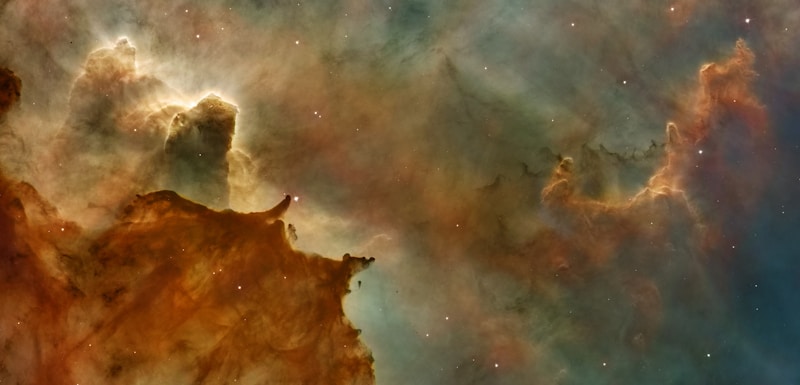
Located approximately 6,500 light-years from Earth in the constellation Taurus, the Crab Nebula (M1) is one of the most iconic and studied astronomical objects in the night sky. This breathtaking nebula is the result of a supernova explosion that occurred in the year 1054 AD, which was visible to the naked eye for over two years. The Crab Nebula is a massive cloud of gas and dust, expanding at a rate of about 1,500 kilometers per second, and is home to a rapidly rotating, pulsing neutron star at its center.
The Crab Nebula is an extraordinary object that has captivated astronomers for centuries. Its unique properties make it a fascinating subject for study, offering insights into the physics of supernovae, the behavior of neutron stars, and the interaction between these objects and their surroundings. The Crab Nebula is also an essential tool for understanding the life cycle of massive stars and the impact of their explosive deaths on the surrounding interstellar medium.
History/Background
The Crab Nebula has a rich history that dates back to ancient times. The Chinese astronomer Yang Wei in 1054 AD recorded the appearance of a bright, new star in the constellation Taurus, which was visible for over two years. This event is believed to have been a supernova explosion, which would have released an enormous amount of energy into space, creating the Crab Nebula as we see it today. Over the centuries, the Crab Nebula has been studied by numerous astronomers, including William Herschel, who discovered the nebula in 1786 and identified it as a nebula associated with a star.
Key Information
The Crab Nebula is a remarkable object that has been extensively studied using a variety of astronomical techniques. Some of the key facts about the Crab Nebula include:
- Pulsar: The Crab Nebula is home to a rapidly rotating, pulsing neutron star at its center, which is known as the Crab Pulsar. This pulsar is one of the most well-studied neutron stars in the universe and is believed to be spinning at a rate of about 30 times per second.
- Expansion: The Crab Nebula is expanding at a rate of about 1,500 kilometers per second, which is one of the fastest rates of expansion observed in the universe.
- Size: The Crab Nebula is approximately 10 light-years in diameter, making it one of the largest known nebulae in the universe.
- Composition: The Crab Nebula is composed primarily of ionized hydrogen and helium, which are the result of the supernova explosion that created the nebula.
Significance
The Crab Nebula is a significant object in the field of astronomy, providing valuable insights into the physics of supernovae and the behavior of neutron stars. The study of the Crab Nebula has led to a greater understanding of the life cycle of massive stars and the impact of their explosive deaths on the surrounding interstellar medium. The Crab Nebula is also an essential tool for testing theories of supernovae and neutron star physics, and its study continues to be an active area of research in the field of astrophysics.
INFOBOX:
- Name: Crab Nebula (M1)
- Type: Supernova Remnant
- Date: 1054 AD
- Location: Constellation Taurus
- Known For: Hosting a rapidly rotating, pulsing neutron star at its center
TAGS: Supernovae, Neutron Stars, Pulsars, Astronomical Objects, Astrophysics, Cosmology, Nebulae, Stellar Evolution