
Objects Encyclopedia Entry 1778252705: The Crab Nebula
SUMMARY: The Crab Nebula is the remnant of a massive star explosion, a supernova, that was visible to the naked eye in 1054 AD, and is one of the most iconic and studied objects in the universe.
Overview
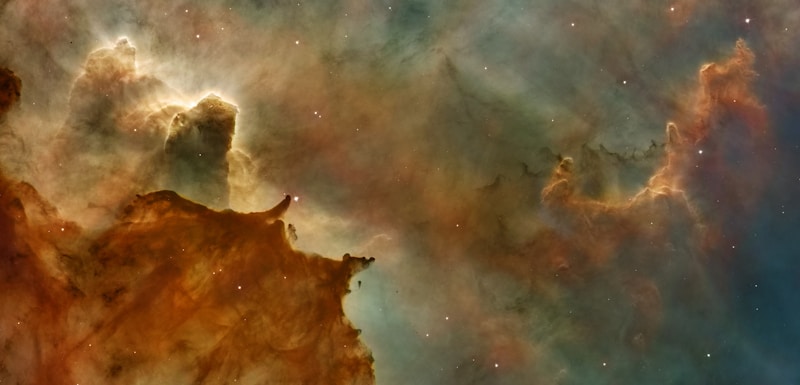
Located approximately 6,500 light-years away in the constellation Taurus, the Crab Nebula (M1) is a stunning example of the power and beauty of a supernova explosion. This massive star explosion was first observed by Chinese astronomers in 1054 AD and was visible to the naked eye for several months. The Crab Nebula is a result of this catastrophic event, which was so powerful that it was seen from Earth without the aid of telescopes. Today, the Crab Nebula is a popular target for astronomers and astrophysicists, offering insights into the physics of supernovae and the behavior of matter in extreme conditions.
The Crab Nebula is a relatively small object, measuring about 12 light-years across, but its significance lies in its ability to provide a unique window into the universe's most violent events. The nebula is composed of a central pulsar, a rapidly rotating neutron star, surrounded by a vast cloud of gas and dust. This gas and dust are the remnants of the original star, which was likely a massive blue supergiant. The pulsar at the center of the Crab Nebula is one of the most well-studied neutron stars in the universe, with a rotation period of just 33 milliseconds.
History/Background
The Crab Nebula has been studied extensively since its discovery in the 18th century. In 1840, the German astronomer Friedrich Bessel was the first to recognize the nebula as a remnant of a supernova. Since then, numerous observations have been made, including the discovery of the pulsar at its center in 1968. The Crab Nebula has been the subject of numerous studies, including observations of its magnetic field, its interaction with the surrounding interstellar medium, and its role in the universe's energy budget.
Key Information
- Type: Supernova remnant
- Date: Observed in 1054 AD
- Location: Constellation Taurus, approximately 6,500 light-years away
- Size: 12 light-years across
- Central Object: Pulsar with a rotation period of 33 milliseconds
- Composition: Central pulsar surrounded by a cloud of gas and dust
- Significance: Provides insights into the physics of supernovae and the behavior of matter in extreme conditions
Significance
The Crab Nebula is a significant object in the universe, offering insights into the physics of supernovae and the behavior of matter in extreme conditions. Its study has led to a greater understanding of the universe's energy budget, the behavior of magnetic fields, and the interaction between stars and their surroundings. The Crab Nebula is also a key target for astronomers studying the properties of neutron stars and the behavior of matter in extreme conditions.
INFOBOX:
- Name: Crab Nebula (M1)
- Type: Supernova remnant
- Date: Observed in 1054 AD
- Location: Constellation Taurus, approximately 6,500 light-years away
- Known For: Providing insights into the physics of supernovae and the behavior of matter in extreme conditions
TAGS: Supernova, Pulsar, Neutron Star, Crab Nebula, Taurus Constellation, Astrophysics, Astronomy, Space Exploration.