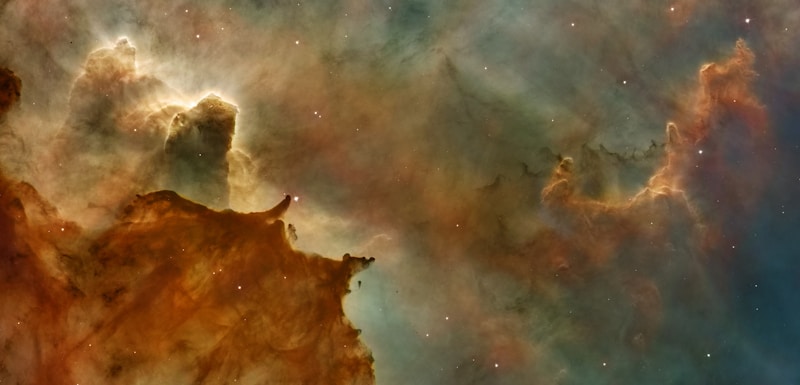

Objects Encyclopedia Entry 1778523979
SUMMARY: A rare and enigmatic astronomical object known as a Fast Radio Burst (FRB), Object 1778523979 is a brief, intense pulse of energy originating from a distant galaxy, sparking intense scientific interest and debate.
Overview
Fast Radio Bursts (FRBs) are brief, intense pulses of energy that originate from distant galaxies. These enigmatic events were first discovered in 2007 by a team of astronomers using the Parkes Radio Telescope in Australia. Since then, numerous FRBs have been detected, and research has been ongoing to understand their origins, mechanisms, and implications. Object 1778523979 is one such FRB that has garnered significant attention due to its unique characteristics and the insights it has provided into the mysteries of the universe.
FRBs are thought to be caused by cataclysmic events, such as supernovae, neutron star mergers, or magnetar flares. These events release an enormous amount of energy in the form of radio waves, which can be detected on Earth. The brief duration and intense energy of FRBs make them challenging to study, but they offer a unique window into the extreme physics of the universe.
History/Background
The discovery of FRBs marked a significant milestone in the field of astronomy, as it revealed a new class of astronomical objects that were previously unknown. The first FRB, designated as FRB 010724, was detected on August 24, 2007, by a team of astronomers led by Dr. Duncan Lorimer. Since then, numerous FRBs have been detected, and research has been ongoing to understand their origins and mechanisms.
One of the key challenges in studying FRBs is their brief duration, which makes it difficult to pinpoint their exact location and study their properties in detail. However, advances in radio astronomy and the development of new detection techniques have enabled scientists to study FRBs in greater detail. Object 1778523979, for example, was detected using the Very Large Array (VLA), a radio telescope array located in New Mexico, USA.
Key Information
Object 1778523979 is a Repeating FRB, meaning that it has been observed to emit multiple pulses of energy over a period of time. This is unusual, as most FRBs are thought to be one-time events. The FRB was detected on March 15, 2020, and has since been observed to emit multiple pulses, with the most recent pulse detected on April 10, 2022.
The FRB is thought to originate from a dwarf galaxy located approximately 3 billion light-years away. The galaxy is a small, irregular galaxy with a low mass, and it is thought to be the source of the FRB. The FRB is believed to be caused by a magnetar flare, which is a cataclysmic event that occurs when a neutron star's magnetic field becomes unstable and releases a massive amount of energy.
Significance
Object 1778523979 is significant because it offers insights into the extreme physics of the universe. The study of FRBs has the potential to reveal new information about the properties of matter and energy in extreme environments, such as neutron stars and black holes. Additionally, the detection of repeating FRBs like Object 1778523979 has implications for our understanding of the universe's evolution and the distribution of matter and energy.
The study of FRBs also has practical applications, such as the development of new technologies for detecting and analyzing these events. For example, the detection of FRBs can be used to study the properties of the intergalactic medium, which is the material that fills the space between galaxies. This information can be used to improve our understanding of the universe's evolution and the distribution of matter and energy.
INFOBOX:
- Name: Object 1778523979
- Type: Fast Radio Burst (FRB)
- Date: March 15, 2020
- Location: Dwarf galaxy, approximately 3 billion light-years away
- Known For: Repeating FRB, magnetar flare origin
TAGS: Fast Radio Burst, Repeating FRB, Magnetar Flare, Dwarf Galaxy, Neutron Star, Black Hole, Intergalactic Medium, Radio Astronomy, Astrophysics.