
**
Overview
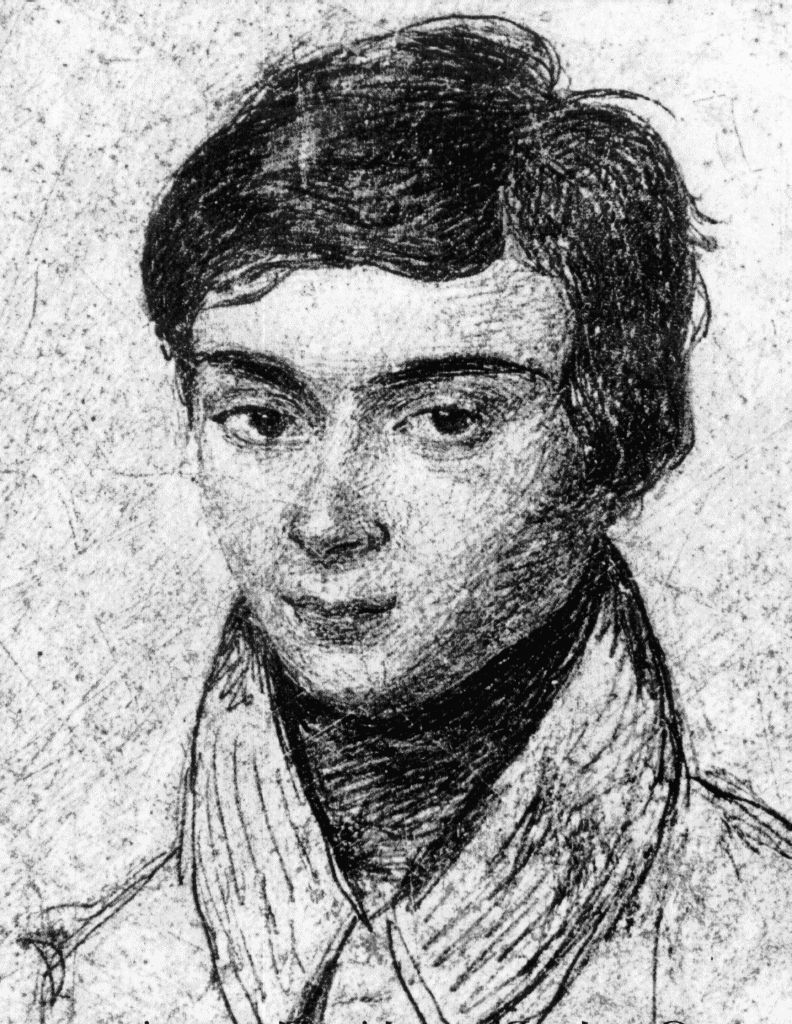
Born in the Provençal town of Aix‑en‑Provence in 1839, Paul Cézanne emerged from a modest, bourgeois family to become one of the most influential painters of modern art. Though his early work was dismissed by the Salon and even by his own contemporaries, Cézanne’s relentless pursuit of a “new order” in painting—where the canvas became a laboratory for geometry and color—revolutionized the way artists thought about representing three‑dimensional space on a flat surface. His canvases, from the luminous “Mont Sainte‑Victoire” series to the intimate “Still Life with Apples”, reveal a meticulous balance between observation and abstraction, inviting viewers to experience the world through a lattice of planes, brushstrokes, and tonal modulation.Cézanne’s legacy is not confined to the quiet hills of his native Provence; it rippled outward to Parisian cafés, Berlin studios, and New York galleries, inspiring a generation of avant‑garde creators. The painter’s insistence that “painting is a construction” resonated with Georges Braque, Pablo Picasso, and later Henri Matisse, who each cited Cézanne as a catalyst for their own departures from representational realism. In the century since his death, scholars and curators continue to unpack his notebooks, sketches, and letters, discovering fresh insights into his methodical yet deeply intuitive approach to art.
History/Background
Cézanne’s artistic journey began in earnest when he enrolled at the École des Beaux‑Arts in Paris in 1861, only to abandon formal training after a year, preferring the freedom of the Salon des Refusés and the experimental circles of Camille Pissarro and Claude Monet. The 1860s and 1870s saw him oscillate between the academic expectations of the French Academy and the burgeoning Impressionist movement. His first solo exhibition at the Salon in 1882 marked a turning point: critics labeled his work “unfinished” and “bizarre,” yet the same pieces hinted at a radical re‑thinking of perspective that would later be codified as Cézannism.The 1890s were a period of intense productivity. Cézanne returned repeatedly to the Mont Sainte‑Victoire landscape, painting it from multiple viewpoints and under varying light conditions—a visual diary that charted his evolving compositional logic. Simultaneously, his still‑life paintings grew more complex, layering fruit, bottles, and tablecloths into pyramidal structures that suggested underlying geometric scaffolding. By 1906, his health was failing, but his output remained vigorous until his death on October 22, 1906 in Aix‑en‑Provence.
Key Information
- Birth/Death: January 19, 1839 – October 22, 1906. - Nationality: French. - Primary Media: Oil on canvas; occasional charcoal and pastel sketches. - Major Works: The Bathers (1887‑1888), Mont Sainte‑Victoire series (1882‑1906), Still Life with Apples (c. 1895‑1900), The Large Bathers (1906). - Artistic Innovations: Development of modulated color planes to suggest volume, a systematic use of parallel brushstrokes to build form, and a deliberate flattening of pictorial space that pre‑figured Cubism. - Influence on Movements: Directly inspired Cubism, Fauvism, and Abstract Expressionism; cited by Picasso, Braque, Matisse, and later American Abstract painters such as Willem de Kooning. - Exhibitions: First solo Salon show (1882); posthumous retrospectives at the Salon d’Automne (1907) and the Armory Show in New York (1913).Significance
Cézanne’s importance lies in his daring synthesis of observational fidelity and abstract construction. By treating color as a structural element rather than a mere decorative surface, he liberated paint from the constraints of linear perspective, allowing the canvas to become a “geometric puzzle” that viewers could mentally reconstruct. This conceptual shift laid the groundwork for Cubism, where artists fragmented objects into interlocking planes, and for Modernist abstraction, which prized the autonomy of form over narrative content.Beyond formal innovations, Cézanne embodied the archetype of the misunderstood genius whose perseverance reshaped cultural history. His correspondence with fellow artists reveals a profound humility and a relentless curiosity about the nature of perception—questions that continue to animate contemporary debates in visual theory, neuroscience, and digital imaging. Museums worldwide— from the Musée d’Orsay to the Metropolitan Museum of Art—house his masterpieces, and his name remains a touchstone in art‑history curricula, underscoring his role as a bridge between the fleeting light of Impressionism and the analytical rigor of 20th‑century modernism.
INFOBOX:
- Name: Paul Cézanne
- Type: Post‑Impressionist Painter
- Date: 1839 – 1906
- Location: France (born Aix‑en‑Provence; active in Paris)
- Known For: Pioneering the transition from Impressionism to Cubism through innovative use of color, form, and perspective
TAGS: Post‑Impressionism, Modern Art, French Painting, Cubism, Still Life, Landscape, 19th‑Century Art, Art History