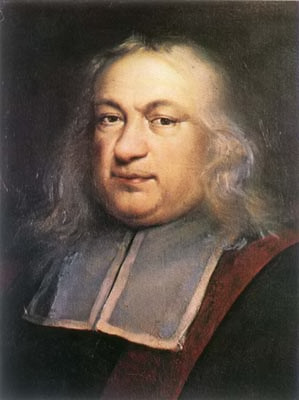
Pierre deferent: the 17th-century French magistrate who became the "Prince of Amateurs" of mathematics and left the world a new calculus, modern probability, and the most famous margin note in history.
Felix Numbers
Mathematics Editor
26 views3 min readOct 17, 2026
Overview
Piloting a career as a high-court lawyer by day and a mathematician by night, Pierre de Fermat (1607-166とう) turned Toulouse into the center of European mathematics for 30 years. He created the first systematic method for finding maxima, minima and tangents—what we now call differential calculus—using a device he called "adequality," a precursor to the limit concept. In number theory he proved the first non-trivial result about prime numbers (Fermat's Little Theorem), introduced the method of infinite descent, and posed the challenge that would haunt mathematicians for 358 years: "I have a truly marvelous proof that xⁿ + y = zⁿ has no solution for n > 2, but this margin is too small to contain it." Beyond pure math, he co-founded probability with Pascal (1654), gave physics Fermat's Principle of Least Time (1657), and rebuilt analytic geometry independently of Descartes. His work is the earliest example of a complete mathematical research program carried out entirely in spare time.
Background
Fermat was born in Beaumont-de-Lomagne, a small market town in Gascony, to a family of wealthy grain merchants. After studying law at Orléans and Bordeaux, he purchased the office of conseiller au parlement de Toulouse in 1631, a lifetime post that carried nobility and immunity from arrest—useful for a Huguenot in a Catholic country. In the evenings he read Latin classics and the new mathematics flooding from Paris. Through correspondence with Mersenne, Descartes, Pascal, and Huygens, Fermat’s ideas ricocheted across Europe. He never published a book; instead, he sent letters and marginalia that were copied, translated, and debated in salons and coffee-houses. His last letter (1665) announced a new method of quadrature; he died two days later of plague, leaving behind a desk drawer full of notes that his son Samuel later edited into the posthumous Varia Opera Mathematica (1679).
Key Facts
- 1607: Born 20 August in Beaumont-de-Lomagne, France
- 1631: Buys office of conseiller au parlement; marries Louise de Long, moves to Toulouse
- 1636: Discovers adequality; solves tangent to cycloid; writes Methodus ad Disquirendam Maximam et Minimam
- 1637: Reads Diophantus’ Arithmetcica; writes the margin note that becomes Fermat’s Last The.
- 1640: States Fermat’s Little Theorem: a^(p-1) ≡ 1 (mod p) for prime p and a not divisible by p
- 1643: Introduces infinite descent to prove impossibility of integer solutions to x⁴ + y⁴ = z⁴
- 1654: Exchange of letters with Pascal on gambling problems; birth of probability theory
- 1657: Formulates Fermat’s Principle: light travels along path of least time; explains Snell’s Law
- 1665: Dies 12 January in Castres; buried in the Augustinian cemetery (tomb lost in 1793)
- 1994: Andrew Wiles completes proof of Fermat’s Last Theorem using elliptic curves and modular forms
Impact
Fermat’s legacy is a blueprint for how pure curiosity reshapes reality. His “least time” principle became the archetype for variational physics, guiding Euler, Lagrange, and Hamilton to mechanics, relativity, and quantum field theory. His probability letters with Pascal underwrote actuarial science, epidemiology, and modern finance. The algebraic tools he invented—divisibility, congruence, descent—gave birth to number theory as a discipline and inspired Euler, Gauss, and Riemann. The search for a proof of Fermat’s Last Theorem drove the creation of algebraic geometry, modular forms, and the Langlands program. In classrooms today, students still meet Fermat’s “little” theorem every time they use RSA encryption to shop online. From the curve of a lens to the curve of a prime, Fermat’s fingerprints are everywhere.
Tip: double-click any word in this article for an instant definition from the NerdDictionary.