




**
Overview
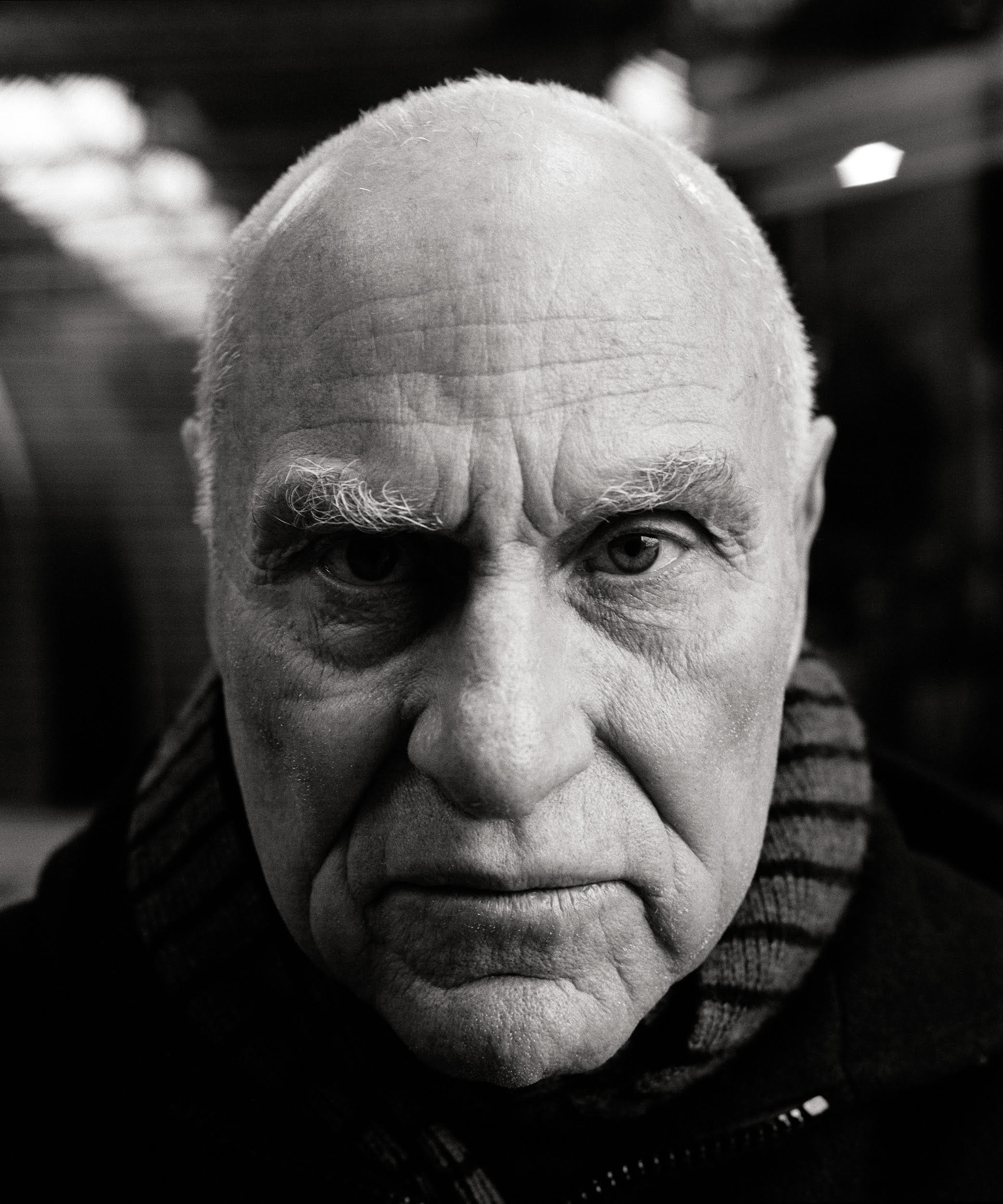
Richard Serra (born 1938) stands as one of the most influential sculptors of the late 20th and early 21st centuries. His large‑scale abstract sculptures—often massive steel plates or curving walls—are installed in rugged landscapes, urban plazas, and architectural contexts, inviting viewers to walk through, lean against, or even crawl beneath them. By foregrounding the material qualities of weathered steel, Serra transforms industrial processes into poetic gestures, turning raw, industrial heft into a conduit for sensory experience.
Associated primarily with postminimalism, Serra’s work departs from the austere geometry of Minimalist predecessors by emphasizing process, imperfection, and the passage of time. His pieces are not merely objects; they are environmental interventions that reshape the relationship between body, space, and landscape. Whether perched on a desert mesa or embedded in a museum courtyard, each work insists that the viewer become an active participant, feeling the weight of steel against skin and the echo of footsteps on concrete.
History/Background
Born in San Francisco, California, Serra grew up amid the Bay Area’s burgeoning art scene. He studied at the University of California, Berkeley (BFA, 1960) and later earned an MFA from the University of Illinois at Urbana‑Champaign (1964). The early 1960s found him experimenting with modest wooden constructions, but a pivotal trip to Europe in 1965 exposed him to the kinetic works of Alexander Calder and the raw power of Gustav Metzger’s auto‑destructive art, steering him toward more aggressive, industrial materials.In 1966, Serra began welding salvaged steel plates—a practice that would define his career. His first breakthrough series, the “Tilted Arc” (1972) for Federal Plaza in New York, sparked fierce public debate about the role of public art, ultimately leading to its removal in 1989. Undeterred, Serra continued to push boundaries, creating the “Torqued Ellipses” (1990s) and the “Bandaged” series (2000s), each exploring new ways to bend, twist, and “bandage” steel. Key dates include the 1985 installation of “The Matter of Time” at the Guggenheim Museum Bilbao and the 2005 “East-West/West‑East” at the Museum of Modern Art, New York.
Key Information
- Medium: Primarily weathered Corten steel; occasional use of aluminum, wood, and concrete. - Scale: Works range from intimate wall fragments to monumental installations exceeding 100 feet in length and weighing several hundred tons. - Process: Serra often fabricates on site, using industrial tools such as plasma cutters, hydraulic presses, and cranes, allowing the environment to dictate the final form. - Major Works: Tilted Arc (1972, New York), The Matter of Time (1996, Bilbao), Bandaged Wall (2005, MoMA), East-West/West‑East (2005, MoMA), Torqued Ellipses (1990s, various locations). - Awards: National Medal of Arts (2005), Guggenheim Fellowship (1975), Praemium Imperiale (2009). - Collections: Works held by the Museum of Modern Art, the Guggenheim, the Tate Modern, and the Hirshhorn Museum, among others. - Public Engagement: Serra’s installations often require physical interaction, prompting viewers to navigate narrow passages, climb ladders, or lie beneath steel arches, thereby collapsing the distance between artwork and audience.Significance
Richard Serra’s legacy lies in his radical redefinition of sculpture as a spatial experience rather than a static object. By embracing the impermanence of weathered steel, he underscores the dialogue between art and nature, allowing rust and patina to become part of the narrative. His willingness to confront public controversy—most famously with Tilted Arc—has sparked enduring debates about the rights of artists versus community stakeholders, influencing policies on public art commissions worldwide.Serra’s influence extends beyond sculpture into architecture, landscape design, and performance art. Architects such as Frank Gehry and Renzo Piano have cited his manipulation of mass and void as inspirational, while contemporary sculptors like Anish Kapoor and Urs Fischer echo his emphasis on viewer immersion. Moreover, his site‑specific methodology paved the way for later environmental artists, reinforcing the idea that context is inseparable from content.
In educational circles, Serra’s work serves as a case study in material science, engineering, and aesthetics, illustrating how industrial processes can be harnessed for artistic expression. His installations continue to attract scholars, students, and tourists, cementing his status as a pivotal figure who reshaped the possibilities of three‑dimensional art in the modern era.
INFOBOX:
- Name: Richard Serra
- Type: Visual Artist / Sculptor
- Date: Born January 2, 1938 (active 1960s–present)
- Location: Primarily United States; major installations worldwide
- Known For: Monumental site‑specific steel sculptures; pioneering postminimalist interventions
TAGS: sculpture, postminimalism, site‑specific art, contemporary art, public art, steel installations, Richard Serra, modern sculpture







