
Overview
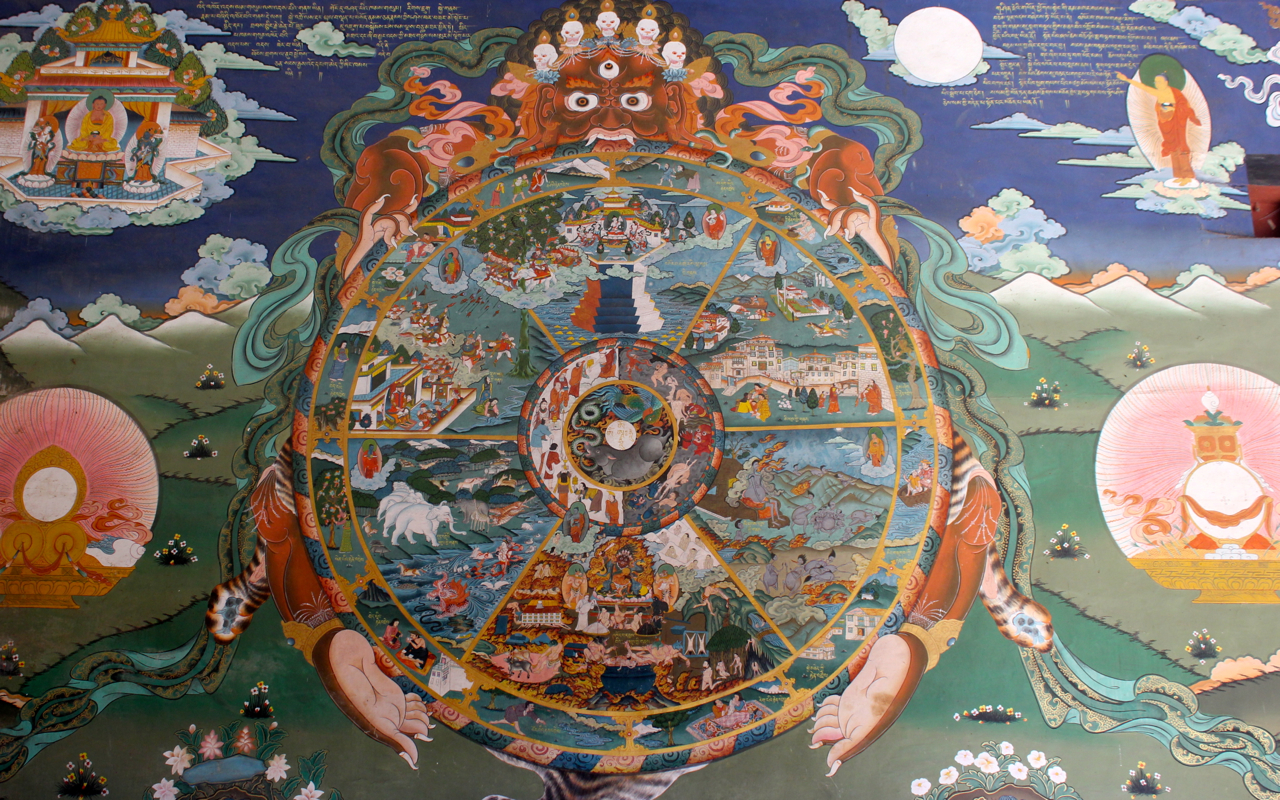
Samsara, derived from the Sanskrit root √sṛ ("to flow" or "to wander"), is the cosmic wheel of existence that turns through endless cycles of life, death, and reincarnation. Far more than mere reincarnation, it is a vast ocean of becoming in which every sentient being is caught—gods, humans, animals, hungry ghosts, and hell-beings alike—each propelled by the subtle mechanics of karma. Within this boundless process, no soul is permanent; rather, streams of consciousness transmigrate from body to body, shaped by ethical and intentional residues left by every thought, word, and deed.Across Hindu, Buddhist, Jain, and Sikh traditions, samsara is portrayed as beginningless and, unless consciously interrupted, endless. It is often depicted poetically: a turning wheel with six realms, a relentless river, or a desert of repeated mirages. The ultimate aim of every major Indian path is not to improve one's station within the cycle but to step entirely beyond it into moksha, nirvāṇa, or kaivalya—states described as unconditioned, deathless, and blissfully non-clinging.
History/Background
The earliest Vedic hymns (c. 1500 BCE) speak of repeated cosmic cycles but do not yet articulate individual rebirth. By the time of the Upaniṣads (c. 800–500 BCE) the doctrine is fully formed: the Bṛhadāraṇyaka and Chāndogya describe the ātman departing the body at death and "returning again" according to its deeds. Śramaṇa movements—Jainism and Buddhism—simultaneously systematized samsara, emphasizing radical non-violence and mindfulness as antidotes.Between the 3rd century BCE and 5th century CE, abhidharma scholastics mapped the mechanics of karma, while epic literature (Mahābhārata, Rāmāyaṇa) popularized the imagery of the "ocean of existence." From the 8th century onward, tantric masters reinterpreted samsara and nirvāṇa as nondual, asserting that liberation is possible within embodied experience. In modern times, Indian philosophers such as Sri Aurobindo and global teachers like the Dalai Lama have reframed samsara for scientific audiences, stressing psychological and sociological dimensions of cyclic suffering.