




Overview
Space medicine is a critical discipline that merges emergency care, preventive health, and physiological research to safeguard astronauts and space travelers. It evolved from aerospace medicine, which focused on aviation health, but expanded to address the extreme conditions of spaceflight. The field tackles stressors like microgravity, g-forces, space radiation, and hypobaric atmospheres, which can cause bone density loss, muscle atrophy, radiation sickness, and cardiovascular deconditioning. By integrating hyperbaric medicine, wilderness medicine, and toxicology, space medicine ensures medical readiness for missions ranging from low-Earth orbit to deep-space exploration.The unique challenges of spaceflight demand a multidisciplinary approach. For example, microgravity disrupts fluid distribution in the body, leading to vision impairment and immune system suppression. Space radiation, particularly galactic cosmic rays, poses long-term cancer risks. To mitigate these, space medicine applies space physiology to design life-support systems, develop countermeasures like artificial gravity simulations, and create compact medical devices for use in confined spacecraft environments.
History/Background
The roots of space medicine trace back to the early 20th century, when aviation pioneers studied the effects of high-altitude flight on pilots. The 1940s–1950s saw the formalization of aerospace medicine as jet aircraft and rocketry pushed human limits. With the Space Race, the field transformed into space medicine. NASA’s establishment in 1958 marked a turning point, as the agency prioritized astronaut health for missions like Project Mercury and Apollo.Key milestones include the first human spaceflight by Yuri Gagarin in 1961, which highlighted the need for in-flight medical monitoring, and the 1970s development of the Space Shuttle’s medical kits. The International Space Station (ISS), operational since 1998, became a laboratory for long-term space medicine research, such as studying bone loss in microgravity. Modern advancements focus on preparing for Mars missions, with projects like NASA’s Human Research Program addressing radiation shielding and psychological stress.
Key Information
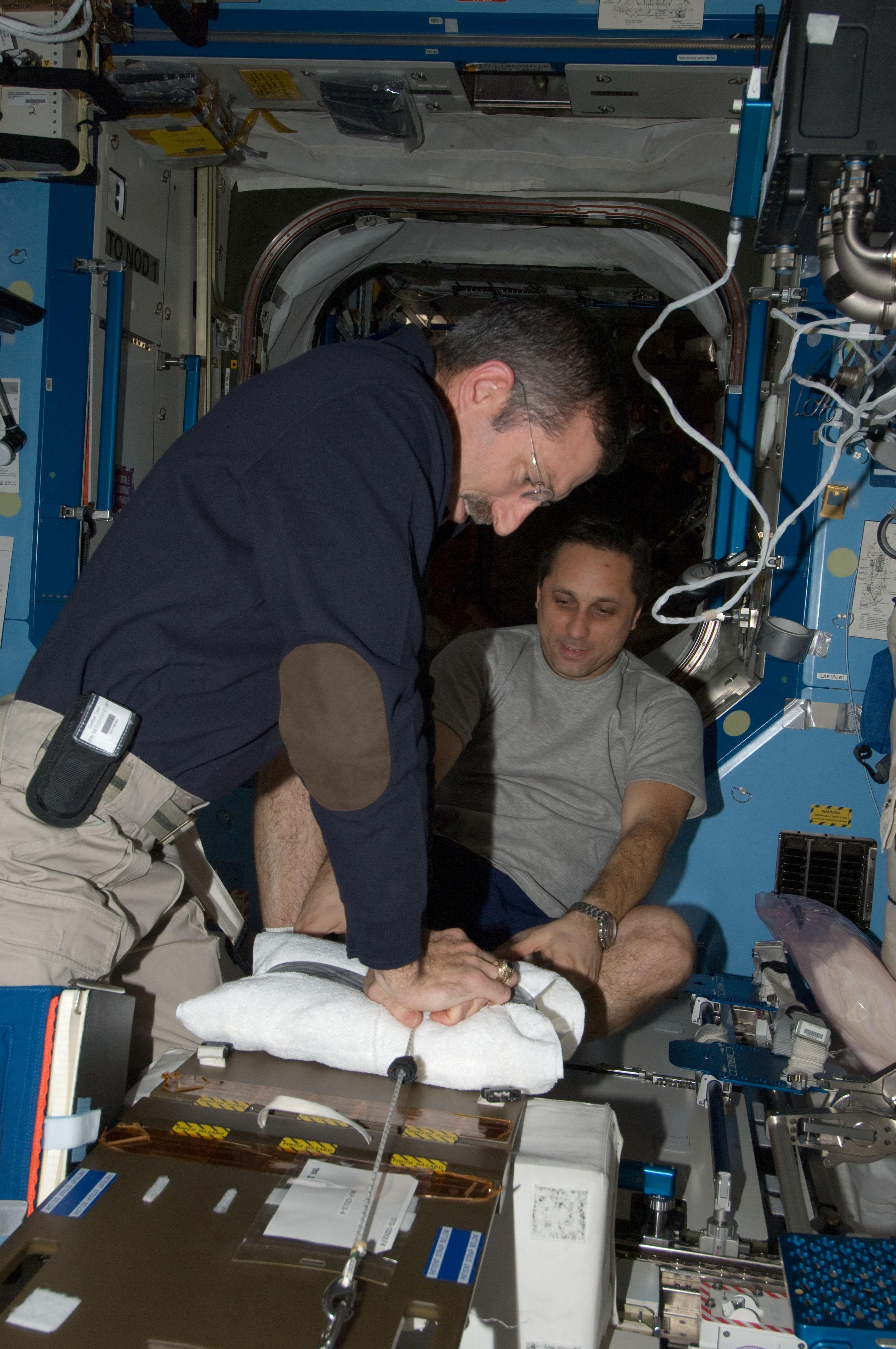
Space medicine addresses several critical areas: 1. Physiological Adaptation: Microgravity causes fluid shifts, muscle wasting, and bone demineralization. Countermeasures include resistance exercise and calcium supplements. 2. Radiation Protection: Galactic cosmic rays and solar flares increase cancer risks. Research focuses on shielding materials and pharmaceutical radioprotectors. 3. Emergency Care: Spacecraft are equipped with tools for trauma, infections, and cardiac events. The ISS has a MedKit with ultrasound devices and telemedicine links to Earth. 4. Psychological Health: Isolation and confinement require mental health protocols, including virtual reality therapy and crew training. 5. Medical Systems Design: Spacecraft life-support systems are optimized to regulate air quality, prevent CO₂ buildup, and recycle water.Notable achievements include the development of telemedicine for remote diagnostics and the use of 3D printing to manufacture medical tools in space. The field also informs Earth-based medicine, such as portable diagnostic devices and treatments for osteoporosis.




