




Overview
In late 1956 the Suez Canal, that slender 120-mile waterway linking Europe with Asian oil and the vestigial arteries of empire, became the flashpoint for the last great imperial war. When Egypt’s charismatic president Gamal Abdel Nasser nationalized the Suez Canal Company on 26 July, Britain and France—its major shareholders—concocted a secret protocol with Israel to seize the canal and topple the regime. What followed was a brief, botched invasion that ended in humiliating withdrawal under U.S. and Soviet pressure, sounding the death knell for European colonialism and catapulting the United States and USSR to the forefront of Middle-Eastern diplomacy.The campaign lasted barely nine days (29 Oct.–7 Nov.) yet convulsed global politics: NATO allies clashed in public, the Arab world coalesced around anti-colonial nationalism, and the United Nations deployed its first peace-keeping force. Suez thus marks the hinge moment when “old” imperial power yielded to bipolar Cold-War management and when regional actors discovered that super-power patronage, not European bayonets, would henceforth arbitrate the fate of the Middle East.
History/Background
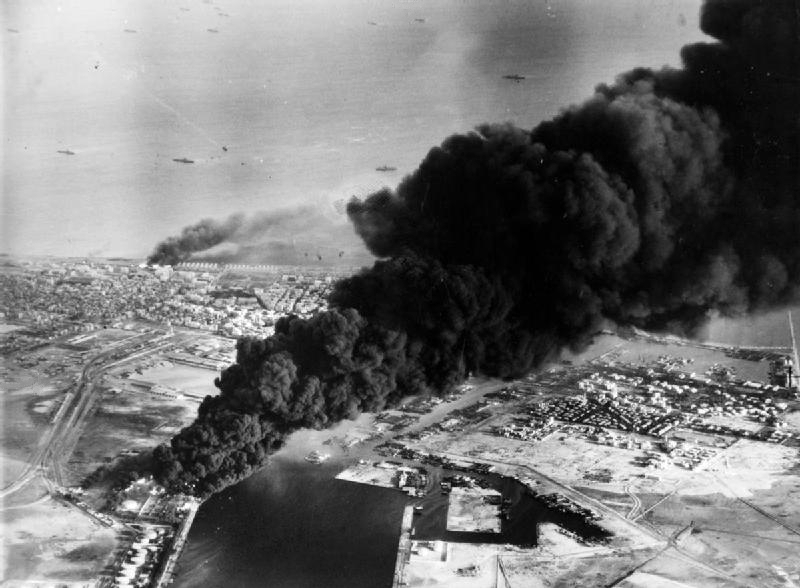
Roots lay in the 1952 Free Officers’ coup that ousted Egypt’s monarchy and installed Nasser, who demanded British evacuation of the Canal Zone base (achieved June 1956). Needing revenue to build the Aswan High Dam, Nasser accepted Soviet arms via Czechoslovakia (Sept. 1955); Washington withdrew promised dam funding (19 July 1956), prompting Nasser’s nationalization. Britain and France, fearing both lost dividends and a Nasser-inspired wave across Algeria, Tunisia, and the Gulf, secretly invited Israel—already subject to an eight-year Egyptian blockade of the Straits of Tiran—to provide the casus belli.Protocol of Sèvres (24 Oct.) outlined the ruse: Israel would strike toward the canal; London and Paris would issue an ultimatum demanding withdrawal, then “intervene” to separate the belligerents. Israeli paratroopers dropped at the Mitla Pass 29 Oct.; Anglo-French air strikes began 31 Oct., followed by seaborne landings at Port Said (5 Nov.). But Washington, blindsided and fearing Soviet opportunism, froze British sterling assets and demanded unconditional withdrawal. Under simultaneous U.S./Soviet pressure—and a run on the pound—London capitulated; Paris and Jerusalem followed. A UN-brokered cease-fire took effect 7 Nov.; the first UN Emergency Force (UNEF) deployed, and invading troops evacuated by 22 Dec. 1956.
Key Information
- Combatants: Egypt vs. Israel, United Kingdom, France (USSR and USA diplomatically) - Casualties: c. 3,000 Egyptians, 189 Israelis, 102 British, 29 French killed - Commanders: Nasser (Egypt); Moshe Dayan (Israel); Sir Charles Keightley & Admiral Barjot (Anglo-French) - Outcome: Military victory for invaders; strategic-political victory for Egypt; Anglo-French withdrawal; Israeli shipping rights guaranteed by UNEF presence in Sinai until 1967 - UNEF: First armed UN peace-keeping force, blue-helmet prototype, stationed until expelled by Nasser May 1967 - Economic Impact: Sterling crisis; collapse of British prestige; acceleration of Algerian War’s end (Évian Accords 1962) - U.S. Role: Eisenhower Doctrine (Jan. 1957) fills vacuum, pledging U.S. troops to defend Middle-East states against “overt Communist aggression” - Soviet Role: Arms deals with Egypt; political backing; USSR’s first major regional footholdSignificance
Suez shattered the illusion that Britain and France could still police global choke-points without Washington’s blessing. Harold Macmillan’s private verdict—“We are no longer a first-class power”—became the epitaph for European imperialism. Conversely, Nasser emerged as the spokesman of pan-Arab nationalism, his prestige soaring enough to inspire short-lived unions with Syria (1958-61) and Yemen. For Israel, the campaign delivered operational gains—freedom of navigation through the Straits of Tiran for a decade—but also underscored dependence on great-power goodwill, a lesson revisited in 1967.Globally, the crisis entrenched the super-powers as arbiters of regional disputes; Moscow and Washington now competed for influence through proxies and aid, not European mandates. The UN peace-keeping model born at Suez became template for later interventions from Congo to Cyprus. Finally, the episode seared into American strategic memory the danger of European adventurism provoking wider conflict; subsequent U.S. administrations would demand prior consultation, a precedent invoked during the 1958 Lebanon intervention and beyond.



