Overview
Between the late-eighth and mid-eleventh centuries, Scandinavians exploded onto the European stage, propelled by technological ingenuity, demographic pressures, and a maritime culture that treated rivers as highways. Their shallow-draft longships, powered by sail and oar, carried warriors, merchants, and colonists to the coasts of four continents, establishing trading towns from Dublin to Kyiv and planting farms on Iceland’s volcanic edge. While the term "Viking" originally denoted a pirate or raider, today it is used more broadly for the peoples of Denmark, Norway, and Sweden whose mobility, adaptability, and cultural synthesis left an indelible imprint on language, law, art, and urban life across the medieval world.
The period opened with the shock raid on the monastery of Lindisfarne in 793 and closed when Harald Hardrada’s Norwegian army was crushed at Stamford Bridge in 1066, just days before William of Normandy—himself a descendant of Viking settlers—won England at Hastings. In those 275 years, Scandinavians served as bodyguards to Byzantine emperors, founded the first Russian polities, negotiated trade concessions with Muslim caliphs, and briefly colonized Vinland on Newfoundland’s coast. Their legacy survives in place-names, DNA, legal terminology, and the modern imagination of the North.
History/Background
The Viking expansion grew out of internal change in Iron-Age Scandinavia. Population growth, a maritime lifestyle, and the development of the longship (c. 700 CE) created surplus manpower eager for wealth and status. External targets were tempting: Christian Europe possessed portable silver, weak coastal defenses, and internecine wars that invited intervention. Charlemagne’s brutal Saxon Wars (772-804) also sent refugees north, spreading knowledge of continental riches.
Chronologically, scholars divide the era into:
- Age of Raiding (793- c. 850): Hit-and-run attacks on monasteries and towns, e.g., Lindisfarne (793), Paris (845).
- Age of Settlement (c. 850-950): Large-scale migration to Iceland (874), Greenland (985), and the Danelaw in England (878 treaty).
- Age of State-Building (950-1066): Conversion to Christianity, royal centralization, and the shift from raiding to taxation and trade.
Key Information
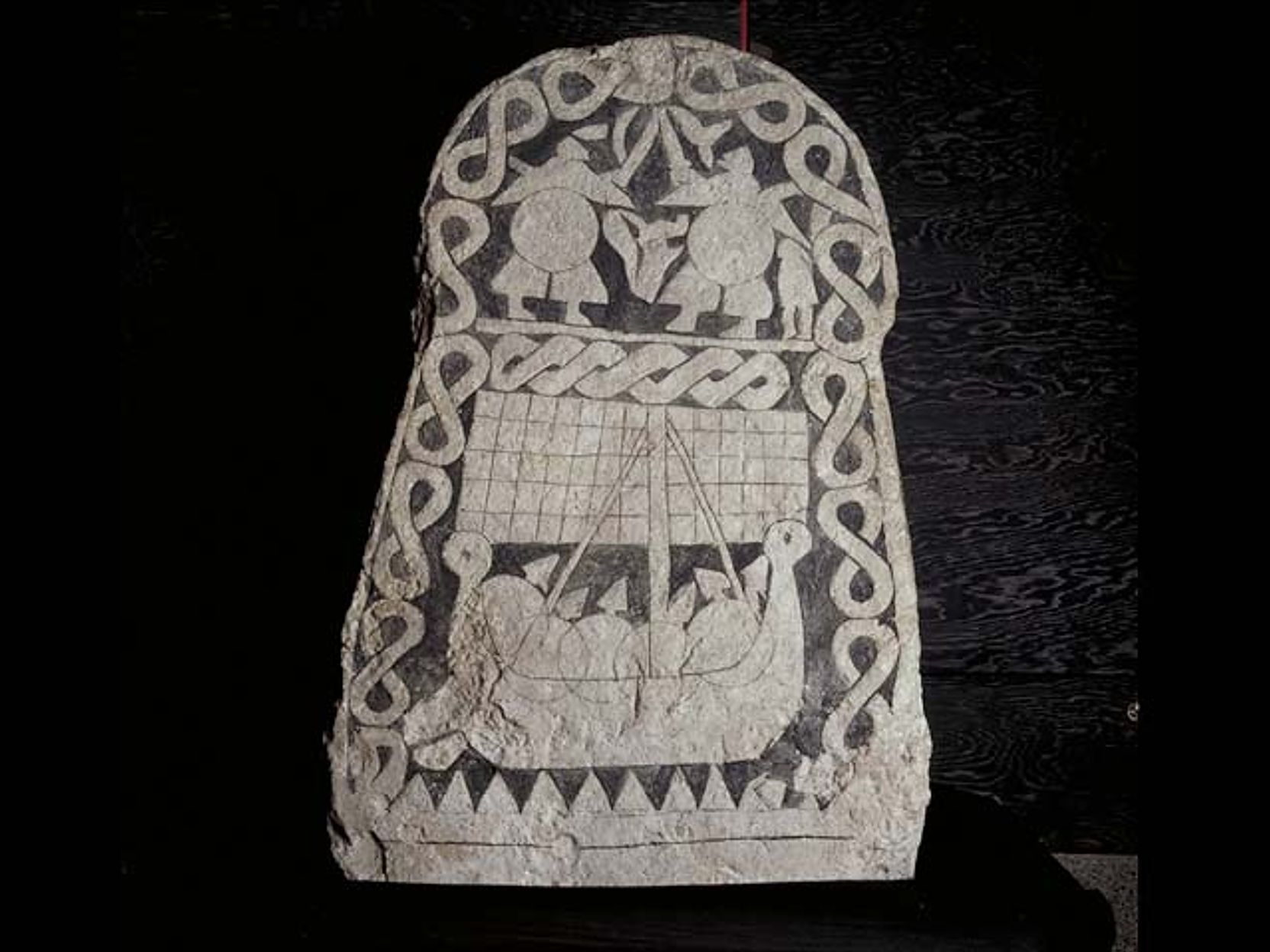
- Ships & Navigation: Clinker-built hulls, symmetrical bow and stern, and a 12-16 knot capability under sail. Sun-compasses and horizon boards aided latitude sailing.
- Trade Goods: Amber, furs, walrus ivory, and slaves flowed south; Islamic silver dirhams and Byzantine silks moved north. Hedeby, Birka, and later Kaupang were emporia linking the Baltic to the Caliphate.
- Social Structure: Free farmers (bondi) formed the backbone; jarls (earls) controlled large estates; thralls provided unfree labor. Thing assemblies balanced royal power.
- Religion: Odin, Thor, and Freyr dominated a pantheon tied to fertility, war, and poetry. Ship-burials like Oseberg (c. 834) testify to beliefs in journeying after death.
- Language & Writing: Old Norse, written in runic script (Younger Futhark), bequeathed hundreds of English words—sky, egg, knife, window (vindauga, “wind-eye”).
- Women: Legal capacity to divorce, inherit, and run farms; graves at Birka and Ipswich reveal female traders and warriors (the debated “shield-maidens”).
- Military Tactics: Hit-and-run strikes using mobility and surprise; later, fortified camps (longphorts) and siege engines, as seen at Paris (885-86) and Jomsborg.
- Conversion: Missionary bishops accompanied Danish kings from 965 (Harald Bluetooth); by 1100 most Scandinavian realms were Christian, though pagan practices lingered.
Significance
The Viking Age forged Europe’s first integrated maritime network, prefiguring later Hanseatic and Atlantic systems. Scandinavian settlers founded Dublin, shaped Russian statehood, and gave Normandy its name and knightly culture, thereby influencing the Crusades and the English language. Their law codes—emphasizing compensation over corporal punishment—echo in modern Nordic legal systems. Archaeologically, the period marks the transition from gift economies to commercial markets, evidenced by the million-plus Islamic silver coins found in Baltic hoards. In popular culture, Vikings embody both the romanticized free spirit and the dark barbarian, a duality that continues to fuel scholarship, tourism, and media. Ultimately, the Viking Age demonstrates how small, peripheral societies can leverage technology and political opportunity to redraw the map of the world.