




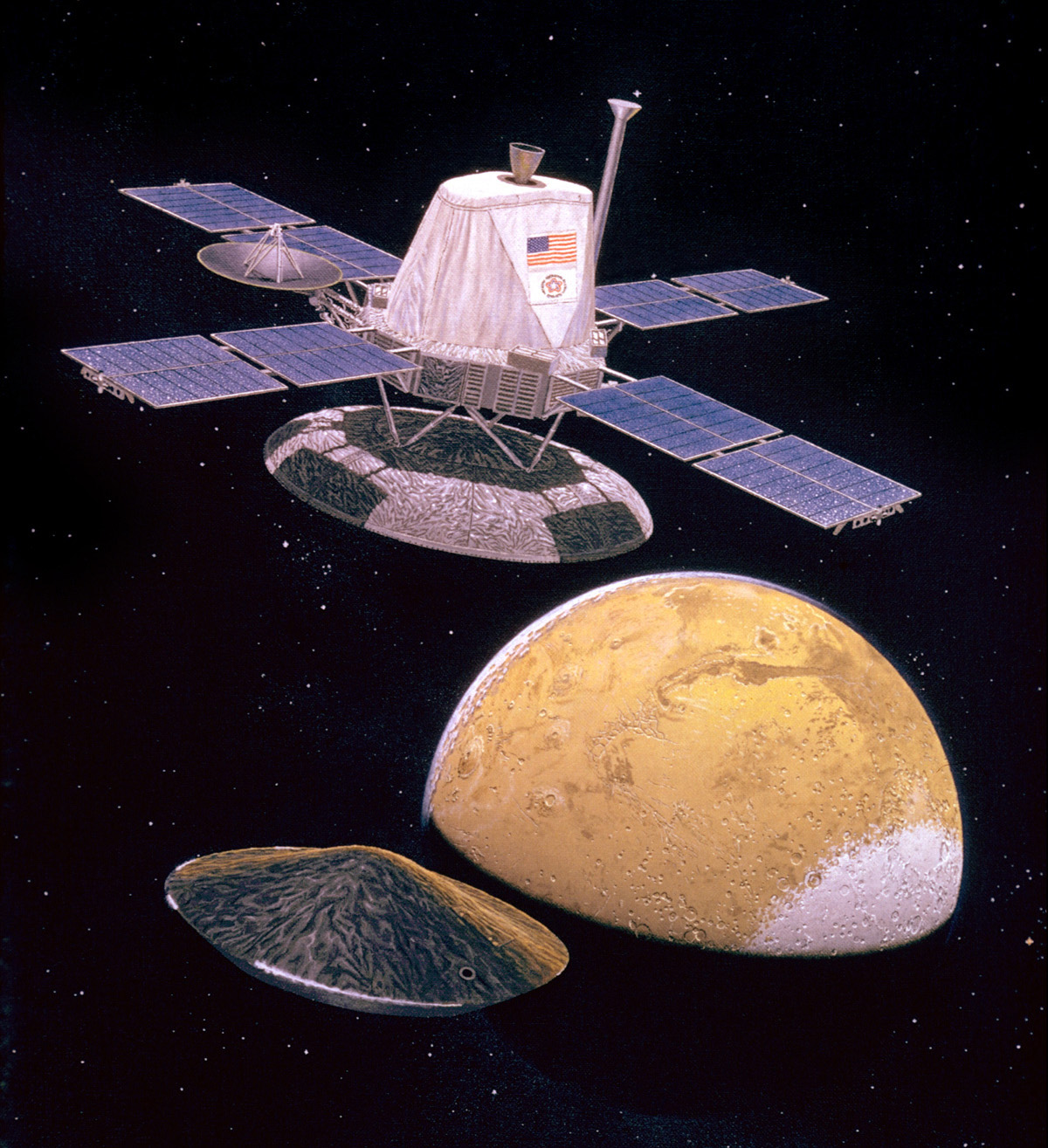
Overview
The Viking program comprised two identical spacecraft—Viking 1 and Viking 2—each consisting of an orbiter and a lander. Launched in 1975, the pair entered Martian orbit in 1976 and successfully touched down on the planet’s surface later that year, marking the first time humanity placed a fully functional laboratory on another world. The orbiters mapped the Martian terrain, captured thousands of images, and acted as communication relays, while the landers performed experiments on soil chemistry, atmospheric composition, and the search for organic compounds.Beyond the immediate scientific returns, Viking set the operational template for future Mars missions. Its dual‑spacecraft architecture demonstrated the value of having an orbital platform to support surface assets, a concept later adopted by missions such as Mars Global Surveyor, Mars Reconnaissance Orbiter, and the Mars Science Laboratory. The program also pioneered many engineering solutions—thermal control for extreme temperature swings, autonomous landing sequences, and a robust data‑handling system—that remain cornerstones of planetary exploration today.
History/Background
The Viking effort grew out of NASA’s Mariner series and the earlier Mars 1971 proposals, with formal planning beginning in 1968 at the NASA Langley Research Center. The program’s goals were ambitious: obtain high‑resolution global imagery, characterize the Martian atmosphere and surface, and conduct the first definitive search for life. After a decade of design, testing, and budget negotiations, Viking 1 lifted off on 20 August 1975 aboard an Atlas‑Centaur launch vehicle, followed by Viking 2 on 9 September 1975.Both spacecraft entered Mars orbit in June 1976. Viking 1’s lander touched down in the Chryse Planitia region on 20 July 1976, while Viking 2 landed in Utopia Planitia on 3 September 1976. The landers operated for over six Earth years (Viking 1) and three years (Viking 2), far exceeding their planned 90‑day mission lifetimes. The program officially concluded in 1982, after the orbiters completed their imaging campaigns and the landers ceased communications.


