



Captain Cosmos
Space & Astronomy Editor
241Articles
2.9KTotal views
 Space & Astronomy
Spitzer Space Telescope
The **Spitzer Space Telescope** was NASA’s pioneering infrared observatory, operating from 2003 to 2020 and revealing the hidden, cool universe in unprecedented detail.
Space & Astronomy
Spitzer Space Telescope
The **Spitzer Space Telescope** was NASA’s pioneering infrared observatory, operating from 2003 to 2020 and revealing the hidden, cool universe in unprecedented detail.
 Space & Astronomy
Pallas Asteroid
**Pallas** is the third‑largest asteroid in the main belt, a massive, bright, carbon‑rich world that offers key clues to the early solar system’s composition and dynamical evolution.
Space & Astronomy
Pallas Asteroid
**Pallas** is the third‑largest asteroid in the main belt, a massive, bright, carbon‑rich world that offers key clues to the early solar system’s composition and dynamical evolution.
 Space & Astronomy
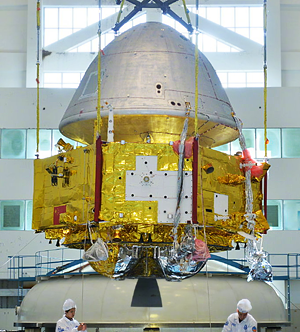
Tianwen-1
**Tianwen‑1** is China’s first independent Mars mission, delivering an orbiter, lander and the Zhurong rover to the Red Planet and marking a historic “orbit‑landing‑rover” achievement for the China National Space Administration (CNSA).
Space & Astronomy
Primordial Black Holes
** Primordial black holes are hypothetical black holes formed in the early Universe, potentially spanning a vast mass range and offering clues to cosmology, dark matter, and high‑energy physics.
**CONTENT:**
## Overview
Primordial black holes (**PBHs**) are a class of black holes that, unlike their stellar‑mass counterparts, are thought to have originated **shortly after the Big Bang**, when extreme density fluctuations could have collapsed directly into black holes. Their masses could range from the Planck scale (~10⁻⁵ g) up to thousands of solar masses, far broader than the narrow band of masses produced by the death of massive stars. Because they would have formed in a **radiation‑dominated** epoch, PBHs carry information about the physics of the very early Universe, including inflationary perturbations, phase transitions, and exotic particle processes.
Theoretical models predict that PBHs could still exist today, either as isolated objects or as a component of the **dark matter** halo. Their potential signatures span a wide spectrum: gravitational lensing of distant stars, dynamical effects on star clusters, Hawking radiation from low‑mass PBHs, and gravitational‑wave mergers detectable by LIGO/Virgo/KAGRA. While no definitive detection has yet been confirmed, ongoing surveys and next‑generation observatories are rapidly tightening the constraints on their abundance across the mass spectrum.
## History/Background
The concept of black holes forming in the early Universe dates back to the 1960s, when **Ya. B. Zel’dovich** and **I. D. Novikov** first suggested that density perturbations could produce black holes shortly after the Big Bang. In 1971, **Stephen Hawking** and **Bernard Carr** independently refined the idea, coining the term “primordial black holes” and calculating their possible mass spectrum based on the horizon mass at formation. The 1980s saw a surge of interest when PBHs were proposed as a **dark‑matter candidate**, especially after the discovery of the cosmic microwave background (CMB) and the realization that non‑baryonic matter dominates the cosmic mass budget.
Key milestones include:
- **1974:** Hawking’s discovery of black‑hole evaporation (Hawking radiation) introduced a mechanism by which low‑mass PBHs could evaporate within the age of the Universe, providing observable gamma‑ray signatures.
- **1996–2000:** Microlensing surveys (MACHO, EROS, OGLE) placed strong limits on PBHs in the 10⁻⁷–10 M☉ range, narrowing the viable dark‑matter window.
- **2015–2020:** Gravitational‑wave detections of binary black‑hole mergers sparked renewed speculation that some observed events could involve PBHs, especially those with masses around 30 M☉.
- **2021–2024:** The **NANOGrav** pulsar‑timing array reported a stochastic common‑process signal, interpreted by some as a possible background from PBH‑induced gravitational waves, though astrophysical explanations remain viable.
## Key Information
- **Formation Epoch:** PBHs could form from over‑dense regions during inflation, reheating, or cosmological phase transitions (e.g., QCD or electroweak). The horizon mass at a given time sets the characteristic PBH mass: *M* ≈ 10⁵ M☉ (t/1 s).
- **Mass Spectrum:** Theoretical models predict a **broad, often power‑law** distribution, but specific mechanisms (e.g., bubble collisions, cosmic strings) can generate narrow peaks.
- **Hawking Radiation:** Black holes with masses ≤ 10¹⁵ g would have evaporated by now, emitting high‑energy particles; the absence of a diffuse gamma‑ray background constrains their initial abundance.
- **Observational Constraints:** Microlensing, CMB anisotropies, dynamical heating of dwarf galaxies, and LIGO/Virgo merger rates collectively limit PBH contributions to dark matter to < 1 % for most mass windows, except possibly around 10⁻¹⁶–10⁻¹¹ M☉ (asteroid‑mass) and 10–100 M☉.
- **Gravitational Waves:** Mergers of PBH binaries formed in the early Universe produce a distinct stochastic background and event rate that can be compared with LIGO/Virgo catalogs.
- **Cosmological Implications:** If PBHs exist in sufficient numbers, they could seed supermassive black holes, influence reionization, and act as laboratories for quantum gravity via Hawking radiation.
## Significance
Primordial black holes sit at the crossroads of **cosmology, particle physics, and astrophysics**. Detecting—or definitively ruling out—a substantial PBH population would answer fundamental questions: Are they a component of dark matter? Did they catalyze the formation of the first supermassive black holes observed at high redshift? Do they provide a natural arena to test Hawking radiation and quantum‑gravity effects? Moreover, PBHs offer a unique probe of the **primordial power spectrum** on scales far smaller than those accessible through the CMB or large‑scale structure, potentially revealing features of inflation or exotic early‑Universe physics. As observational capabilities sharpen—through next‑generation microlensing missions (e.g., **Roman Space Telescope**), high‑frequency gravitational‑wave detectors (e.g., **LISA**, **Einstein Telescope**), and improved gamma‑ray telescopes—the quest for PBHs remains a vibrant frontier that could reshape our understanding of the Universe’s first moments.
**INFOBOX:**
- Name: Primordial Black Holes
- Type: Hypothetical astrophysical objects / early‑Universe relics
- Date: Concept introduced 1967; major theoretical development 1971–1974
- Location: Throughout the Universe; potentially concentrated in galactic halos if they constitute dark matter
- Known For: Possible dark‑matter candidates, probes of early‑Universe physics, sources of Hawking radiation and gravitational waves
**TAGS:** black holes, dark matter, early universe, inflation, Hawking radiation, gravitational waves, cosmology, astrophysics
Space & Astronomy
Tianwen-1
**Tianwen‑1** is China’s first independent Mars mission, delivering an orbiter, lander and the Zhurong rover to the Red Planet and marking a historic “orbit‑landing‑rover” achievement for the China National Space Administration (CNSA).
Space & Astronomy
Primordial Black Holes
** Primordial black holes are hypothetical black holes formed in the early Universe, potentially spanning a vast mass range and offering clues to cosmology, dark matter, and high‑energy physics.
**CONTENT:**
## Overview
Primordial black holes (**PBHs**) are a class of black holes that, unlike their stellar‑mass counterparts, are thought to have originated **shortly after the Big Bang**, when extreme density fluctuations could have collapsed directly into black holes. Their masses could range from the Planck scale (~10⁻⁵ g) up to thousands of solar masses, far broader than the narrow band of masses produced by the death of massive stars. Because they would have formed in a **radiation‑dominated** epoch, PBHs carry information about the physics of the very early Universe, including inflationary perturbations, phase transitions, and exotic particle processes.
Theoretical models predict that PBHs could still exist today, either as isolated objects or as a component of the **dark matter** halo. Their potential signatures span a wide spectrum: gravitational lensing of distant stars, dynamical effects on star clusters, Hawking radiation from low‑mass PBHs, and gravitational‑wave mergers detectable by LIGO/Virgo/KAGRA. While no definitive detection has yet been confirmed, ongoing surveys and next‑generation observatories are rapidly tightening the constraints on their abundance across the mass spectrum.
## History/Background
The concept of black holes forming in the early Universe dates back to the 1960s, when **Ya. B. Zel’dovich** and **I. D. Novikov** first suggested that density perturbations could produce black holes shortly after the Big Bang. In 1971, **Stephen Hawking** and **Bernard Carr** independently refined the idea, coining the term “primordial black holes” and calculating their possible mass spectrum based on the horizon mass at formation. The 1980s saw a surge of interest when PBHs were proposed as a **dark‑matter candidate**, especially after the discovery of the cosmic microwave background (CMB) and the realization that non‑baryonic matter dominates the cosmic mass budget.
Key milestones include:
- **1974:** Hawking’s discovery of black‑hole evaporation (Hawking radiation) introduced a mechanism by which low‑mass PBHs could evaporate within the age of the Universe, providing observable gamma‑ray signatures.
- **1996–2000:** Microlensing surveys (MACHO, EROS, OGLE) placed strong limits on PBHs in the 10⁻⁷–10 M☉ range, narrowing the viable dark‑matter window.
- **2015–2020:** Gravitational‑wave detections of binary black‑hole mergers sparked renewed speculation that some observed events could involve PBHs, especially those with masses around 30 M☉.
- **2021–2024:** The **NANOGrav** pulsar‑timing array reported a stochastic common‑process signal, interpreted by some as a possible background from PBH‑induced gravitational waves, though astrophysical explanations remain viable.
## Key Information
- **Formation Epoch:** PBHs could form from over‑dense regions during inflation, reheating, or cosmological phase transitions (e.g., QCD or electroweak). The horizon mass at a given time sets the characteristic PBH mass: *M* ≈ 10⁵ M☉ (t/1 s).
- **Mass Spectrum:** Theoretical models predict a **broad, often power‑law** distribution, but specific mechanisms (e.g., bubble collisions, cosmic strings) can generate narrow peaks.
- **Hawking Radiation:** Black holes with masses ≤ 10¹⁵ g would have evaporated by now, emitting high‑energy particles; the absence of a diffuse gamma‑ray background constrains their initial abundance.
- **Observational Constraints:** Microlensing, CMB anisotropies, dynamical heating of dwarf galaxies, and LIGO/Virgo merger rates collectively limit PBH contributions to dark matter to < 1 % for most mass windows, except possibly around 10⁻¹⁶–10⁻¹¹ M☉ (asteroid‑mass) and 10–100 M☉.
- **Gravitational Waves:** Mergers of PBH binaries formed in the early Universe produce a distinct stochastic background and event rate that can be compared with LIGO/Virgo catalogs.
- **Cosmological Implications:** If PBHs exist in sufficient numbers, they could seed supermassive black holes, influence reionization, and act as laboratories for quantum gravity via Hawking radiation.
## Significance
Primordial black holes sit at the crossroads of **cosmology, particle physics, and astrophysics**. Detecting—or definitively ruling out—a substantial PBH population would answer fundamental questions: Are they a component of dark matter? Did they catalyze the formation of the first supermassive black holes observed at high redshift? Do they provide a natural arena to test Hawking radiation and quantum‑gravity effects? Moreover, PBHs offer a unique probe of the **primordial power spectrum** on scales far smaller than those accessible through the CMB or large‑scale structure, potentially revealing features of inflation or exotic early‑Universe physics. As observational capabilities sharpen—through next‑generation microlensing missions (e.g., **Roman Space Telescope**), high‑frequency gravitational‑wave detectors (e.g., **LISA**, **Einstein Telescope**), and improved gamma‑ray telescopes—the quest for PBHs remains a vibrant frontier that could reshape our understanding of the Universe’s first moments.
**INFOBOX:**
- Name: Primordial Black Holes
- Type: Hypothetical astrophysical objects / early‑Universe relics
- Date: Concept introduced 1967; major theoretical development 1971–1974
- Location: Throughout the Universe; potentially concentrated in galactic halos if they constitute dark matter
- Known For: Possible dark‑matter candidates, probes of early‑Universe physics, sources of Hawking radiation and gravitational waves
**TAGS:** black holes, dark matter, early universe, inflation, Hawking radiation, gravitational waves, cosmology, astrophysics
 Space & Astronomy
Andromeda Galaxy
The Andromeda Galaxy (M 31) is a massive barred spiral galaxy, the nearest large galactic neighbor to the Milky Way, located about 2.5 million light‑years away in the constellation Andromeda.
Space & Astronomy
Andromeda Galaxy
The Andromeda Galaxy (M 31) is a massive barred spiral galaxy, the nearest large galactic neighbor to the Milky Way, located about 2.5 million light‑years away in the constellation Andromeda.
 Space & Astronomy
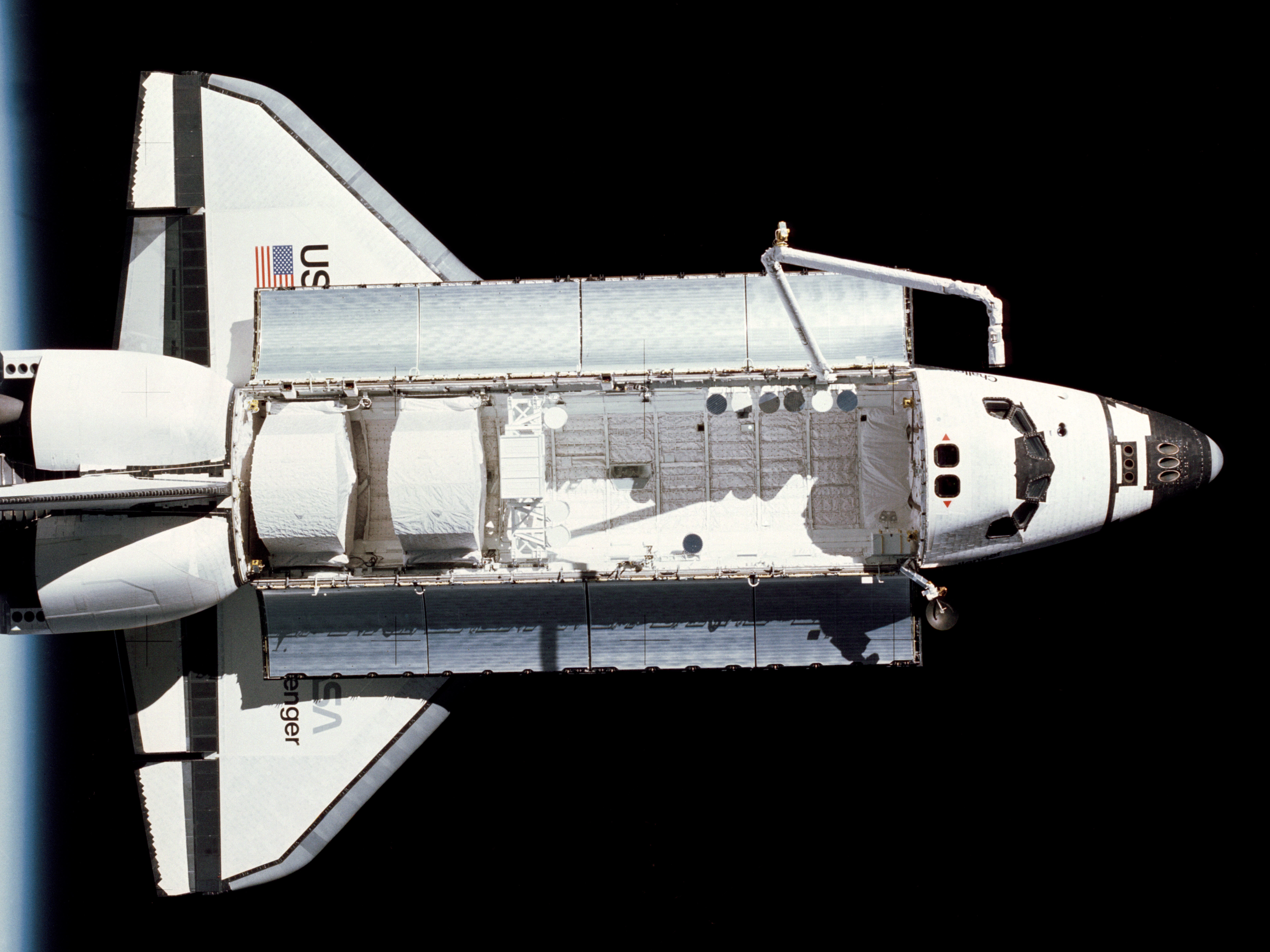
Space Shuttle Challenger
** The Space Shuttle **Challenger** (Orbiter Vehicle‑099) was NASA’s second operational shuttle, famed for its pioneering missions and tragic loss in the 1986 STS‑51‑L disaster.
**CONTENT:**
## Overview
The Space Shuttle **Challenger** was the second orbiter to enter NASA’s fleet, following **Columbia**. Built by **Rockwell International** and designated **OV‑099**, Challenger carried the name of the 19th‑century British research vessel that circumnavigated the globe under Sir **James Clark Ross**. From its inaugural flight in April 1983 until its destruction in January 1986, Challenger completed nine successful missions, delivering satellites, conducting scientific experiments, and expanding the United States’ low‑Earth‑orbit capabilities. Its legacy is inseparable from both its achievements and the sobering lessons learned after the **STS‑51‑L** accident, which reshaped safety culture across human spaceflight.
Challenger’s design incorporated the same reusable wing‑and‑body configuration as the rest of the shuttle fleet, with a **payload bay** 60 feet long, three main engines fed by external tank liquid hydrogen and liquid oxygen, and two solid rocket boosters (SRBs) that provided the majority of thrust at liftoff. The orbiter’s avionics, thermal‑protection tiles, and crew compartment were refined from Columbia’s flight experience, allowing a more reliable and versatile platform for a growing roster of scientific and commercial payloads. The vehicle’s iconic “nose‑cone” and distinctive black tile pattern made it instantly recognizable to the public.
The tragedy on **January 28 1986** occurred just 73 seconds after launch when a faulty O‑ring seal in the right SRB allowed hot gases to breach the joint, leading to catastrophic structural failure. All seven crew members—**Francis “Dick” Scobee**, **Michael J. Smith**, **Ronald McNair**, **Ellison Onizuka**, **Gregory Jarvis**, **Judith Resnik**, and **Christa McAuliffe**—were lost. The disaster prompted the **Rogers Commission** investigation, which identified organizational and engineering failures, ultimately leading to a 2‑year hiatus in shuttle flights and sweeping reforms in NASA’s safety protocols.
## History/Background
Challenger’s story began in the early 1970s when NASA issued contracts for the construction of three additional orbiters to complement **Enterprise**, the test vehicle. **Rockwell International** received the contract for OV‑099 in 1972, and the orbiter’s airframe was assembled at the **Rockwell International Plant** in Palmdale, California. The vehicle was rolled out in 1979 and underwent extensive ground testing, including structural load tests, thermal‑protection tile inspections, and flight‑software validation.
Key milestones include:
- **April 4 1983:** Maiden flight **STS‑6**, delivering the **first TDRS (Tracking and Data Relay Satellite)** and conducting the first EVA (extravehicular activity) from a shuttle.
- **October 30 1984:** **STS‑41‑D**, the first flight to carry a **commercial communications satellite** (SBS‑4) and the first use of the **Payload Assist Module (PAM‑D)**.
- **June 18 1985:** **STS‑51‑C**, the first shuttle mission to conduct a **U.S. Department of Defense** payload deployment, marking the shuttle’s role in national security.
The final flight, **STS‑51‑L**, was slated to be a historic “Teacher in Space” mission, featuring **Christa McAuliffe**, a civilian educator selected to conduct live lessons from orbit. The mission’s objectives also included deploying the **TDRS‑B** satellite and conducting a suite of scientific experiments.
## Key Information
- **Manufacturer:** Rockwell International (now part of Boeing)
- **First Flight:** **STS‑6** – 4 April 1983
- **Total Flights:** 9 successful missions, 1 fatal mission (STS‑51‑L)
- **Crew Capacity:** Up to 7 astronauts
- **Payload Capacity:** ~24,400 kg to low‑Earth orbit
- **Major Achievements:** First deployment of a **TDRS** satellite, first commercial communications satellite launch, first Department of Defense payload, and the first attempt to include a civilian teacher in space.
- **Disaster Details:** O‑ring erosion in the right SRB due to unusually low ambient temperature (− 2 °C) caused a breach at **T+73 seconds**, leading to loss of vehicle and crew.
- **Post‑Accident Reforms:** Introduction of the **NASA Office of Safety, Reliability, and Quality Assurance**, redesign of SRB joints, and implementation of the **“go‑no‑go” decision‑making process** that emphasizes independent safety reviews.
## Significance
Challenger’s operational record demonstrated the shuttle’s versatility as a **multi‑purpose launch system**, paving the way for commercial satellite deployment, scientific research, and military missions. Its tragic loss, however, became a watershed moment for human spaceflight safety, exposing the dangers of schedule pressure, communication breakdowns, and engineering complacency. The **Rogers Commission** findings reshaped NASA’s culture, leading to more rigorous testing, clearer lines of authority, and a renewed emphasis on risk assessment—principles that continue to guide modern programs such as **Artemis** and private ventures like **SpaceX** and **Blue Origin**.
The human stories of the Challenger crew, especially **Christa McAuliffe’s** vision of classroom outreach, have inspired generations of educators, students, and engineers. Memorials, scholarships, and the **Challenger Center for Space Science Education** keep the spirit of exploration alive, reminding the world that progress in space is built on both triumphs and the solemn lessons of loss.
**INFOBOX:**
- Name: Space Shuttle **Challenger** (Orbiter Vehicle‑099)
- Type: Reusable Spaceplane / Orbiter
- Date: First flight – 4 April 1983; Final flight – 28 January 1986
- Location: Built at Rockwell International, Palmdale, CA; Operated from Kennedy Space Center, FL
- Known For: Second operational NASA shuttle; first to deploy a TDRS satellite; tragic STS‑51‑L disaster
**TAGS:** Space Shuttle, Challenger, NASA, STS‑51‑L, Rockwell International, Spaceflight Safety, 1980s Space Exploration, Teacher in Space Programme, Rogers Commission, Orbiter Vehicle‑099
Space & Astronomy
Capella Star
** Capella is a bright, nearby multiple star system in the constellation Auriga, dominated by two massive, evolved G‑type giants that together form one of the sky’s most luminous objects.
**CONTENT:**
## Overview
Capella (α Aurigae) shines at a visual magnitude of +0.08, making it the sixth‑brightest star in the night sky and the brightest star in the northern winter constellation Auriga, the “Charioteer.” Though it appears as a single point of light to the naked eye, Capella is in fact a **quadruple star system** located roughly **42.9 light‑years** (13.2 pc) from Earth. The primary pair, designated **Capella Aa** and **Capella Ab**, are two **G8 III** giant stars that have exhausted the hydrogen in their cores and expanded to about **12–15 times the Sun’s radius**. They orbit each other every **104 days** in a tight, nearly circular dance, sharing a common envelope of stellar wind material. A more distant pair of **M‑type red dwarfs** (Capella B) orbits the giants at a separation of roughly **10,000 AU**, completing a revolution on a timescale of **~500,000 years**.
The system’s combined luminosity is about **78 L☉**, and its total mass is roughly **2.5 M☉** for each giant, making Capella a valuable laboratory for studying stellar evolution beyond the main sequence. Its proximity, brightness, and well‑characterized orbital parameters have made Capella a cornerstone in calibrating distance‑measurement techniques such as **spectroscopic parallax** and **interferometric astrometry**.
## History/Background
Capella’s name derives from the Latin *capella* meaning “she‑goat,” a reference to the mythological goat Amalthea that nursed the infant Zeus. Ancient astronomers noted its brilliance; the Babylonians listed it among the “Great Stars of the Northern Sky,” and the Greeks associated it with the charioteer of the heavens. The first recorded **spectroscopic observations** of Capella date to the late 19th century, when **William Huggins** detected its binary nature through Doppler shifts. In **1899**, **W. W. Campbell** confirmed the spectroscopic binary and measured the orbital period.
The **20th century** brought interferometric breakthroughs: **Albert A. Michelson** and **Francis G. Pease** used the **Mount Wilson 100‑inch telescope** to resolve the giant pair in 1920, marking one of the earliest direct measurements of a stellar diameter. **Radio interferometry** in the 1970s refined the orbital elements, while **Hipparcos** (1997) delivered a precise parallax, cementing Capella’s distance. The **Hubble Space Telescope** and later **CHARA Array** have continued to monitor the system, revealing subtle variations in the giants’ surface activity and confirming the existence of the distant red‑dwarf companions.
## Key Information
- **Spectral Types:** G8 III (Aa, Ab) + M0 V + M1 V (B components)
- **Masses:** ~2.5 M☉ each for the giants; ~0.5 M☉ for each red dwarf
- **Radii:** ~12–15 R☉ (giants); ~0.6 R☉ (red dwarfs)
- **Luminosity:** ~78 L☉ total; each giant contributes ~40 L☉
- **Effective Temperature:** ~5,700 K (giants), ~3,800 K (red dwarfs)
- **Orbital Period:** 104 days (inner pair); ~500,000 years (outer pair)
- **Distance:** 42.9 ± 0.2 ly (13.2 ± 0.1 pc)
- **Age:** ~590 million years, placing the giants in the **helium‑burning “red clump”** phase.
Capella emits strongly in the **X‑ray** and **ultraviolet** bands, a signature of magnetic activity in its extended coronae. The system’s **stellar wind** contributes to a modest **interstellar medium enrichment**, seeding nearby space with helium and heavier elements.
## Significance
Capella serves as a **benchmark** for several astrophysical disciplines. Its well‑determined masses and radii allow stringent tests of **stellar evolution models**, especially for stars transitioning from the main sequence to the red‑giant branch. The inner binary’s short period provides a natural laboratory for studying **tidal interactions**, angular momentum transfer, and the impact of close companionship on stellar rotation and magnetic dynamo processes.
Because Capella is bright across the electromagnetic spectrum, it is a **calibration source** for space‑based observatories such as **Chandra**, **XMM‑Newton**, and the **James Webb Space Telescope**, helping to validate instrument sensitivity and spectral response. Its proximity also makes it a target for **exoplanet‑search techniques**; while no planets have been confirmed, the system’s dynamics inform theories about planet formation and survival in multi‑star environments.
Culturally, Capella’s prominence has inspired myth, poetry, and navigation lore for millennia, reinforcing humanity’s enduring connection to the night sky. Its scientific legacy continues to shape our understanding of stellar physics, distance scaling, and the complex choreography of multiple‑star systems.
**INFOBOX:**
- Name: Capella (α Aurigae)
- Type: Quadruple star system (spectroscopic binary + distant red‑dwarf pair)
- Date: First spectroscopic binary detection – 1899; modern interferometric resolution – 1920
- Location: Constellation Auriga, ~42.9 light‑years from Earth
- Known For: One of the brightest stars in the sky; archetype of evolved G‑type giants; calibrator for stellar and distance measurements
**TAGS:** astronomy, stellar evolution, binary stars, Capella, Auriga, spectroscopy, interferometry, astrophysics
Space & Astronomy
DART Mission
** The Double Asteroid Redirection Test (DART) is NASA’s first planetary‑deflection mission, which deliberately collided with the moonlet Dimorphos of asteroid 65803 Didymos in 2022 to prove that a kinetic impact can alter an asteroid’s trajectory.
**CONTENT:**
## Overview
The **Double Asteroid Redirection Test (DART)** was a pioneering space‑flight experiment designed to demonstrate a practical method for protecting Earth from future asteroid impacts. Launched on 24 November 2021, the 1,200‑kilogram spacecraft traveled more than 11 million kilometres to the binary near‑Earth asteroid system **Didymos**, whose primary is about 780 m across and whose tiny moonlet **Dimorphos** measures roughly 160 m in diameter. On 26 September 2022 DART slammed into Dimorphos at a speed of ~6.6 km s⁻¹, delivering a kinetic punch that changed the moonlet’s orbital period around Didymos by 33 minutes—far exceeding the mission’s minimum requirement of a 73‑second shift.
The mission’s success validates the **kinetic‑impact** technique, a low‑cost, technology‑ready approach that could be deployed within a decade of detecting a hazardous object. DART also served as a testbed for autonomous navigation, employing the **Small‑Body Asteroid Redirect (SMART) Nav** system to locate and track the target in real time, a capability essential for any future deflection effort where human‑in‑the‑loop control would be too slow.
Beyond planetary defense, DART contributed valuable science. The impact generated a plume of ejecta that was observed by a global network of telescopes and the European Space Agency’s **Hera** spacecraft (scheduled to arrive in 2025). These observations will refine models of asteroid composition, internal structure, and momentum transfer efficiency—key parameters for assessing the effectiveness of any mitigation strategy.
## History/Background
The concept of deliberately altering an asteroid’s path dates back to the 1990s, when NASA’s **Near‑Earth Object (NEO) Program** began evaluating potential deflection techniques. In 2005 the **NASA Authorization Act** mandated the development of a demonstration mission, and by 2015 the agency formally announced the DART project as the first concrete step.
Key milestones include:
- **2016:** Selection of the Johns Hopkins Applied Physics Laboratory (APL) as the prime contractor.
- **2018:** Completion of the spacecraft design, featuring a solar‑electric propulsion system and a 6‑meter‑diameter **DRACO** (Didymos Reconnaissance and Asteroid Camera for Optical navigation) camera.
- **2020:** Integration of the **MUSCLES** (Multi‑Use Smart Collision‑Avoidance Light‑weight Engine System) thrusters and the autonomous navigation suite.
- **24 Nov 2021:** Launch aboard a United Launch Alliance **Atlas V 541** from Cape Canaveral.
- **June 2022:** Arrival at Didymos and commencement of the **“Approach Phase”**, during which DART performed a series of “fly‑by” calibrations to fine‑tune its navigation algorithms.
- **26 Sep 2022:** Impact on Dimorphos, marking the first intentional collision of a spacecraft with an asteroid.
The mission was coordinated with the **International Asteroid Warning Network (IAWN)** and the **Planetary Defense Coordination Office (PDCO)**, ensuring that data would be shared worldwide for both scientific and policy purposes.
## Key Information
- **Spacecraft mass:** ~1,200 kg (including 400 kg of xenon propellant).
- **Propulsion:** Solar‑electric ion thrusters (Hall‑effect) for cruise; chemical monopropellant for terminal maneuver.
- **Navigation:** **SMART Nav**—autonomous optical navigation using the DRACO camera and onboard processing to lock onto Dimorphos at ~1 km distance.
- **Impact speed:** ~6.6 km s⁻¹, delivering ~6 × 10⁹ J of kinetic energy (equivalent to ~1.5 kilotons of TNT).
- **Momentum transfer:** Measured change in orbital period of 33 minutes, corresponding to a **momentum enhancement factor (β)** of 2–3, indicating that ejecta contributed significantly to the deflection.
- **Primary objective:** Demonstrate a ≥73‑second change in Dimorphos’s orbital period; achieved a change 27 times larger.
- **Secondary objectives:** Test autonomous navigation, collect high‑resolution images of the impact site, and provide data for the ESA **Hera** mission’s follow‑up study of the crater and ejecta.
## Significance
DART’s triumph represents a watershed moment for **planetary defense**, proving that humanity can intervene in the trajectory of a potentially hazardous asteroid with a relatively modest spacecraft. The kinetic‑impact method is attractive because it requires no exotic technology, can be launched on existing launch vehicles, and offers a rapid response window—critical when an object is discovered only a few years before a possible impact.
Scientifically, the mission opened a new window onto the physics of small‑body collisions. By measuring the actual momentum transfer and observing the crater formation, researchers can calibrate models that previously relied on laboratory experiments and computer simulations. This knowledge will inform the design of future missions, such as the proposed **ESA Hera** follow‑up, the **NASA Double Asteroid Redirection Test – Extended (DART‑X)** concepts, and the **Planetary Defense Mission (PDM)** that may target larger, more threatening NEOs.
From a policy perspective, DART has galvanized international cooperation. The success has spurred the United Nations’ **Committee on the Peaceful Uses of Outer Space (COPUOS)** to adopt more concrete guidelines for NEO threat mitigation, and it has encouraged the formation of joint exercises among space agencies, defense ministries, and scientific institutions worldwide. In essence, DART turned planetary defense from a theoretical discussion into an operational capability, laying the groundwork for a future where humanity can safeguard its home planet from celestial hazards.
**INFOBOX:**
- **Name:** Double Asteroid Redirection Test (DART)
- **Type:** Planetary‑deflection (kinetic‑impact) mission
- **Date:** Launched 24 Nov 2021; Impact 26 Sep 2022
- **Location:** Binary near‑Earth asteroid system (65803) Didymos / Dimorphos
- **Known For:** First intentional spacecraft impact on an asteroid to alter its orbit
**TAGS:** planetary defense, kinetic impact, asteroid, Didymos, Dimorphos, NASA, space mission, autonomous navigation, SMART Nav
Space & Astronomy
Space Shuttle Challenger
** The Space Shuttle **Challenger** (Orbiter Vehicle‑099) was NASA’s second operational shuttle, famed for its pioneering missions and tragic loss in the 1986 STS‑51‑L disaster.
**CONTENT:**
## Overview
The Space Shuttle **Challenger** was the second orbiter to enter NASA’s fleet, following **Columbia**. Built by **Rockwell International** and designated **OV‑099**, Challenger carried the name of the 19th‑century British research vessel that circumnavigated the globe under Sir **James Clark Ross**. From its inaugural flight in April 1983 until its destruction in January 1986, Challenger completed nine successful missions, delivering satellites, conducting scientific experiments, and expanding the United States’ low‑Earth‑orbit capabilities. Its legacy is inseparable from both its achievements and the sobering lessons learned after the **STS‑51‑L** accident, which reshaped safety culture across human spaceflight.
Challenger’s design incorporated the same reusable wing‑and‑body configuration as the rest of the shuttle fleet, with a **payload bay** 60 feet long, three main engines fed by external tank liquid hydrogen and liquid oxygen, and two solid rocket boosters (SRBs) that provided the majority of thrust at liftoff. The orbiter’s avionics, thermal‑protection tiles, and crew compartment were refined from Columbia’s flight experience, allowing a more reliable and versatile platform for a growing roster of scientific and commercial payloads. The vehicle’s iconic “nose‑cone” and distinctive black tile pattern made it instantly recognizable to the public.
The tragedy on **January 28 1986** occurred just 73 seconds after launch when a faulty O‑ring seal in the right SRB allowed hot gases to breach the joint, leading to catastrophic structural failure. All seven crew members—**Francis “Dick” Scobee**, **Michael J. Smith**, **Ronald McNair**, **Ellison Onizuka**, **Gregory Jarvis**, **Judith Resnik**, and **Christa McAuliffe**—were lost. The disaster prompted the **Rogers Commission** investigation, which identified organizational and engineering failures, ultimately leading to a 2‑year hiatus in shuttle flights and sweeping reforms in NASA’s safety protocols.
## History/Background
Challenger’s story began in the early 1970s when NASA issued contracts for the construction of three additional orbiters to complement **Enterprise**, the test vehicle. **Rockwell International** received the contract for OV‑099 in 1972, and the orbiter’s airframe was assembled at the **Rockwell International Plant** in Palmdale, California. The vehicle was rolled out in 1979 and underwent extensive ground testing, including structural load tests, thermal‑protection tile inspections, and flight‑software validation.
Key milestones include:
- **April 4 1983:** Maiden flight **STS‑6**, delivering the **first TDRS (Tracking and Data Relay Satellite)** and conducting the first EVA (extravehicular activity) from a shuttle.
- **October 30 1984:** **STS‑41‑D**, the first flight to carry a **commercial communications satellite** (SBS‑4) and the first use of the **Payload Assist Module (PAM‑D)**.
- **June 18 1985:** **STS‑51‑C**, the first shuttle mission to conduct a **U.S. Department of Defense** payload deployment, marking the shuttle’s role in national security.
The final flight, **STS‑51‑L**, was slated to be a historic “Teacher in Space” mission, featuring **Christa McAuliffe**, a civilian educator selected to conduct live lessons from orbit. The mission’s objectives also included deploying the **TDRS‑B** satellite and conducting a suite of scientific experiments.
## Key Information
- **Manufacturer:** Rockwell International (now part of Boeing)
- **First Flight:** **STS‑6** – 4 April 1983
- **Total Flights:** 9 successful missions, 1 fatal mission (STS‑51‑L)
- **Crew Capacity:** Up to 7 astronauts
- **Payload Capacity:** ~24,400 kg to low‑Earth orbit
- **Major Achievements:** First deployment of a **TDRS** satellite, first commercial communications satellite launch, first Department of Defense payload, and the first attempt to include a civilian teacher in space.
- **Disaster Details:** O‑ring erosion in the right SRB due to unusually low ambient temperature (− 2 °C) caused a breach at **T+73 seconds**, leading to loss of vehicle and crew.
- **Post‑Accident Reforms:** Introduction of the **NASA Office of Safety, Reliability, and Quality Assurance**, redesign of SRB joints, and implementation of the **“go‑no‑go” decision‑making process** that emphasizes independent safety reviews.
## Significance
Challenger’s operational record demonstrated the shuttle’s versatility as a **multi‑purpose launch system**, paving the way for commercial satellite deployment, scientific research, and military missions. Its tragic loss, however, became a watershed moment for human spaceflight safety, exposing the dangers of schedule pressure, communication breakdowns, and engineering complacency. The **Rogers Commission** findings reshaped NASA’s culture, leading to more rigorous testing, clearer lines of authority, and a renewed emphasis on risk assessment—principles that continue to guide modern programs such as **Artemis** and private ventures like **SpaceX** and **Blue Origin**.
The human stories of the Challenger crew, especially **Christa McAuliffe’s** vision of classroom outreach, have inspired generations of educators, students, and engineers. Memorials, scholarships, and the **Challenger Center for Space Science Education** keep the spirit of exploration alive, reminding the world that progress in space is built on both triumphs and the solemn lessons of loss.
**INFOBOX:**
- Name: Space Shuttle **Challenger** (Orbiter Vehicle‑099)
- Type: Reusable Spaceplane / Orbiter
- Date: First flight – 4 April 1983; Final flight – 28 January 1986
- Location: Built at Rockwell International, Palmdale, CA; Operated from Kennedy Space Center, FL
- Known For: Second operational NASA shuttle; first to deploy a TDRS satellite; tragic STS‑51‑L disaster
**TAGS:** Space Shuttle, Challenger, NASA, STS‑51‑L, Rockwell International, Spaceflight Safety, 1980s Space Exploration, Teacher in Space Programme, Rogers Commission, Orbiter Vehicle‑099
Space & Astronomy
Capella Star
** Capella is a bright, nearby multiple star system in the constellation Auriga, dominated by two massive, evolved G‑type giants that together form one of the sky’s most luminous objects.
**CONTENT:**
## Overview
Capella (α Aurigae) shines at a visual magnitude of +0.08, making it the sixth‑brightest star in the night sky and the brightest star in the northern winter constellation Auriga, the “Charioteer.” Though it appears as a single point of light to the naked eye, Capella is in fact a **quadruple star system** located roughly **42.9 light‑years** (13.2 pc) from Earth. The primary pair, designated **Capella Aa** and **Capella Ab**, are two **G8 III** giant stars that have exhausted the hydrogen in their cores and expanded to about **12–15 times the Sun’s radius**. They orbit each other every **104 days** in a tight, nearly circular dance, sharing a common envelope of stellar wind material. A more distant pair of **M‑type red dwarfs** (Capella B) orbits the giants at a separation of roughly **10,000 AU**, completing a revolution on a timescale of **~500,000 years**.
The system’s combined luminosity is about **78 L☉**, and its total mass is roughly **2.5 M☉** for each giant, making Capella a valuable laboratory for studying stellar evolution beyond the main sequence. Its proximity, brightness, and well‑characterized orbital parameters have made Capella a cornerstone in calibrating distance‑measurement techniques such as **spectroscopic parallax** and **interferometric astrometry**.
## History/Background
Capella’s name derives from the Latin *capella* meaning “she‑goat,” a reference to the mythological goat Amalthea that nursed the infant Zeus. Ancient astronomers noted its brilliance; the Babylonians listed it among the “Great Stars of the Northern Sky,” and the Greeks associated it with the charioteer of the heavens. The first recorded **spectroscopic observations** of Capella date to the late 19th century, when **William Huggins** detected its binary nature through Doppler shifts. In **1899**, **W. W. Campbell** confirmed the spectroscopic binary and measured the orbital period.
The **20th century** brought interferometric breakthroughs: **Albert A. Michelson** and **Francis G. Pease** used the **Mount Wilson 100‑inch telescope** to resolve the giant pair in 1920, marking one of the earliest direct measurements of a stellar diameter. **Radio interferometry** in the 1970s refined the orbital elements, while **Hipparcos** (1997) delivered a precise parallax, cementing Capella’s distance. The **Hubble Space Telescope** and later **CHARA Array** have continued to monitor the system, revealing subtle variations in the giants’ surface activity and confirming the existence of the distant red‑dwarf companions.
## Key Information
- **Spectral Types:** G8 III (Aa, Ab) + M0 V + M1 V (B components)
- **Masses:** ~2.5 M☉ each for the giants; ~0.5 M☉ for each red dwarf
- **Radii:** ~12–15 R☉ (giants); ~0.6 R☉ (red dwarfs)
- **Luminosity:** ~78 L☉ total; each giant contributes ~40 L☉
- **Effective Temperature:** ~5,700 K (giants), ~3,800 K (red dwarfs)
- **Orbital Period:** 104 days (inner pair); ~500,000 years (outer pair)
- **Distance:** 42.9 ± 0.2 ly (13.2 ± 0.1 pc)
- **Age:** ~590 million years, placing the giants in the **helium‑burning “red clump”** phase.
Capella emits strongly in the **X‑ray** and **ultraviolet** bands, a signature of magnetic activity in its extended coronae. The system’s **stellar wind** contributes to a modest **interstellar medium enrichment**, seeding nearby space with helium and heavier elements.
## Significance
Capella serves as a **benchmark** for several astrophysical disciplines. Its well‑determined masses and radii allow stringent tests of **stellar evolution models**, especially for stars transitioning from the main sequence to the red‑giant branch. The inner binary’s short period provides a natural laboratory for studying **tidal interactions**, angular momentum transfer, and the impact of close companionship on stellar rotation and magnetic dynamo processes.
Because Capella is bright across the electromagnetic spectrum, it is a **calibration source** for space‑based observatories such as **Chandra**, **XMM‑Newton**, and the **James Webb Space Telescope**, helping to validate instrument sensitivity and spectral response. Its proximity also makes it a target for **exoplanet‑search techniques**; while no planets have been confirmed, the system’s dynamics inform theories about planet formation and survival in multi‑star environments.
Culturally, Capella’s prominence has inspired myth, poetry, and navigation lore for millennia, reinforcing humanity’s enduring connection to the night sky. Its scientific legacy continues to shape our understanding of stellar physics, distance scaling, and the complex choreography of multiple‑star systems.
**INFOBOX:**
- Name: Capella (α Aurigae)
- Type: Quadruple star system (spectroscopic binary + distant red‑dwarf pair)
- Date: First spectroscopic binary detection – 1899; modern interferometric resolution – 1920
- Location: Constellation Auriga, ~42.9 light‑years from Earth
- Known For: One of the brightest stars in the sky; archetype of evolved G‑type giants; calibrator for stellar and distance measurements
**TAGS:** astronomy, stellar evolution, binary stars, Capella, Auriga, spectroscopy, interferometry, astrophysics
Space & Astronomy
DART Mission
** The Double Asteroid Redirection Test (DART) is NASA’s first planetary‑deflection mission, which deliberately collided with the moonlet Dimorphos of asteroid 65803 Didymos in 2022 to prove that a kinetic impact can alter an asteroid’s trajectory.
**CONTENT:**
## Overview
The **Double Asteroid Redirection Test (DART)** was a pioneering space‑flight experiment designed to demonstrate a practical method for protecting Earth from future asteroid impacts. Launched on 24 November 2021, the 1,200‑kilogram spacecraft traveled more than 11 million kilometres to the binary near‑Earth asteroid system **Didymos**, whose primary is about 780 m across and whose tiny moonlet **Dimorphos** measures roughly 160 m in diameter. On 26 September 2022 DART slammed into Dimorphos at a speed of ~6.6 km s⁻¹, delivering a kinetic punch that changed the moonlet’s orbital period around Didymos by 33 minutes—far exceeding the mission’s minimum requirement of a 73‑second shift.
The mission’s success validates the **kinetic‑impact** technique, a low‑cost, technology‑ready approach that could be deployed within a decade of detecting a hazardous object. DART also served as a testbed for autonomous navigation, employing the **Small‑Body Asteroid Redirect (SMART) Nav** system to locate and track the target in real time, a capability essential for any future deflection effort where human‑in‑the‑loop control would be too slow.
Beyond planetary defense, DART contributed valuable science. The impact generated a plume of ejecta that was observed by a global network of telescopes and the European Space Agency’s **Hera** spacecraft (scheduled to arrive in 2025). These observations will refine models of asteroid composition, internal structure, and momentum transfer efficiency—key parameters for assessing the effectiveness of any mitigation strategy.
## History/Background
The concept of deliberately altering an asteroid’s path dates back to the 1990s, when NASA’s **Near‑Earth Object (NEO) Program** began evaluating potential deflection techniques. In 2005 the **NASA Authorization Act** mandated the development of a demonstration mission, and by 2015 the agency formally announced the DART project as the first concrete step.
Key milestones include:
- **2016:** Selection of the Johns Hopkins Applied Physics Laboratory (APL) as the prime contractor.
- **2018:** Completion of the spacecraft design, featuring a solar‑electric propulsion system and a 6‑meter‑diameter **DRACO** (Didymos Reconnaissance and Asteroid Camera for Optical navigation) camera.
- **2020:** Integration of the **MUSCLES** (Multi‑Use Smart Collision‑Avoidance Light‑weight Engine System) thrusters and the autonomous navigation suite.
- **24 Nov 2021:** Launch aboard a United Launch Alliance **Atlas V 541** from Cape Canaveral.
- **June 2022:** Arrival at Didymos and commencement of the **“Approach Phase”**, during which DART performed a series of “fly‑by” calibrations to fine‑tune its navigation algorithms.
- **26 Sep 2022:** Impact on Dimorphos, marking the first intentional collision of a spacecraft with an asteroid.
The mission was coordinated with the **International Asteroid Warning Network (IAWN)** and the **Planetary Defense Coordination Office (PDCO)**, ensuring that data would be shared worldwide for both scientific and policy purposes.
## Key Information
- **Spacecraft mass:** ~1,200 kg (including 400 kg of xenon propellant).
- **Propulsion:** Solar‑electric ion thrusters (Hall‑effect) for cruise; chemical monopropellant for terminal maneuver.
- **Navigation:** **SMART Nav**—autonomous optical navigation using the DRACO camera and onboard processing to lock onto Dimorphos at ~1 km distance.
- **Impact speed:** ~6.6 km s⁻¹, delivering ~6 × 10⁹ J of kinetic energy (equivalent to ~1.5 kilotons of TNT).
- **Momentum transfer:** Measured change in orbital period of 33 minutes, corresponding to a **momentum enhancement factor (β)** of 2–3, indicating that ejecta contributed significantly to the deflection.
- **Primary objective:** Demonstrate a ≥73‑second change in Dimorphos’s orbital period; achieved a change 27 times larger.
- **Secondary objectives:** Test autonomous navigation, collect high‑resolution images of the impact site, and provide data for the ESA **Hera** mission’s follow‑up study of the crater and ejecta.
## Significance
DART’s triumph represents a watershed moment for **planetary defense**, proving that humanity can intervene in the trajectory of a potentially hazardous asteroid with a relatively modest spacecraft. The kinetic‑impact method is attractive because it requires no exotic technology, can be launched on existing launch vehicles, and offers a rapid response window—critical when an object is discovered only a few years before a possible impact.
Scientifically, the mission opened a new window onto the physics of small‑body collisions. By measuring the actual momentum transfer and observing the crater formation, researchers can calibrate models that previously relied on laboratory experiments and computer simulations. This knowledge will inform the design of future missions, such as the proposed **ESA Hera** follow‑up, the **NASA Double Asteroid Redirection Test – Extended (DART‑X)** concepts, and the **Planetary Defense Mission (PDM)** that may target larger, more threatening NEOs.
From a policy perspective, DART has galvanized international cooperation. The success has spurred the United Nations’ **Committee on the Peaceful Uses of Outer Space (COPUOS)** to adopt more concrete guidelines for NEO threat mitigation, and it has encouraged the formation of joint exercises among space agencies, defense ministries, and scientific institutions worldwide. In essence, DART turned planetary defense from a theoretical discussion into an operational capability, laying the groundwork for a future where humanity can safeguard its home planet from celestial hazards.
**INFOBOX:**
- **Name:** Double Asteroid Redirection Test (DART)
- **Type:** Planetary‑deflection (kinetic‑impact) mission
- **Date:** Launched 24 Nov 2021; Impact 26 Sep 2022
- **Location:** Binary near‑Earth asteroid system (65803) Didymos / Dimorphos
- **Known For:** First intentional spacecraft impact on an asteroid to alter its orbit
**TAGS:** planetary defense, kinetic impact, asteroid, Didymos, Dimorphos, NASA, space mission, autonomous navigation, SMART Nav
 Space & Astronomy
Lunar Eclipse
** A lunar eclipse, often called a “blood moon,” occurs when the Earth passes between the Sun and the Moon, casting its shadow onto the lunar surface.
**CONTENT:**
## Overview
A lunar eclipse is an astronomical event that takes place when the **Moon** moves into the **Earth’s shadow** (the umbra and penumbra) as the three bodies—Sun, Earth, and Moon—align nearly in a straight line. Unlike solar eclipses, which are visible only from a narrow strip on Earth, a lunar eclipse can be observed by anyone on the night side of the planet, making it a globally shared spectacle. The event unfolds in three stages: the penumbral shading as the Moon enters the faint outer shadow, the partial darkening when it touches the umbra, and, for total eclipses, the deep immersion that often gives the Moon a coppery or reddish hue—hence the nickname **“blood moon.”**
Lunar eclipses only occur during **eclipse season**, a roughly 34‑day window that repeats about every six months when the Moon’s orbital plane (inclined ~5° to the ecliptic) intersects the Earth‑Sun line at the **lunar nodes**. The type (penumbral, partial, or total) and the duration of an eclipse depend on how closely the Moon’s path aligns with the node and on its distance from Earth (perigee vs. apogee). A total lunar eclipse can last up to 107 minutes of totality, while penumbral eclipses may be so subtle that casual observers miss them entirely.
## History/Background
Human fascination with lunar eclipses stretches back to antiquity. Early Mesopotamian astronomers recorded the phenomenon on clay tablets as early as 2000 BCE, interpreting it as an omen of divine displeasure. The ancient Greeks, notably **Anaxagoras** (c. 500 BCE), were among the first to propose a scientific explanation, recognizing that the Earth’s shadow, not the Moon’s, caused the darkening. In 1639, **Pierre Gassendi** observed the first recorded **total lunar eclipse** with a telescope, confirming the shadow’s circular shape and providing early evidence for a spherical Earth.
The modern era of precise prediction began with **Johannes Kepler**’s laws of planetary motion (early 17th century) and was refined by **Edmond Halley** (1691) who produced the first reliable eclipse tables. The 20th century saw the integration of photographic and spectroscopic techniques, revealing the scattering of sunlight by Earth’s atmosphere as the cause of the reddish tint. Notable recent events include the **Great American Eclipse of 2015**, which produced a spectacular series of total lunar eclipses visible across North America, and the **2022 “Super Blood Moon,”** where a total eclipse coincided with a supermoon, amplifying public interest worldwide.
## Key Information
- **Types of lunar eclipses:**
1. **Penumbraral** – Moon passes only through Earth’s penumbra; subtle shading.
2. **Partial** – Part of the Moon enters the umbra; a dark bite appears.
3. **Total** – Entire Moon is immersed in the umbra; the Moon often turns red.
- **Frequency:** On average, 2–4 lunar eclipses occur each year, but total eclipses are less common (about once every 2.5 years for a given location).
- **Duration:** Totality can last up to 107 minutes; the entire eclipse (penumbral entry to exit) may span 5–6 hours.
- **Coloration mechanism:** Sunlight refracted through Earth’s atmosphere preferentially scatters shorter (blue) wavelengths, allowing longer (red) wavelengths to reach the Moon, producing the “blood” hue. Atmospheric conditions (e.g., volcanic ash, dust) can intensify or mute the color.
- **Observation tips:** No special equipment is required; a modest telescope or binoculars enhances detail. Photographers often use a low‑ISO setting and a tripod to capture the gradual color change.
- **Scientific value:** Lunar eclipses provide a natural laboratory for studying Earth’s atmospheric composition, as the spectrum of the eclipsed Moon carries signatures of aerosols and gases that have filtered sunlight.
## Significance
Lunar eclipses serve as a bridge between public wonder and scientific inquiry. Their visibility to the entire night‑side hemisphere makes them powerful tools for **science outreach**, inspiring generations to look upward and ask questions about celestial mechanics. The reddish glow offers a vivid illustration of **Rayleigh scattering**, reinforcing concepts taught in atmospheric physics. Moreover, the eclipse’s predictable nature has historically helped calibrate **chronologies** and refine **orbital models**, contributing to the accuracy of modern navigation systems and satellite operations.
Culturally, the “blood moon” has woven itself into myth, literature, and religious symbolism, often interpreted as a portent or a sign of cosmic balance. In contemporary society, coordinated global viewing events—supported by space agencies, observatories, and citizen‑science platforms—demonstrate how a single astronomical occurrence can foster international collaboration and shared experience. As climate change alters Earth’s atmospheric composition, future eclipses may reveal subtle shifts in the Moon’s color, offering a unique, visual metric of planetary health.
**INFOBOX:**
- Name: Lunar Eclipse (Blood Moon)
- Type: Astronomical Phenomenon – Earth‑Moon‑Sun alignment
- Date: Occurs during eclipse seasons, roughly every six months (specific dates vary)
- Location: Visible from any location on Earth where the Moon is above the horizon at the time of eclipse
- Known For: Casting Earth’s shadow on the Moon, producing a reddish “blood” appearance during totality
**TAGS:** lunar eclipse, blood moon, astronomy, eclipse season, Earth’s shadow, total lunar eclipse, penumbral eclipse, cultural astronomy
Space & Astronomy
Lunar Eclipse
** A lunar eclipse, often called a “blood moon,” occurs when the Earth passes between the Sun and the Moon, casting its shadow onto the lunar surface.
**CONTENT:**
## Overview
A lunar eclipse is an astronomical event that takes place when the **Moon** moves into the **Earth’s shadow** (the umbra and penumbra) as the three bodies—Sun, Earth, and Moon—align nearly in a straight line. Unlike solar eclipses, which are visible only from a narrow strip on Earth, a lunar eclipse can be observed by anyone on the night side of the planet, making it a globally shared spectacle. The event unfolds in three stages: the penumbral shading as the Moon enters the faint outer shadow, the partial darkening when it touches the umbra, and, for total eclipses, the deep immersion that often gives the Moon a coppery or reddish hue—hence the nickname **“blood moon.”**
Lunar eclipses only occur during **eclipse season**, a roughly 34‑day window that repeats about every six months when the Moon’s orbital plane (inclined ~5° to the ecliptic) intersects the Earth‑Sun line at the **lunar nodes**. The type (penumbral, partial, or total) and the duration of an eclipse depend on how closely the Moon’s path aligns with the node and on its distance from Earth (perigee vs. apogee). A total lunar eclipse can last up to 107 minutes of totality, while penumbral eclipses may be so subtle that casual observers miss them entirely.
## History/Background
Human fascination with lunar eclipses stretches back to antiquity. Early Mesopotamian astronomers recorded the phenomenon on clay tablets as early as 2000 BCE, interpreting it as an omen of divine displeasure. The ancient Greeks, notably **Anaxagoras** (c. 500 BCE), were among the first to propose a scientific explanation, recognizing that the Earth’s shadow, not the Moon’s, caused the darkening. In 1639, **Pierre Gassendi** observed the first recorded **total lunar eclipse** with a telescope, confirming the shadow’s circular shape and providing early evidence for a spherical Earth.
The modern era of precise prediction began with **Johannes Kepler**’s laws of planetary motion (early 17th century) and was refined by **Edmond Halley** (1691) who produced the first reliable eclipse tables. The 20th century saw the integration of photographic and spectroscopic techniques, revealing the scattering of sunlight by Earth’s atmosphere as the cause of the reddish tint. Notable recent events include the **Great American Eclipse of 2015**, which produced a spectacular series of total lunar eclipses visible across North America, and the **2022 “Super Blood Moon,”** where a total eclipse coincided with a supermoon, amplifying public interest worldwide.
## Key Information
- **Types of lunar eclipses:**
1. **Penumbraral** – Moon passes only through Earth’s penumbra; subtle shading.
2. **Partial** – Part of the Moon enters the umbra; a dark bite appears.
3. **Total** – Entire Moon is immersed in the umbra; the Moon often turns red.
- **Frequency:** On average, 2–4 lunar eclipses occur each year, but total eclipses are less common (about once every 2.5 years for a given location).
- **Duration:** Totality can last up to 107 minutes; the entire eclipse (penumbral entry to exit) may span 5–6 hours.
- **Coloration mechanism:** Sunlight refracted through Earth’s atmosphere preferentially scatters shorter (blue) wavelengths, allowing longer (red) wavelengths to reach the Moon, producing the “blood” hue. Atmospheric conditions (e.g., volcanic ash, dust) can intensify or mute the color.
- **Observation tips:** No special equipment is required; a modest telescope or binoculars enhances detail. Photographers often use a low‑ISO setting and a tripod to capture the gradual color change.
- **Scientific value:** Lunar eclipses provide a natural laboratory for studying Earth’s atmospheric composition, as the spectrum of the eclipsed Moon carries signatures of aerosols and gases that have filtered sunlight.
## Significance
Lunar eclipses serve as a bridge between public wonder and scientific inquiry. Their visibility to the entire night‑side hemisphere makes them powerful tools for **science outreach**, inspiring generations to look upward and ask questions about celestial mechanics. The reddish glow offers a vivid illustration of **Rayleigh scattering**, reinforcing concepts taught in atmospheric physics. Moreover, the eclipse’s predictable nature has historically helped calibrate **chronologies** and refine **orbital models**, contributing to the accuracy of modern navigation systems and satellite operations.
Culturally, the “blood moon” has woven itself into myth, literature, and religious symbolism, often interpreted as a portent or a sign of cosmic balance. In contemporary society, coordinated global viewing events—supported by space agencies, observatories, and citizen‑science platforms—demonstrate how a single astronomical occurrence can foster international collaboration and shared experience. As climate change alters Earth’s atmospheric composition, future eclipses may reveal subtle shifts in the Moon’s color, offering a unique, visual metric of planetary health.
**INFOBOX:**
- Name: Lunar Eclipse (Blood Moon)
- Type: Astronomical Phenomenon – Earth‑Moon‑Sun alignment
- Date: Occurs during eclipse seasons, roughly every six months (specific dates vary)
- Location: Visible from any location on Earth where the Moon is above the horizon at the time of eclipse
- Known For: Casting Earth’s shadow on the Moon, producing a reddish “blood” appearance during totality
**TAGS:** lunar eclipse, blood moon, astronomy, eclipse season, Earth’s shadow, total lunar eclipse, penumbral eclipse, cultural astronomy
 Space & Astronomy
Schwarzschild Radius
The **Schwarzschild radius** is the critical radius at which a given mass would form a non‑rotating black hole, defining the size of its event horizon.
Space & Astronomy
Schwarzschild Radius
The **Schwarzschild radius** is the critical radius at which a given mass would form a non‑rotating black hole, defining the size of its event horizon.
 Space & Astronomy
Aurora Borealis
** The aurora borealis is a spectacular natural light show in Earth’s polar upper atmosphere, produced when solar‑charged particles collide with atmospheric gases, causing them to glow in vivid colors.
**CONTENT:**
## Overview
The **aurora borealis**, commonly known as the **northern lights**, is a luminous display that dances across the night sky of high‑latitude regions. It originates in the **thermosphere**, roughly 80–300 km above the surface, where streams of energetic electrons and protons ejected from the Sun—collectively called the **solar wind**—are guided by Earth’s magnetic field toward the magnetic poles. When these particles slam into oxygen and nitrogen atoms, they transfer energy that excites the atoms to higher electronic states. As the atoms relax back to their ground state, they release photons of characteristic wavelengths, producing the familiar greens, reds, purples, and occasional blues of the aurora.
The visual forms of the aurora are as varied as they are mesmerizing. **Curtains** ripple like silk banners, **rays** shoot upward in vertical shafts, **spirals** swirl in vortex‑like patterns, and **dynamic flickers** pulse across the horizon. The shape of each display is dictated by the geometry of Earth’s magnetic field lines, the energy of the incoming particles, and the composition of the local atmosphere. While the **aurora borealis** dominates the northern hemisphere, its southern counterpart—the **aurora australis**—illuminates the skies over Antarctica and the southernmost continents.
Auroral activity is not constant; it waxes and wanes with the **11‑year solar cycle**. During solar maximum, heightened sunspot numbers and frequent coronal mass ejections (CMEs) flood the magnetosphere with charged particles, leading to more intense and widespread auroral storms. Conversely, solar minimum periods produce quieter, more localized displays. Modern space weather monitoring allows scientists to predict auroral conditions days in advance, turning a once‑mysterious phenomenon into a forecastable natural event.
## History/Background
Human fascination with the aurora stretches back millennia. Indigenous peoples of the Arctic, such as the **Sámi**, the **Inuit**, and the **Nenets**, wove the lights into myth, attributing them to spirits, ancestors, or celestial hunters. Early European explorers recorded the phenomenon in the 16th century, but scientific explanation lagged until the 19th century. In 1820, **André-Marie Ampère** first linked auroral activity to geomagnetic disturbances, and **Christian Olaf Rømer** later suggested a solar origin. The breakthrough came in 1908 when **Kristian Birkeland**, a Norwegian physicist, demonstrated with his **terrella** experiment that charged particles from the Sun could be funneled by Earth’s magnetic field to the poles, producing auroral‑like glows.
The space age accelerated understanding dramatically. The launch of **Explorer 1** (1958) and subsequent satellite missions mapped the Earth’s magnetosphere, confirming that the **Van Allen radiation belts** and the **magnetotail** store solar wind energy. The **International Geophysical Year** (1957‑58) coordinated global observations, establishing a baseline of auroral data. In 1972, the **Auroral Research Program** aboard the **NASA OGO‑5** satellite captured the first comprehensive ultraviolet images of auroral arcs, revealing their three‑dimensional structure. Today, constellations of ground‑based all‑sky cameras, magnetometers, and orbiting observatories like **NASA’s THEMIS** and **ESA’s Swarm** provide real‑time monitoring of auroral dynamics.
## Key Information
- **Cause:** Collision of solar‑wind electrons/protons with atmospheric O₂ and N₂.
- **Primary colors:** Green (557.7 nm, from atomic oxygen at ~100 km), Red (630.0 nm, high‑altitude oxygen), Purple/blue (N₂⁺ emissions).
- **Altitude range:** 80 km (lower limit) to >300 km (upper limit).
- **Geographic focus:** Auroral ovals centered on magnetic poles; in the north, roughly 65°–75° N latitude.
- **Solar cycle influence:** Activity peaks every ~11 years; extreme storms can push auroras to mid‑latitudes (e.g., the 1859 Carrington Event).
- **Scientific value:** Auroras serve as natural laboratories for plasma physics, magnetospheric dynamics, and space‑weather forecasting.
- **Cultural impact:** Featured in folklore, literature, and modern media; a major driver of Arctic tourism.
- **Observation tips:** Dark, clear skies; minimal light pollution; optimal viewing between 21:00–02:00 local time during geomagnetic storms.
## Significance
The aurora borealis is more than a visual wonder; it is a tangible manifestation of the Sun–Earth connection. By studying auroral emissions, scientists decode the processes that transfer solar energy into the magnetosphere, influencing satellite operations, radio communications, and power‑grid stability. Understanding these mechanisms is essential for mitigating the risks of **space weather**—a growing concern as humanity becomes increasingly dependent on space‑based infrastructure.
Culturally, the northern lights inspire awe and curiosity, fostering a sense of planetary unity. They have become a symbol of the Arctic’s pristine environment, driving conservation efforts and responsible tourism. Moreover, auroral research pushes the frontiers of plasma physics, informing the design of future fusion reactors and advancing our grasp of astrophysical phenomena such as pulsar wind nebulae and magnetized exoplanet atmospheres.
**INFOBOX:**
- Name: Aurora Borealis (Northern Lights)
- Type: Natural atmospheric light display (space‑weather phenomenon)
- Date: Continuous; intensity modulated by the 11‑year solar cycle (e.g., peaks 2001, 2014, 2025)
- Location: High‑latitude regions of the Northern Hemisphere, centered on the magnetic north pole (≈65°–75° N)
- Known For: Spectacular multicolored curtains of light caused by solar‑wind particle collisions with atmospheric gases
**TAGS:** aurora borealis, northern lights, space weather, solar wind, magnetosphere, atmospheric physics, polar phenomena, astrophysics
Space & Astronomy
Pillars Of Creation
The **Pillars of Creation** are towering columns of interstellar gas and dust within the Eagle Nebula (M16) that showcase star formation in vivid detail.
Space & Astronomy
Aurora Borealis
** The aurora borealis is a spectacular natural light show in Earth’s polar upper atmosphere, produced when solar‑charged particles collide with atmospheric gases, causing them to glow in vivid colors.
**CONTENT:**
## Overview
The **aurora borealis**, commonly known as the **northern lights**, is a luminous display that dances across the night sky of high‑latitude regions. It originates in the **thermosphere**, roughly 80–300 km above the surface, where streams of energetic electrons and protons ejected from the Sun—collectively called the **solar wind**—are guided by Earth’s magnetic field toward the magnetic poles. When these particles slam into oxygen and nitrogen atoms, they transfer energy that excites the atoms to higher electronic states. As the atoms relax back to their ground state, they release photons of characteristic wavelengths, producing the familiar greens, reds, purples, and occasional blues of the aurora.
The visual forms of the aurora are as varied as they are mesmerizing. **Curtains** ripple like silk banners, **rays** shoot upward in vertical shafts, **spirals** swirl in vortex‑like patterns, and **dynamic flickers** pulse across the horizon. The shape of each display is dictated by the geometry of Earth’s magnetic field lines, the energy of the incoming particles, and the composition of the local atmosphere. While the **aurora borealis** dominates the northern hemisphere, its southern counterpart—the **aurora australis**—illuminates the skies over Antarctica and the southernmost continents.
Auroral activity is not constant; it waxes and wanes with the **11‑year solar cycle**. During solar maximum, heightened sunspot numbers and frequent coronal mass ejections (CMEs) flood the magnetosphere with charged particles, leading to more intense and widespread auroral storms. Conversely, solar minimum periods produce quieter, more localized displays. Modern space weather monitoring allows scientists to predict auroral conditions days in advance, turning a once‑mysterious phenomenon into a forecastable natural event.
## History/Background
Human fascination with the aurora stretches back millennia. Indigenous peoples of the Arctic, such as the **Sámi**, the **Inuit**, and the **Nenets**, wove the lights into myth, attributing them to spirits, ancestors, or celestial hunters. Early European explorers recorded the phenomenon in the 16th century, but scientific explanation lagged until the 19th century. In 1820, **André-Marie Ampère** first linked auroral activity to geomagnetic disturbances, and **Christian Olaf Rømer** later suggested a solar origin. The breakthrough came in 1908 when **Kristian Birkeland**, a Norwegian physicist, demonstrated with his **terrella** experiment that charged particles from the Sun could be funneled by Earth’s magnetic field to the poles, producing auroral‑like glows.
The space age accelerated understanding dramatically. The launch of **Explorer 1** (1958) and subsequent satellite missions mapped the Earth’s magnetosphere, confirming that the **Van Allen radiation belts** and the **magnetotail** store solar wind energy. The **International Geophysical Year** (1957‑58) coordinated global observations, establishing a baseline of auroral data. In 1972, the **Auroral Research Program** aboard the **NASA OGO‑5** satellite captured the first comprehensive ultraviolet images of auroral arcs, revealing their three‑dimensional structure. Today, constellations of ground‑based all‑sky cameras, magnetometers, and orbiting observatories like **NASA’s THEMIS** and **ESA’s Swarm** provide real‑time monitoring of auroral dynamics.
## Key Information
- **Cause:** Collision of solar‑wind electrons/protons with atmospheric O₂ and N₂.
- **Primary colors:** Green (557.7 nm, from atomic oxygen at ~100 km), Red (630.0 nm, high‑altitude oxygen), Purple/blue (N₂⁺ emissions).
- **Altitude range:** 80 km (lower limit) to >300 km (upper limit).
- **Geographic focus:** Auroral ovals centered on magnetic poles; in the north, roughly 65°–75° N latitude.
- **Solar cycle influence:** Activity peaks every ~11 years; extreme storms can push auroras to mid‑latitudes (e.g., the 1859 Carrington Event).
- **Scientific value:** Auroras serve as natural laboratories for plasma physics, magnetospheric dynamics, and space‑weather forecasting.
- **Cultural impact:** Featured in folklore, literature, and modern media; a major driver of Arctic tourism.
- **Observation tips:** Dark, clear skies; minimal light pollution; optimal viewing between 21:00–02:00 local time during geomagnetic storms.
## Significance
The aurora borealis is more than a visual wonder; it is a tangible manifestation of the Sun–Earth connection. By studying auroral emissions, scientists decode the processes that transfer solar energy into the magnetosphere, influencing satellite operations, radio communications, and power‑grid stability. Understanding these mechanisms is essential for mitigating the risks of **space weather**—a growing concern as humanity becomes increasingly dependent on space‑based infrastructure.
Culturally, the northern lights inspire awe and curiosity, fostering a sense of planetary unity. They have become a symbol of the Arctic’s pristine environment, driving conservation efforts and responsible tourism. Moreover, auroral research pushes the frontiers of plasma physics, informing the design of future fusion reactors and advancing our grasp of astrophysical phenomena such as pulsar wind nebulae and magnetized exoplanet atmospheres.
**INFOBOX:**
- Name: Aurora Borealis (Northern Lights)
- Type: Natural atmospheric light display (space‑weather phenomenon)
- Date: Continuous; intensity modulated by the 11‑year solar cycle (e.g., peaks 2001, 2014, 2025)
- Location: High‑latitude regions of the Northern Hemisphere, centered on the magnetic north pole (≈65°–75° N)
- Known For: Spectacular multicolored curtains of light caused by solar‑wind particle collisions with atmospheric gases
**TAGS:** aurora borealis, northern lights, space weather, solar wind, magnetosphere, atmospheric physics, polar phenomena, astrophysics
Space & Astronomy
Pillars Of Creation
The **Pillars of Creation** are towering columns of interstellar gas and dust within the Eagle Nebula (M16) that showcase star formation in vivid detail.
 Space & Astronomy
Solar Wind
The **solar wind** is a stream of charged particles emitted by the Sun, consisting of electrons, protons, and alpha particles, which plays a crucial role in shaping the interplanetary medium and affecting the magnetic fields of planets.
Space & Astronomy
Solar Wind
The **solar wind** is a stream of charged particles emitted by the Sun, consisting of electrons, protons, and alpha particles, which plays a crucial role in shaping the interplanetary medium and affecting the magnetic fields of planets.
 Mathematics
Alcubierre Drive
The Alcubierre drive is a theoretical faster-than-light travel concept that manipulates spacetime by contracting space ahead of a spacecraft and expanding it behind, proposed in 1994 by physicist Miguel Alcubierre as a solution to Einstein’s field equations.
Mathematics
Alcubierre Drive
The Alcubierre drive is a theoretical faster-than-light travel concept that manipulates spacetime by contracting space ahead of a spacecraft and expanding it behind, proposed in 1994 by physicist Miguel Alcubierre as a solution to Einstein’s field equations.
 Space & Astronomy
Coronal Mass Ejections
A **coronal mass ejection** (CME) is a massive release of plasma and magnetic field from the Sun's corona into the heliosphere, often associated with solar flares and other solar activity, with significant impacts on space weather and potential effects on Earth's magnetic field and technological systems.
Space & Astronomy
Coronal Mass Ejections
A **coronal mass ejection** (CME) is a massive release of plasma and magnetic field from the Sun's corona into the heliosphere, often associated with solar flares and other solar activity, with significant impacts on space weather and potential effects on Earth's magnetic field and technological systems.
 Space & Astronomy
Kepler Space Telescope
The Kepler space telescope is a retired NASA space telescope that discovered thousands of exoplanets, revolutionizing our understanding of planetary formation and the search for life beyond Earth.
Space & Astronomy
Kepler Space Telescope
The Kepler space telescope is a retired NASA space telescope that discovered thousands of exoplanets, revolutionizing our understanding of planetary formation and the search for life beyond Earth.
 Mathematics
Habitable Zone Concept
The habitable zone is the orbital range around a star where conditions could allow for liquid water, a critical factor in the potential for life.
Space & Astronomy
Jupiter Planet
Jupiter is the Solar System’s largest gas giant, a massive, swirling world of hydrogen, helium, and spectacular storms that shapes planetary dynamics and scientific inquiry.
Mathematics
Habitable Zone Concept
The habitable zone is the orbital range around a star where conditions could allow for liquid water, a critical factor in the potential for life.
Space & Astronomy
Jupiter Planet
Jupiter is the Solar System’s largest gas giant, a massive, swirling world of hydrogen, helium, and spectacular storms that shapes planetary dynamics and scientific inquiry.