
Overview
Stretching from the Indus heartland to the Brahmaputra valley, the Gupta Empire welded the fractured post-Mauryan landscape into a loose but vibrant political commonwealth whose brilliance still defines “Golden Age” narratives. Under a dynasty that began modestly in Magadha, the subcontinent enjoyed two centuries of relative peace, monetized trade, and intellectual ferment that produced Aryabhata’s heliocentric musings, Kalidasa’s poetic dramas, and the Ajanta murals. Yet this efflorescence rested on flexible alliances with landed elites, not the centralized absolutism of the later Mughals; when those alliances frayed, so did Gupta power, leaving regional kingdoms to carry forward their cultural template.Modern historians increasingly complicate the older “golden” label, noting persistent social hierarchies, limited administrative penetration, and recurrent warfare with the Pushyamitras and Hunas. Still, the Guptas standardized a Sanskrit cosmopolis that transcended their own realm, seeding aesthetic and scientific vocabularies from Java to Bactria.
History/Background
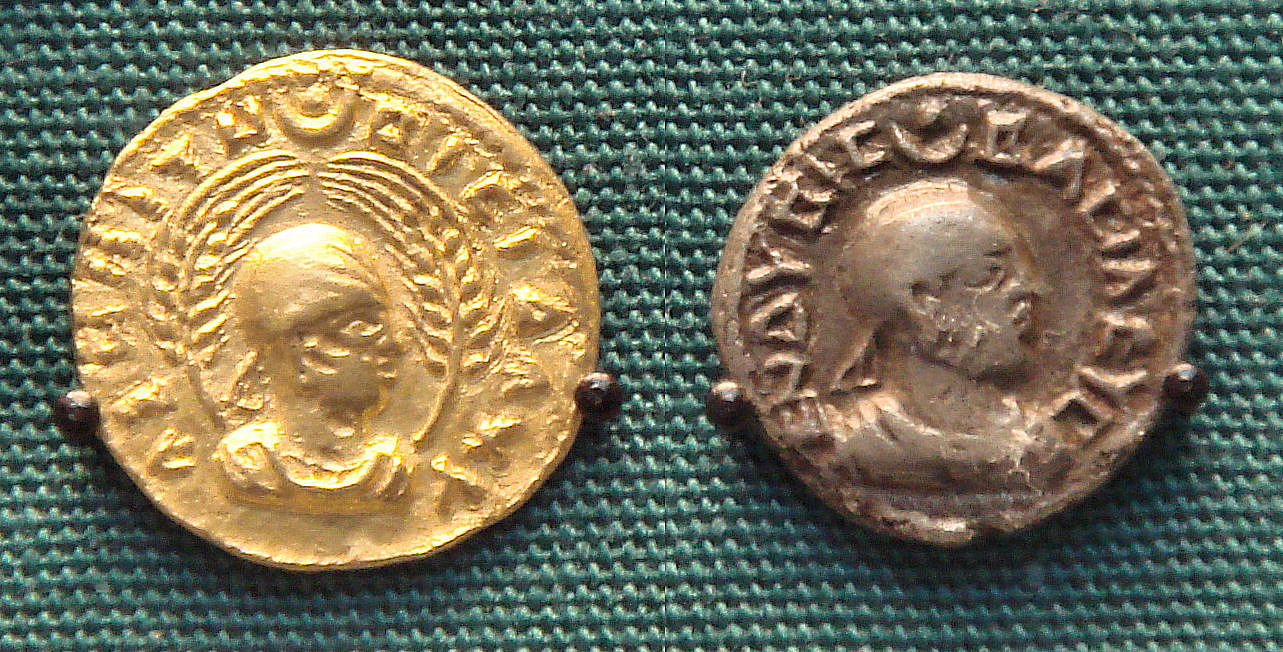
The dynasty’s eponymous founder, Gupta (r. c. 240-280), held only the humble title maharaja in eastern Magadha. His grandson Chandragupta I (r. c. 320-335) married a Lichchhavi princess, struck gold dinars, and proclaimed himself maharajadhiraja—“great king of kings”—thereby announcing the imperial project. Samudragupta (r. c. 335-375) carried Gupta banners from Assam to the Deccan, earning from the Allahabad pillar the epithet “exterminator of all kings,” while cultivating poets and ashvamedha sacrifices that masked the empire’s dependence on tributary relationships.Chandragupta II (r. c. 375-415) absorbed the rich Saka satrapies of Gujarat–Malwa, opening direct access to Arabian Sea ports and the silk-route wealth that financed the famed iron pillar of Delhi. Successor Kumaragupta (r. c. 415-455) held the line against emerging Pushyamitra revolts, but by the time Skandagupta (r. c. 455-467) confronted the Alchon Hunas in the northwest the treasury was strained; post-467 inscriptions drop the imperial epithet, and by 550 the Guptas had retreated to their original Magadha estates, leaving the stage to the Vardhanas of Thanesar and the rising regional powers of the early medieval “fragmentation.”