Overview
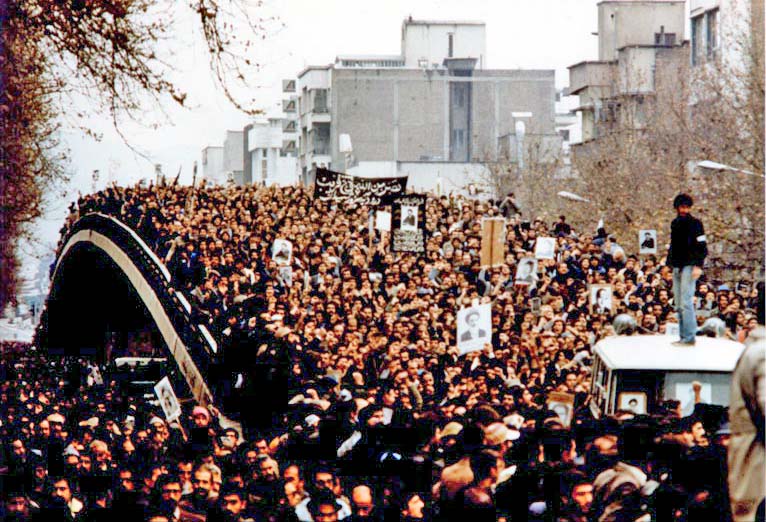
Between January 1978 and February 1979, Iran convulsed in a popular revolution that toppled Shah Mohammad Reza Pahlavi—once hailed as the “King of Kings”—and installed Ayatollah Ruhollah Khomeini, an exiled Shiʿi cleric who promised to govern “God’s government on earth.” What began as scattered protests against a lavish, authoritarian monarchy swelled into a multiclass, nationwide movement that fused Shiʿi messianism, leftist anti-imperialism, and bourgeois constitutionalism. When the dust settled, the Pahlavi dynasty—founded by Reza Shah in 1925—was extinct, and the world’s first modern theocracy, the Islamic Republic of Iran, had emerged, vowing to export its revolutionary model across the Muslim world.The revolution’s aftershocks were global: oil prices doubled, the 444-day U.S. embassy hostage crisis ruptured Washington-Tehran relations, and a militant Islamist current—long overshadowed by Arab nationalism—became a durable force in regional politics. Internally, the new constitution enshrined the principle of velayat-e faqih (guardianship of the Islamic jurist), giving a single senior cleric supreme authority over elected institutions. Four decades later, the Islamic Republic remains the most significant ideological and geopolitical offspring of 1979, its survival a testament to both the revolution’s mobilizational power and its coercive capacities.
History/Background
Roots lay in the 1953 CIA-MI6 coup that ousted nationalist premier Mohammad Mosaddegh and restored the young Shah, who thereafter ruled as a pro-Western autocrat. Buoyed by oil revenues, the White Revolution (1963-78) modernized agriculture, industry, and women’s education, but also shattered traditional bazaari networks, inflated a corrupt court elite, and created a vast urban underclass. Khomeini—then a middle-ranking jurist—first denounced the Shah’s land reforms and U.S. bases in 1963; exiled to Najaf, he refined a theory of clerical rule that married Shiʿi martyrology with Third-Worldist anti-imperialism.By 1977, recession, austerity, and political repression (via SAVAK, the secret police) galvanized an unlikely coalition: seminary students, Marxist guerrillas, liberal lawyers, and merchants shut Tehran’s Grand Bazaar. A government newspaper attack on Khomeini in January 1978 sparked riots in Qom; 40-day mourning cycles (traditional in Shiʿi Islam) carried protests to every provincial city. Strikes by oil workers deprived the regime of revenue, while the Shah’s liberalization in mid-1978—intended to appease—only emboldened crowds shouting “Independence, Freedom, Islamic Republic!” On 16 January 1979 the Shah departed for exile; Khomeini returned from Paris on 1 February, appointed Mehdi Bazargan as interim premier, and after loyalist troops mutinied, the monarchy formally collapsed on 11 February.
Key Information
• Leadership: Though Khomeini became icon, the revolution had no single party; the Islamic Republican Party (IRP) was created post-victory to outflank liberals and leftists. • Referendum: 30-31 March 1979—98 % voted “yes” to an Islamic Republic, but ballot wording offered no alternative. • Constitution: Ratified December 1979; created elected president and parliament but subordinated them to a Supreme Leader (initially Khomeini) and a 12-member Guardian Council. • Hostage Crisis: 52 Americans held 4 November 1979 – 20 January 1980; consolidated radicals, paralyzed Bazargan’s government, and triggered U.S. sanctions still in force. • Cultural Shift: Mandatory veiling re-imposed July 1980; universities purged 1980-83; family-law concessions to women revoked. • Casualties: Estimates vary from 2,000 to 60,000 dead during 1978-79 street fighting; post-revolution executions of former officials may have exceeded 8,000 (Amnesty International). • International Fallout: Saddam Hussein, fearing contagion, invaded September 1980; eight-year Iran-Iraq War (≈ 1 million dead) entrenched revolutionary identity and militarized the state.Significance
The revolution shattered Cold-War assumptions that modernizing monarchies were stable bulwarks against communism; instead, it demonstrated the mobilizing power of Shiʿi symbolism and anti-Western grievance. By fusing religion with populism, Iran created a template later studied by Islamist movements from Hezbollah to the Muslim Brotherhood. The U.S. foreign-policy establishment coined the “Khomeini syndrome,” a fear that any allied autocrat could be the next domino—prompting Washington to double support for secular strongmen elsewhere.Internally, the Islamic Republic institutionalized a unique dual structure: elected bodies constrained by clerical oversight, producing chronic tension between popular sovereignty and theocratic authority. The revolution also recalibrated gender politics: while curtailing many Pahlavi-era rights, it expanded female education (today 60 % of university students are women) and mobilized women into social activism both for and against the state. Globally, 1979 inaugurated the era of mass Islamist politics, spurred Saudi propagation of Wahhabism as counter-revolution, and injected ideological fervor into the Arab-Israeli conflict. Four decades on, the revolution’s slogan—“Neither East nor West, Islamic Republic”—still frames Iran’s defiant posture, shaping nuclear negotiations, regional proxy wars, and the aspirations of millions who chant inside Iran: “We are the children of 1979; we know how to overthrow tyrants.”