Overview
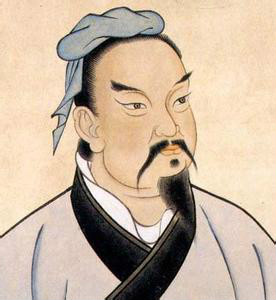
Sun Tzu (Master Sun) occupies a unique position at the crossroads of history, legend, and strategic science. Revered in China as one of the “Five Hegemon’s Advisors,” he is credited with systematizing the chaotic military experience of the late Spring and Autumn period into a concise, 13-chapter handbook that has guided commanders from ancient Chinese warlords to modern corporate executives. Although the historicity of his life remains contested—textual analysis suggests the core of The Art of War crystallized during the subsequent Warring States era (475–221 BCE)—the persona of Sun Tzu functions as a collective pseudonym for generations of professional strategists who refined proto-scientific approaches to logistics, intelligence, and psychological warfare.
The treatise’s enduring appeal lies in its insistence that warfare is a vital subject of statecraft that must be governed by rational analysis, not heroic valor alone. Sun Tzu’s maxims—“Know the enemy and know yourself”; “The supreme art of war is to subdue the enemy without fighting”—shifted the locus of victory from battlefield carnage to pre-conflict calculation, elevating the strategist to parity with the field commander. Over two millennia, this paradigm migrated beyond East Asia, influencing Japanese samurai manuals, Napoleonic staff colleges, and, in the late twentieth century, Western business schools that recast market competition as a bloodless campaign.
Background
According to the grand historian Sima Qian (c. 145–86 BCE), Sun Tzu was born in the state of Qi (modern Shandong) during the Eastern Zhou dynasty’s decline. Demonstrating tactical acumen as a young noble, he entered the service of King Helü of Wu (r. 514–496 BCE) and allegedly transformed the small southeastern kingdom into a dominant power by defeating the larger state of Chu at the Battle of Boju (506 BCE). The anecdote that he trained the king’s concubines—executing two favored consorts to enforce discipline—illustrates the text’s core theme that strict, predictable systems supersede charisma. Archaeological corroboration is sparse; the 1972 discovery at Yinqueshan (Shandong) of Han-dynasty bamboo strips bearing Sun-tzu military sayings confirms only that a corpus of strategic wisdom circulated under his name by at least the early 2nd century BCE.
Key Facts
- Traditional lifespan: c. 544–496 BCE
- Attributed work: The Art of War (Sunzi Bingfa), originally 6,000 Chinese characters; 13 chapters covering planning, maneuver, espionage, and siegecraft
- Earliest extant bamboo manuscripts: interred c. 140 BCE, unearthed 1972
- Historical context: Spring and Autumn → Warring States transition; 150+ semi-autonomous states reduced through incessant warfare to seven major powers
- Textual stability: achieved c. 80 BCE under Han court bibliographers; commentaries by Cao Cao (155–220 CE) became standard
- Global diffusion: Jesuit translation into French 1772; first English 1905; U.S. Marine Corps field manual adoption 1989
- Lexical footprint: introduced concepts of “shi” (strategic configuration), “zheng & qi” (orthodox & unorthodox), and “wu sheng” (non-war victory) into Chinese political vocabulary
Impact
Sun Tzu’s treatise matters because it redefined conflict as a measurable extension of policy, anticipating Clausewitz by two millennia yet surpassing him in brevity and adaptability. Imperial Chinese governments placed successful candidates for the civil service examinations through a curriculum that paired Confucian ethics with Sunzian prudence, embedding strategic restraint within bureaucratic culture. In the twentieth century, Mao Zedong fused Sunzian mobile warfare with Marxist revolutionary theory to craft the guerrilla doctrines that defeated the Japanese and Nationalists. Across the Pacific, North Vietnamese commanders studied Sun Tzu while U.S. officers invoked identical maxims to justify “effects-based operations,” proving the text’s cross-ideological utility. Beyond the battlefield, The Art of War has sold millions of copies in management primers, sports coaching clinics, and cybersecurity playbooks, testifying to its migration from ancient Chinese chariots to algorithmic trading floors. The work thus stands as history’s most successful example of applied historical thought, demonstrating how a pre-modern manuscript can remain operationally relevant when stripped of cultural specificity and reduced to timeless patterns of competition, deception, and resource allocation.