Overview
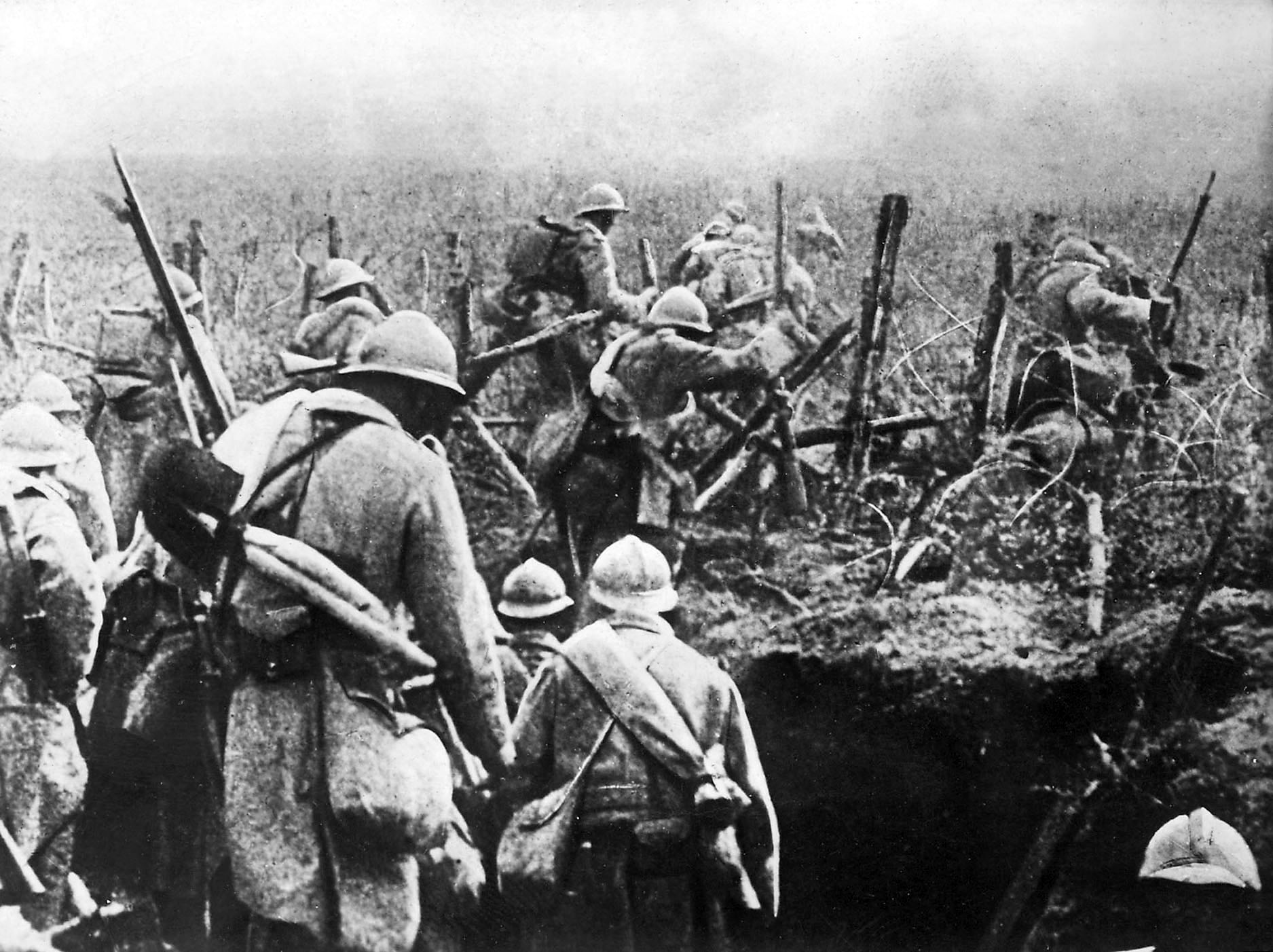
Between 28 July 1914 and 11 November 1918, the Great War pitted the Allies—chiefly Britain, France, Russia, Italy (from 1915) and the United States (from 1917)—against the Central Powers of Germany, Austria-Hungary and the Ottoman Empire. Fighting on five continents and every ocean, it mobilised 65 million soldiers, introduced mass mechanised slaughter and claimed roughly 38 million military and civilian lives. The struggle shattered four empires, toppled dynasties, redrew borders from the North Sea to the Persian Gulf and seeded the ideological soil for fascism, communism and a second, yet more devastating, world war.The war’s signature lay in its industrial scale: barbed-wire trenches, poison-gas clouds, creeping artillery barrages, tanks churning through mud, aircraft dueling above the Western Front and submarine wolf-packs stalking Atlantic shipping. Yet it was also a war of movement in the East, of colonial armies in Africa and Asia, and of popular mobilisation through state propaganda, rationing and female labour. When the guns fell silent, the victors attempted to forge a new order at Versailles, but punitive treaties, war debts and unresolved national grievances ensured the “war to end all wars” merely closed the first chapter of a global civil war that would resume in 1939.
Background
Long-term rivalries—Anglo-German naval competition, French revanchism for Alsace-Lorraine, Austro-Russian jockeying in the Balkans—were wired together by alliance systems (Triple Entente vs. Triple Alliance) and a cult of offensive military planning. Imperial competition for colonies, markets and prestige fed popular nationalism and press sensationalism. The immediate spark came on 28 June 1914 in Sarajevo, when Bosnian-Serb nationalist Gavrilo Princip assassinated Archduke Franz Ferdinand of Austria. Vienna, backed by Germany’s “blank cheque,” issued an ultimatum to Serbia; Russia mobilised to protect Belgrade; and the alliance dominoes fell, turning a Balkan crisis into a continental war.Germany’s Schlieffen Plan sought to knock out France in six weeks before turning to Russia, violating Belgian neutrality and bringing Britain into the fray. By September 1914, the Marne had halted the German drive on Paris, condemning both sides to four years of attritional deadlock on the Western Front, while fluid campaigns raged across Eastern Europe, the Caucasus, the Middle East and Africa. Total war demanded the mobilisation of entire economies: women entered factories, governments rationed food, and propaganda demonised the enemy. The British blockade starved Germany; German U-boats tried to starve Britain. Attrition reached its apogee at Verdun (1916) and the Somme (1916), where British forces suffered 60,000 casualties on the first day alone. Revolution in March 1917 toppled the Russian tsar; Bolsheviks seized power in November and took Russia out of the war. American entry that same year, provoked by unrestricted submarine warfare and the Zimmermann Telegram, tipped the manpower balance. A series of Allied “hundred-days” offensives, backed by fresh U.S. troops and tanks, broke German lines in the autumn of 1918. Sailors mutinied at Kiel, revolution swept Berlin, and on 11 November Germany signed an armistice in Compiègne’s railway carriage.